NPL&REO News

US FICO acquires Brazilian Risk Management Firm GoOn

US data analytics firm FICO has acquired Brazilian credit risk management consultancy GoOn, gaining wider access to thousands of potential clients in the Brazilian financial market. The values involved in the deal were not disclosed.

Founded in 2002, GoOn provides risk consulting services for the entire consumer credit life cycle. It is reported to have many deep-pocketed clients in Brazil’s banking, retail, insurance, and real estate sectors. Moreover, it has trained more than 12,000 credit management professionals and most of whom work for its clients.

FICO’s technology assets, combined with Goon’s skilled human talent, will create a powerful company in Brazil’s credit market, say analysts.

Original Story: Nearshore Americas | Narayan Ammachchi
Photo: GoOn
Edition: Prime Yield

ECB takes over Italian’s troubled Banca Carige

The European Central Bank’s (ECB) decision to take temporary control of Italy’s troubled bank Banca Carige means the government doesn’t have to consider state aid yet.

Thanks to ECB’s intervention, Italy’s populist government – an increasingly uneasy coalition of the anti-establishment 5Star Movement and the far-right League, which put banks at the top of its list of enemies — doesn’t have to find a solution to the bank’s financial problems, avoiding (for now) the use of state aid, which would have enraged many of the coalition partners’ voters.

In the root of ECB’s decision, was the risk that the failure of Carige to raise needed capital of up to €400 million could reverberate across the entire Italian banking system, possibly sparking a systemic crisis. That’s a risk the seven-month-old government wouldn’t be able to afford, as it remains torn between ambitious spending plans and modest growth forecasts for this year.

«If there was a risk of contagion from Banca Carige, that has been averted for now,» said an official close to the European banking supervisory authorities, who declined to be named. «The ECB supervision grants continuity and gives more time to the bank to find a partner and pursue its turnaround plan.»

The ECB appointed a six-person team to manage Carige, Italy’s 10th-largest bank, after most of its board of directors resigned following the collapse of efforts to raise fresh capital. It was the first time the ECB had made such a move since it acquired expanded powers in 2014 to supervise European lenders.

Italian banks and their balance sheets, burdened by Europe’s biggest pile of bad loans, have been a constant source of concern for both the ECB and the Bank of Italy.

We must note that the two new ruling parties have been among the staunchest critics of Italian banks’ costly rescue plans, and reimbursing savers hit by the crisis was among their main electoral promises. Now, faced with their first banking trouble, they have been surprisingly tight-lipped.

Original Story:EPO/ AICEP
Photo: Banca Carige
Edition: Prime Yield

Brazil’s state-controlled banks to depend less on Treasury funding

The new heads of two Brazilian state lenders, BNDES and Caixa Econômica Federal, said in during their swearing-in ceremony that they will depend less on Treasury funding in coming years, in a sign President Jair Bolsonaro government wants to redefine the role of public-sector banks.

According to the officials, the new administration also plans to make development bank BNDES and mortgage lender Caixa Econômica Federal speed up repayment of Treasury loans. The strategy marks a departure from an economic model championed by previous left-wing administrations that funneled public funds to BNDES and other state banks to create “national champions.”

Economy Minister Paulo Guedes said such policies are «regressive» in a speech where he pledged that public-sector lending by public banks should focus on credit for the unprivileged and let the private-sector handle most lending.

At a swearing-in ceremony for the bank executives, new BNDES head Joaquim Levy said its lending activity should be adjusted in line with the equity of its shareholder, the federal government.

Carlos Thadeu de Freitas, the financial director of BNDES, told two local newspapers that the bank aims to return up to 100 billion reais ($27 billion) in loans owed to the Treasury in 2019.

BNDES had planned to repay 26 billion reais to the Treasury this year, but raising that figure would allow the government to cut public debt faster as is the desire of Bolsonaro’s new economic team, Freitas said.

«The BNDES has to reinvent itself,» Freitas was quoted as saying in newspaper O Estado de S.Paulo. «It cannot compete with private banks, providing working capital to companies which have other means to access such lines.»

In the same vein, Caixa will sell stakes in four subsidiaries to repay loans to the Treasury, said Pedro Guimarães, its new chief executive. The plan will involve the insurance, cards, asset management and lottery units.

Original Story: Reuters |Marcela Ayres
Photo: Caixa Economica Federal
Edition:Prime Yield

Spanish NPLs fall more than 60% since 2013’s peak

The figures for Non-Performing Loans (NPL) has fallen more than 60% from the highs observed in 2013 in Spain.

According to the latest figures published by the Bank of Spain, the level of non-performing loans (NPL) fell to 6.08% in October, 1.7 points lower than in September and far bellow the 8.41% recorded a year ago.

These figures represent a new low in the level of NPL in recent years. The fall has been more intense in the absolute figures of non-performing loans, accelerating its annual rhythm of descent to 28.4%.

In October a rhythm of decent was maintained in the balance of credit, with an annual fall of 3%, explained by the continuing efforts of households to reduce debt and the efforts of the banks to reduce the non-performing assets inherited from the crisis.

However, new credit grew in October at an annual rate of 12%.

Original Story: The Corner |  J.L.N Campuzano
Photo: Banco de España
Edition: Prime Yield

Investment through Portuguese Golden Visa reaches 838 €Mn in 2018

Portugal garnered 838 €Mn in investment through the Golden Visa programme last year, which is 0.6% less than the previous year, according to figures released by the Foreigner and Border Service (SEF).

In 2018 the country issued 1,409 Golden Visas, which is up on the previous year. China leads the list of gold visas granted flowed by Brazil, Turkey, South Africa and Russia.

The Portuguese Golden Visa scheme was originally launched in 2012, targeting wealthy foreigners willing to invest at least €500,000 in Portuguese real estate or to create 10 jobs.

Original Story:  The Portugal News| AICEP Portugal Global
Photo: Free Images.com/Ricardo Gurgel
Edition: Prime Yield

Portuguese NPL stock falls 4% in the 3rd quarter 2018

In the third quarter of 2018, the Portuguese NPL (Non-Performing Loan) ratio decreased 0.4 p.p. to 11.3%, benefiting from a reduction of non-performing loan stock by 1.3 €Bn (4%), according to the latest report released by the Banco of Portugal (BdP, the Portuguese Central Bank).

The reduction of this ratio was more significant in the household’s segment (housing purpose), whose NPL stock decreased by 269 €Mn (5%) in the quarter ended in September.

According to BdP, the NPL ratio decreased by 6.6 p.p. (SNF: -8.1 p.p., households: -3.2 p.p.) since the historical peak observed in June 2016, reflecting a 38% reduction in total NPL stock (NFC: -37%, households: -36%), corresponding to 19.2 €Bn (SNF: -12.2 €Bn, households: -4.6 €Bn).

Between July and the end of September 2018, the NPL impairment coverage ratio increased by 0.3 compared to the previous quarter, standing at 53.2%. This figure is 10 p.p. above that observed in June 2016, when the NPL ration reached its maximum value.

The Portuguese Central Bank explains that the quarterly variation was mainly due to an increase of 0.8 p.p. in the impairment coverage ratio of the SNF segment, which stood at 58.7%. The coverage ratio of the consumption and other purposes segment decreased by 2.1 p.p., mainly reflecting a reduction of the accumulated impairments for NPL in this segment.

Original Info: Banco de Portugal (BdP)
Photo: Banco de Portugal
Written and Edition: Prime Yield

Portugal’s Financial Innovations accelerates NPL reduction

Currently, Portugal’s comparative NPL ratios still exceed the European average, and are higher than Italy’s. However, Portuguese banks have recently accelerated their reduction of these bad loansand are on course to solve the problem altogether. A combination of financial innovations with a growing economy and companies resuming payments on some previously faulty loans are at the root of this improvement.

This is not just good news for the country, as the NPL reduction is an ongoing project since the financial crisis, but they’re also a sign of Portuguese financial innovation. That is because, by the time the number of NPL’s in Portugal hit their highest number in the midst of Portugal’s bailout, the state banks could no longer use state support without exposing shareholders and bondholders to losses. This is different from lenders in Spain and Ireland, who were able to benefit from such support.

Bank of Portugal Deputy Governor Elisa Ferreira told Reuters, «With the pressure we are exerting and the efforts by the banks, the NPL problem is contained, regulated, controlled, and on a serious path towards its resolution». About 4-5 €Bn worth of bad loans are cleared every six months, which is a demonstrably fast rate of clearance.

Thus far, through the use of write-downs, selling bad loan portfolios, and agreements with debtors, Portugal’s banks have been slashing about 10 billion euros a year in bad loans, resulting in eliminating over one-third of their non-performing loans since their highest point, in 2016. This means NPLs have fallen from 50.5 billion euros, to 32.4 billion euros this past June, where they made up 17.9% of all loans at their peak.  They have since been dropped to 11.7% of all loans.

While a notable improvement, this is still well above the European average of 3.4%, and still higher than Italy’s nearly 10% rate. However, it is a great deal lower than Greece’s rate (45%) and Cyprus’ rate (29%) of NPLs.

As good as this all is, it’s about to get better: Portugal’s three largest domestic banks – Caixa Geral de Depositos (CGD), Millennium bcp and Novo Banco – have banded together to create a platform to resolve their NPL problem jointly, with common corporate debtors. A platform like this is a key innovation, as Portugal’s banking system lacks sufficiently big banks with major international operations, or partners, who could help them absorb the badly performing loans – which is how Italy is managing their NPLs. This platform is yet to take off, so there is likely to be additional massive improvement for Portugal going forward.

In addition to this financial innovation, Portugal is also experiencing healthy economic growth. Last year, the economy’s growth reached 2.8%, the strongest it’s been since 2000. Since then, multiple companies have been able to resume payments on their non-performing loans. The economy is slowing down, but the government expects economic growth to remain above 2% for the next few years, which in turn means companies will continue to resume payments on bad loans.

Portugal’s good fortune comes as Greece also makes strides with a growing economy of their own; approval of a new bailout, and a recent proposal to create a new special vehicle to cut their bad debts in half.

Under this proposal, lenders would transfer about half of their deferred tax claims to a special purpose vehicle. It would basically be buying the bad loans from banks at market prices. This vehicle would then sell the bonds,and use the proceeds to purchase approximately 42 billion euros of bad loans from the lenders.

In both countries, these new financial platforms allow states to take advantage of their growing economies, to not just stabilise their banks and reduce the rates of non-performing loans, but for their financial institutions to thrive.

Original Story: South EU Summit B. Lana Guggenheim
Photo: Freeimages.com / Svilen Milev
Edition:Prime Yield

Portuguese Housing Market boom shows signs of slowing down

The Portuguese housing market is starting to show signs of slowing down after the country’s post 2011-2014 international bailout boom.

Housing prices rose 8.5% in the third quarter of 2018, year-on-year, slowing down from the 11.2% increase in the second quarter compared to the same period of last year, revealed the National Statistics Institute. This result marks the second consecutive quarter of decelerating home prices following five straight quarters of home-price growth.

According to Eurostat data, Portugal recorded the third-highest increase in home prices in the European Union last year.

Original Story: Bloomberg |Henrique Almeida
Photo: Big Stock Photo
Edition: Prime Yield

Spain and Portugal are better placed than Italy for transaction to post-QE, says Moody’s

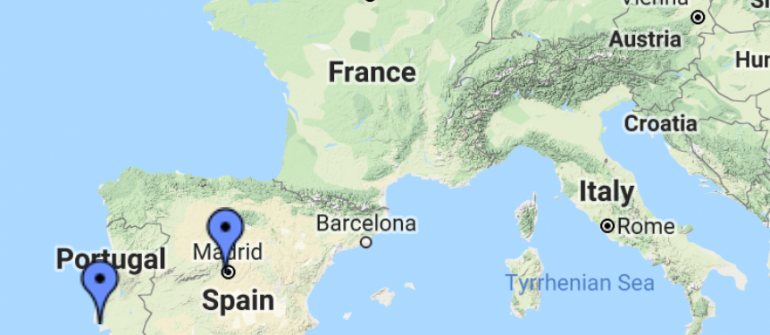
The governments of Italy (Baa3, stable), Spain (Baa1, stable) and Portugal (Baa3, stable) will need to continue to diversify their funding sources to meet their still very elevated gross borrowing requirements when the European Central Bank (ECB) ends new purchases of euro area sovereign debt at the end of the year, Moody’s Investors Service said in a new report.

Untitled Governments of Italy, Spain and Portugal; Spain, Portugal better placed than Italy for transition to post-QE environment”, the report shows that debt-to-GDP ratios close to or above 100%, as well as continued budget deficits, mean that Spain and Italy will face gross borrowing requirements of around 17 and 18% of GDP respectively in 2019-2020, whereas the borrowing requirements of Portugal are somewhat lower at of 13-14% of GDP these years.

«We believe that Spain and Portugal are well placed to continue to manage the transition to a post-QE environment,» said Petter Bryman, a Moody’s Assistant Vice President — Analyst and co-author of the report. «Italy will face more significant challenges, although these are driven by domestic political and economic developments rather than the withdrawal of ECB support.»

Spain’s higher credit quality and robust demand from non-resident investors and Portugal’s increasingly diversified sources of funding leave them in a comparatively good position to continue to negotiate the transition to a post-quantitative easing environment.

Although Moody’s consider the risks of a liquidity crisis for Italy to be low, the agency stresses that the sell-off by non-resident investors from May 2018 means that managing the transition will be more challenging for Italy, despite the recent de-escalation of tensions with the EU over the 2019 budget.

The pace of purchases of euro area government bonds under the ECB’s quantitative easing programme (the Public Sector Purchase Programme — PSPP) has already slowed significantly compared to its peak in 2016 when the ECB purchased the equivalent of between 30 and 40% of the gross issuance of these countries.

The ECB will continue to reinvest the proceeds of maturing bonds for the foreseeable future, although Moody’s estimates that the figure reinvested in 2019 will amount to around 10% of the gross borrowing requirements of Spain and Portugal and 6% of those of Italy in 2019.

In recent years, Italy, Spain and Portugal have successfully extended the maturity of their borrowing, locking in today’s low rates for a considerable period. Government borrowing rates have so far not notably increased as the ECB has reduced the pace of its QE purchases, meaning that the final phase-out of new PSPP purchases at the end of this year in itself is unlikely to lead to an immediate rise in borrowing rates for the three countries.

Elevated gross borrowing requirements can impact Moody’s assessment of sovereign credit quality in two ways. Firstly, if they lead to more elevated government borrowing costs, this can impact Moody’s assessment of a government’s fiscal strength.

Secondly, the risk that the government will not be able to raise the necessary funding to meet its obligations forms part of the assessment of a sovereign’s susceptibility to event risk.

Original Story: Moody’s
Photo: Google Maps
Edition: Prime Yield

Spain’s Bankia sells €3bn NPA portfolio to Lone Star

Spanish state owner lender Bankia has agreed the sale of €3bn of bad loans and repossessed property to private US equity firm Lone Star. The portfolio includes foreclosed real estate assets with a gross book value of approximately €1.65bn, as well as €1.42 bn in non-performing loans (NPL).

Bankia will keep a 20% ownership stake in the company formed to own, manage and sell the foreclosed real estate, while Lone Star will own 100% of the bad loan portfolio.

Spanish lenders have been making a determined effort to clean up their balance sheets since Spain’s decade-long property bubble burst in 2008. Last year, Spain’s banks led Europe with €50.8bn of the continent’s €104.4bn in distressed real estate asset sales, according to the investment bank Evercore. Spain has kept that lead over the first nine months of 2018, with €33.3bn of Europe’s €77.1bn total.

Bankia has had an especially fraught role in the banking crisis that followed the bursting of the property bubble. The lender was formed from the merger of seven regional savings banks in 2010 and held an initial public offering in 2011. But a year later Bankia revealed a vast capital shortfall that required nationalisation and a bailout of more than €20bn.

Now, the Bank stated the sale of the real estate and loan portfolios to Lone Star, combined with other reductions in non-performing loans and foreclosed assets expected for 2018, will reduce non-performing assets it holds by a gross book value of more than €6bn. The lender said the deal is expected to close in the second quarter of 2019 and will increase its fully loaded common equity tier one ratio by 12 basis points.The bank set up the goal to sell €8.8bn in bad loans by 2020.

Original Story: Financial Times | Ian Mount
Photo: Bankia
Edition:Prime Yield

Italian NPL servicer doBank expands European reach with Altamira acquisition

ItalianNPL servicing specialist doBank announced a deal to buy 85% of Altamira Asset Management to push in to other potentially lucrative southern European markets, adding €55bn in assets undermanagement to its existing €140bn.

doBank said it is attracted by the market size and complexity of NPLs in southern Europe, identifying the region as its number one priority in terms of potential merger and acquisition activity.

Original Story: Global Capital | Asad Ali
Photo: Altamira Asset Management (LinkedIn)
Edition:Prime Yield

Top