NPL&REO News

European NPL Sales reach a €205.2 bn peak in 2018

The European non-performing loan (NPL) market reached a new peak in 2018, with disposals totalling €205.2 bn in gross book value (GBV), according to the new European NPL FY report from Debtwire ABS.

Debtwire’s report tracked 142 transactions, recording a particularly intense pace of activity in the last quarter, given that at the end of 3Q18, closed deals totalled € 125bn.

Italy was the most active country in 2018, producing half of the total NPL sales. Debtwire identified 64 closed NPL sales with a GBV of € 103.6bn, almost half of which were via securitisations within the government’s Garanzia sulla Cartolarizzazione delle Sofferenze (GACS) scheme, which runs only until 6 March 2019.

At the same time, sales started to slow down in Spain as large Spanish banks near end of their balance sheet clean-ups.However, a massive € 43.2bn was completed in 2018 across 27 deals and most of these have involved two jumbo buyers, Cerberus Capital Management and Lone Star Funds.

Other significant trend is that the sales are starting to accelerate in other Southern European countries, still the ones with the highest NPL ratios, and market participants expect to see more in 2019. In 2018, Greek banks closed eight sales for a total volume of €13.9bn, Portuguese banks closed 16 NPL and REO deals for a total volume of €8bn and Cyprus saw two deals for €2.9 bn.

In Ireland, there were eight deals for EUR 14.3bn, while in the United Kingdom the bad bank UKAR dominated the loan disposal market with £5.8bn of sales out of a total £6.5bn. Germany has also seen disposal of NPLs connected with troubled local banks. HSH Nordbank’s € 6.3bn portfolio, sold together with the bank to Cerberus, made up most of the €7.7bn volume in the country.

«The NPL market has reached a peak that will not be topped in 2019. This is especially the case in Italy, where the GACS effect will slow down, with most large banks having already taken advantage of the program and now needing to focus on unlikely to pay (UTP) portfolios. Still, with European regulators pushing for banks to dispose of their bad loans quickly, activity will remain consistently intense across the continent» said Alessia Pirolo, Head of NPL Coverage, Debtwire.

Original Story: Property EU| Jane Roberts
Photo: 
Edition:Prime Yield

More NPL portfolios go up for sale in Greece

National, Piraeus, Alpha and Eurobank, Greece’s four systemic banks, want to speed up the sale of NPL portfolios in 2019. So far, between them, these banks have sold bad loans with a gross book value (GBV) of €9bn. A value that should be largely surpassed in 2019.

National and Piraeus will be the first to make new sales in 2019, conceding four new portfoliosadding up to €3 bn.

Alpha leads the pack in loan sales, having already completed the concession of four portfolios with a total nominal value of €3.5 bn. National has sold a major portfolio of €2 bn, Piraeus two portfolios totaling €1.8 bn and Eurobank another two packages worth €1.6 bn.

Now National will concede NPLs from small and medium-sized enterprises totaling €1.6 bn in the portfolio “Symbol,” as well as a package of consumer loans – without collateral – worth €700 Mn. Both sales are expected to be completed within the first half of the year.

Piraeus will also put up for grabs a package of consumer loans without collateral with a nominal value of €400 Mn, named “Iris,” along with a portfolio of a similar size containing shipping loans and named “Nemo.”

Interest from international investors appears to be strong, as reflected by the prices achieved during previous sales and by the entry of strong players in the Greek market.

Original Story: Ekathimerini | Evgenia Tzortzi
Photo: FreeImages.com/Takis Kolokotronis
Edition: Prime Yield

Global economic growth should slow down in 2019, according to UBS

Global economic growth is expected to slow down in 2019, according to UBS, as tighter monetary policy, weaker earnings growth and political challenges confront the world’s major economies.

After seeing a growth of 3.8% in 2018, UBS said in its outlook for the year ahead that it expected global economic growth to slow to 3.6% in 2019.

«The decline in global growth will mean a weaker tailwind for global markets, which could begin to anticipate an end of the economic cycle as 2019 progresses,» the investment bank said in a note.

In the meantime, solid domestic demand in the euro zone will not be sufficient to offset reduced export growth, UBS’s economists said.

On the bright side, UBS said a recession looks unlikely given current rates of consumption, investment and employment growth «and we think the typical causes of a downturn are unlikely to materialize in 2019

«Our base case is for inflation to stay contained, allowing central bankers to remain sensitive to growth. We don’t foresee a major fiscal policy shift or a commodity price shock. Consumer balance sheets are in solid shape and improvements in banking sector capitalization since the financial crisis reduce the risk of a global credit crunch

It also noted that there are growth opportunities and pockets of value.

Tighter monetary policy

Among the biggest challenges facing the world’s largest economies is a new era of tighter monetary policy following a decade of stimulus after the financial crisis of 2008.

Central banks in the U.S., U.K., euro zone, Japan and elsewhere introduced a mixture of low interest rates and expansionary monetary stimulus programs, known as “quantitative easing” (QE) — essentially large-scale asset purchases — in a bid to boost spending in the economy.

While these tools were useful in re-establishing stability in global financial systems, central banks are keen to “normalize” such policies.

The U.S. has already stopped its QE program and hiked interest rates four times in 2018 while the European Central Bank confirmed in December that QE would end at the end of the month, with bond purchases falling from €15 bn ($17 bn) a month to zero. Amid ongoing Brexit uncertainty, meanwhile, the Bank of England has yet to say when its own QE program will end, although interest rates have been raised slightly.

UBS noted that the coming year will represent the first time since the global financial crisis when central bank balance sheets are on track to end the year smaller than they were at the start of it.

Original story: CNBC | Holly Ellyatt
Photo: Freeimages.com/Sergey Klimkin
Edition: Prime Yield

Axactor acquires large unsecured NPL portfolio in Spain

Axactor has closed its biggest one-off transaction in 2018, with a large Spanish financial institution. The purchase is an unsecured portfolio with an outstanding balance of approximately €940 Mn across more than 100.000 claims. The portfolio comes with a significant number of paying cases, increasing the existing revenue from unsecured portfolios by more than 40% in 2019.

«Complementing recent announcements in Germany, Italy, Sweden and Finland this portfolio shows real commitment by Axactor in growth and diversification across both continental Europe and the Nordics. Combining this with existing forward flow commitments, Axactor is well placed for significant growth into 2019 and beyond» says Endre Rangnes, CEO, Axactor Group, in a press release.

«Axactor Spain is delighted to have secured this large portfolio in the last quarter of 2018. It provides us with momentum into 2019 across the whole business. It will complement our wins in the other product areas, 3PC, Secured and REO» says David Martín and Andrés López, General Directors of Axactor Spain.

Axactor plans to make this acquisition through their jointly owned SPV with Geveran and will finance the transaction using existing cash and credit facilities.

Original story: Property Magazine International
Photo: Axactor Spain
Edition: Prime Yield

ECB takes over Italian’s troubled Banca Carige

The European Central Bank’s (ECB) decision to take temporary control of Italy’s troubled bank Banca Carige means the government doesn’t have to consider state aid yet.

Thanks to ECB’s intervention, Italy’s populist government – an increasingly uneasy coalition of the anti-establishment 5Star Movement and the far-right League, which put banks at the top of its list of enemies — doesn’t have to find a solution to the bank’s financial problems, avoiding (for now) the use of state aid, which would have enraged many of the coalition partners’ voters.

In the root of ECB’s decision, was the risk that the failure of Carige to raise needed capital of up to €400 million could reverberate across the entire Italian banking system, possibly sparking a systemic crisis. That’s a risk the seven-month-old government wouldn’t be able to afford, as it remains torn between ambitious spending plans and modest growth forecasts for this year.

«If there was a risk of contagion from Banca Carige, that has been averted for now,» said an official close to the European banking supervisory authorities, who declined to be named. «The ECB supervision grants continuity and gives more time to the bank to find a partner and pursue its turnaround plan.»

The ECB appointed a six-person team to manage Carige, Italy’s 10th-largest bank, after most of its board of directors resigned following the collapse of efforts to raise fresh capital. It was the first time the ECB had made such a move since it acquired expanded powers in 2014 to supervise European lenders.

Italian banks and their balance sheets, burdened by Europe’s biggest pile of bad loans, have been a constant source of concern for both the ECB and the Bank of Italy.

We must note that the two new ruling parties have been among the staunchest critics of Italian banks’ costly rescue plans, and reimbursing savers hit by the crisis was among their main electoral promises. Now, faced with their first banking trouble, they have been surprisingly tight-lipped.

Original Story:EPO/ AICEP
Photo: Banca Carige
Edition: Prime Yield

Spanish NPLs fall more than 60% since 2013’s peak

The figures for Non-Performing Loans (NPL) has fallen more than 60% from the highs observed in 2013 in Spain.

According to the latest figures published by the Bank of Spain, the level of non-performing loans (NPL) fell to 6.08% in October, 1.7 points lower than in September and far bellow the 8.41% recorded a year ago.

These figures represent a new low in the level of NPL in recent years. The fall has been more intense in the absolute figures of non-performing loans, accelerating its annual rhythm of descent to 28.4%.

In October a rhythm of decent was maintained in the balance of credit, with an annual fall of 3%, explained by the continuing efforts of households to reduce debt and the efforts of the banks to reduce the non-performing assets inherited from the crisis.

However, new credit grew in October at an annual rate of 12%.

Original Story: The Corner |  J.L.N Campuzano
Photo: Banco de España
Edition: Prime Yield

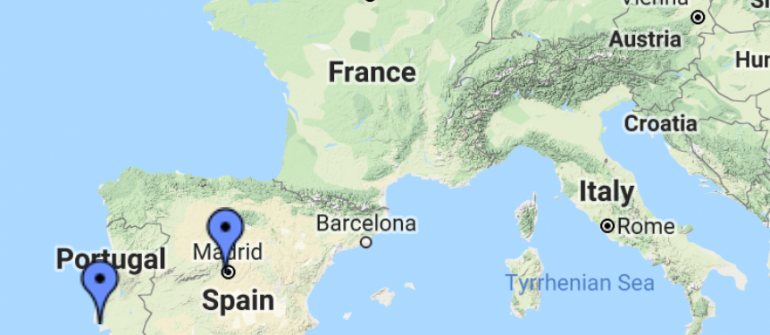
Spain and Portugal are better placed than Italy for transaction to post-QE, says Moody’s

The governments of Italy (Baa3, stable), Spain (Baa1, stable) and Portugal (Baa3, stable) will need to continue to diversify their funding sources to meet their still very elevated gross borrowing requirements when the European Central Bank (ECB) ends new purchases of euro area sovereign debt at the end of the year, Moody’s Investors Service said in a new report.

Untitled Governments of Italy, Spain and Portugal; Spain, Portugal better placed than Italy for transition to post-QE environment”, the report shows that debt-to-GDP ratios close to or above 100%, as well as continued budget deficits, mean that Spain and Italy will face gross borrowing requirements of around 17 and 18% of GDP respectively in 2019-2020, whereas the borrowing requirements of Portugal are somewhat lower at of 13-14% of GDP these years.

«We believe that Spain and Portugal are well placed to continue to manage the transition to a post-QE environment,» said Petter Bryman, a Moody’s Assistant Vice President — Analyst and co-author of the report. «Italy will face more significant challenges, although these are driven by domestic political and economic developments rather than the withdrawal of ECB support.»

Spain’s higher credit quality and robust demand from non-resident investors and Portugal’s increasingly diversified sources of funding leave them in a comparatively good position to continue to negotiate the transition to a post-quantitative easing environment.

Although Moody’s consider the risks of a liquidity crisis for Italy to be low, the agency stresses that the sell-off by non-resident investors from May 2018 means that managing the transition will be more challenging for Italy, despite the recent de-escalation of tensions with the EU over the 2019 budget.

The pace of purchases of euro area government bonds under the ECB’s quantitative easing programme (the Public Sector Purchase Programme — PSPP) has already slowed significantly compared to its peak in 2016 when the ECB purchased the equivalent of between 30 and 40% of the gross issuance of these countries.

The ECB will continue to reinvest the proceeds of maturing bonds for the foreseeable future, although Moody’s estimates that the figure reinvested in 2019 will amount to around 10% of the gross borrowing requirements of Spain and Portugal and 6% of those of Italy in 2019.

In recent years, Italy, Spain and Portugal have successfully extended the maturity of their borrowing, locking in today’s low rates for a considerable period. Government borrowing rates have so far not notably increased as the ECB has reduced the pace of its QE purchases, meaning that the final phase-out of new PSPP purchases at the end of this year in itself is unlikely to lead to an immediate rise in borrowing rates for the three countries.

Elevated gross borrowing requirements can impact Moody’s assessment of sovereign credit quality in two ways. Firstly, if they lead to more elevated government borrowing costs, this can impact Moody’s assessment of a government’s fiscal strength.

Secondly, the risk that the government will not be able to raise the necessary funding to meet its obligations forms part of the assessment of a sovereign’s susceptibility to event risk.

Original Story: Moody’s
Photo: Google Maps
Edition: Prime Yield

Spain’s Bankia sells €3bn NPA portfolio to Lone Star

Spanish state owner lender Bankia has agreed the sale of €3bn of bad loans and repossessed property to private US equity firm Lone Star. The portfolio includes foreclosed real estate assets with a gross book value of approximately €1.65bn, as well as €1.42 bn in non-performing loans (NPL).

Bankia will keep a 20% ownership stake in the company formed to own, manage and sell the foreclosed real estate, while Lone Star will own 100% of the bad loan portfolio.

Spanish lenders have been making a determined effort to clean up their balance sheets since Spain’s decade-long property bubble burst in 2008. Last year, Spain’s banks led Europe with €50.8bn of the continent’s €104.4bn in distressed real estate asset sales, according to the investment bank Evercore. Spain has kept that lead over the first nine months of 2018, with €33.3bn of Europe’s €77.1bn total.

Bankia has had an especially fraught role in the banking crisis that followed the bursting of the property bubble. The lender was formed from the merger of seven regional savings banks in 2010 and held an initial public offering in 2011. But a year later Bankia revealed a vast capital shortfall that required nationalisation and a bailout of more than €20bn.

Now, the Bank stated the sale of the real estate and loan portfolios to Lone Star, combined with other reductions in non-performing loans and foreclosed assets expected for 2018, will reduce non-performing assets it holds by a gross book value of more than €6bn. The lender said the deal is expected to close in the second quarter of 2019 and will increase its fully loaded common equity tier one ratio by 12 basis points.The bank set up the goal to sell €8.8bn in bad loans by 2020.

Original Story: Financial Times | Ian Mount
Photo: Bankia
Edition:Prime Yield

Italian NPL servicer doBank expands European reach with Altamira acquisition

ItalianNPL servicing specialist doBank announced a deal to buy 85% of Altamira Asset Management to push in to other potentially lucrative southern European markets, adding €55bn in assets undermanagement to its existing €140bn.

doBank said it is attracted by the market size and complexity of NPLs in southern Europe, identifying the region as its number one priority in terms of potential merger and acquisition activity.

Original Story: Global Capital | Asad Ali
Photo: Altamira Asset Management (LinkedIn)
Edition:Prime Yield

Greek economy and banks committed to ambitious NPL reduction by 2021

Hellenic Bank Association is ready to agree with the government on a new framework to protect first home that will not create any side-effects, Nikos Karamouzis, president of the association announced on Monday, according to ANA.

Speaking to reporters, Karamouzis admitted that non-performing loans are a big challenge for the society, the economy and banks have committed to an ambitious programme of NPL reduction by 2021. He added that home protection should cover lower incomes that will be able to meet their obligations with the support of the state and pointed out that an existing legislation has frozen borrowers’ obligations worth 18 billion euros.

Original Story: Tornos News
Photo:

Spanish banks reduce €114 billion in NPL in 5 years

Spanish Banks have reduced over €114 billion in Non-Performing Loans (NPL) since the peak of December 2013, reflecting a decrease of 60.2% in the NPL amount, says the November’s Financial Stability Report released by the Central Bank of Spain.

The monetary authoroty chaired by Pablo Hernandez de Cos considers that the positive evolution of the Economy over the last year, associated with the active management of distressed assets by financial entities and the supervision’s pressure are the causes of such a positive improvement.

Over the last 12 months alone, the amount of NPL has fallen €24,7 billion, with the stock hitting €74,8 billion as of June 2018. The most recent sales of NPL portfolios have involved Banks such as Sabadell, Caixa Bank, BBVA or Santander.

Original Story: Europa Press
Photo: Banco de España
Translation and Edition: Prime Yield

NPL worth € 780 billion hang over the European economy

Even though banks are maintaining efforts to clean up their balance sheets, a stockpile of nearly €780bn worth of non-performing loans (NPLs) still weighs on the European economy, according to the European Banking Authority (EBA).

The figure has fallen significantly over the past three years, partly thanks to regulators. But much credit should go to international distressed credit managers. They have made significant efforts to rid European banks of these bad assets and reward their backers with high returns. The European NPL market is up-and-running, and the ways in which yield-starved pension funds can get involved are multiplying.

Once a source of apprehension for investors, owing to their impact on the banking system, NPLs today are an attractive investment opportunity in the South European countries. The European bank bail-in regime, introduced in 2015, was also instrumental in this market’s development. It means, among other things, that banks have to take losses on NPLs before they can access public money to avoid bankruptcy. Indeed, a bank’s decision to write down or write off the value of a portfolio of loans is the starting point of any NPL transaction.

In theory, the process is simple. When banks are ready to dispose of a portfolio of NPLs, they negotiate with potential buyers. Once the deal goes through, the buyer of the NPLs employs a credit-servicing business to realise the value of the loans. The spread between the ask and bid price represents the return for the buyer. The buyer, however, assumes several kinds of risks.

Francisco Milone, partner and head of real estate for Europe at alternative manager Värde Partners, explains: «There’s a risk to the value of the assets that were used as loan collateral, which investors come to own once they enforce the loan. Then there is a legal risk, because you are betting on your ability to convert a loan into an assets, and you are making an assumption on how long it’s going to take you to go from being a creditor to actually owning the collateral. These two risks are tied to your servicing ability». “Finally, there is financing risk because in the majority of these transactions there is leverage involved,” he says.

For these reasons, NPL expertise lies firmly in the hands of alternative managers or funds with credit-servicing capacity and strong familiarity with local markets. In fact, most significant players in the market have partnered with or acquired a local credit-servicing business.  Värde is a good example, as Tim Mooney, its global head of real estate, says: «We have purchased or partnered with specialised servicers in these markets. If you don’t have that specialist skill set, you can’t compete, because you can’t really bear the risks associated with investing in these assets or really understand how to price them»

The difference between NPLs and other alternative credit investment types, such as direct lending, is that with the latter there is potentially more certainty about the evolution of these loans. This is because the capacity of the borrower to repay the loan has been tested, and plenty of data exists on the collateral.

Distressed credit funds are increasingly turning their attention towards UTP assets, according to Marco D’Arrò, founder and managing partners of Real Asset Partners, a London-based advisory business in the alternative assets sector. Banks often offer UTP portfolios following the disposal of NPLs, and existing buyers are often at the front of the line. So while the stock of NPLs is falling the opportunities are growing.

Original Story: IPE  |  Carlo Svaluto Moreolo
Edition: Prime-Yield

ECB will give euro zone banks extra time to solve their soured loan problem

European Central Bank supervisors will give euro zone banks extra time to set cash aside against their bad loans if their pile of soured debt is particularly high.
Last July, the ECB announced long-delayed guidelines aimed at bringing down a 721 billion euro pile of unpaid debt, mostly inherited from the 2008-12 economic crisis and concentrated in Greece, Cyprus, Portugal and Italy.
The guidelines were the result of a compromise among supervisors after an earlier proposal to set the same timeframe for all banks had met with resistance from bankers, lawmakers and even within the ECB itself, as reported by Reuters last month.
Under the new rules, the ECB’s Single Supervisory Mechanism (SSM) will set «bank-specific supervisory expectations» for the provision of non-performing loans (NPLs), while using benchmarks to ensure consistency.
«The bank-specific supervisory expectations are based on a benchmarking of comparable banks and guided by individual banks’ current NPL ratio and main financial features,» the ECB said.
Its aim «over the medium term» is to achieve the same coverage for old non-performing loans as is the case with new ones, for which banks have to provide in full.
No further detail was given.

Original Story: Reuters | Francesco Canepa, Balazs Koranyi
Photo: European Central Bank
Edition:Prime Yield

EU NPL initiatives spell confusion for banks

The European Central Bank (ECB) announced its own measures to prevent Europe’s banks from becoming embroiled in another non-perfoming loans (NPL) crisis, following the mid-March announcement of the European Commission (EC) of a plan to achieve the same goal, although by different means.

According to Euromoney, «these moves are part of an effort to appease some jurisdictions, most notably Germany, hesitating to agree to a pan-European depository insurance scheme (EDIS). The reluctance stems from the higher perceived risks in banking markets such as Greece, Cyprus and Italy, where the NPL problem has been most acute and progress has been relatively slow».

The EC’s proposal provides hope that full banking union could be completed by June this year, says EC vice-president Valdis Dombrovskis. EDIS is the final piece of that plan. The EC proposal seeks to introduce a minimum coverage ratio for NPLs through an amendment to the Capital Requirements Regulation, meaning that it will be binding for all banks in the Union. Loans originated after March 1 this year will be subject to a timeline of increasing provisions. Secured loans would need a coverage ratio of 5% in year one, increasing to 100% by year eight. Unsecured loans would need 35% coverage in year one; 100% by year two. Banks would do this either by deducting from their capital or writing them off via profit and loss provisions.

The ECB’s guidance, on the other hand, is non-binding and will be set on a case-by-case basis. It only applies to loans that become delinquent after April 1, regardless of origination date and it differs in its timeline for secured loans, which would need to be fully provisioned by year seven. Its incremental step ups are also different to the EC’s, with secured loans needing 40% provisioning after three years of being classified as non-performing.

The ECB noted that if it deems Pillar 1 requirements as insufficient for any given bank, it may implement Pillar 2 requirements.

How the two proposals (if the Commission’s is adopted) would interact is unclear.

Original Story: Euromoney (Graham Bippert)
Photograph: Depositphotos
Edition: Prime Yield

Portuguese NPL is still under the European Commission radar

For Valdis Dombrovckis, the European Comission (EU) Vice-President, the volumes of Non-Performing Loans (NPLs) in Portugal are a cause of concern. During an audition in the Portuguese National Assembly last Friday, the EU responsible showed his concern about the last data released by the European Central Bank which point to the NPL downsizing in Portugal still far from the European average. The NPL ratio in the Portuguese market fell from 17.9% in June 2016 to 15.5% in June 2017, in a correspondent decrease of about € 8 billion.

Speaking to the Portuguese Deputies, Dombrovckis warned that the Brussels sees «clear progress but the Portuguese NPL ratio is still well above the European average. That is why there is still work to be done in this area, given that the banking sector continues to be in risk».

According to the EU Commissioner, «during the last three years the NPL was reduced by 1/3 within the European Union, corresponding to about € 300 billion, and some of the countries that had high rates of NPL have substantially lowered that risk, making that the UE ratio stands now on the 4.4%».

Original Story: TSF Radio
Photograph: EPA/Stephanie Lecocq
Translation and Edition: Prime Yield

Banking Union: First Progress Report on the tackling of non-performing loans to support the risk-reduction agenda

The European Commission has welcomed the headway made in tackling non-performing loans (NPLs) in the EU as part of ongoing work at the national and EU level to reduce remaining risks in parts of the European banking sector.

In its First Progress Report since the Finance Ministers agreed an Action Plan on reducing non-performing loans (NPLs), the Commission highlights the further improvement in NPL ratios and forthcoming measures to bring NPL stocks down further.

Reducing NPLs is important for the smooth functioning of the Banking Union and the Capital Markets Union, and for a stable and integrated financial system in the EU. Addressing high stocks of NPLs and preventing their possible future accumulation is essential to strengthen and cement economic growth in Europe. Households and companies depend on a strong and crisis-proof financial sector to get financing. While individual banks and Member States are in the driving seat when it comes to tackling their stocks of NPLs, there is a clear EU dimension given the potential spill-over effects to the EU economy as a whole.

Valdis Dombrovskis, Vice-President for Financial Stability, Financial Services and Capital Markets Union said: “Getting the level of NPLs down is essential to reducing risks in the banking sector and completing the Banking Union. Concerted efforts by banks, supervisors, Member States and Commission have already borne fruits. But we need to forge ahead to further bring down NPL levels. We want banks in all EU countries to regain their full capacity to lend to companies and households while preventing build-up of new bad loans.”

Key findings
Today’s First Progress Report, which takes the form of a Communication and an accompanying Staff Working Document, highlights recent developments of NPLs both in the EU as a whole and within individual Member States. It shows that the positive trend of falling NPL ratios and growing coverage ratios has solidified and continued into the second half of 2017.

NPL ratios have been falling in nearly all Member States, although the situation differs significantly across Member States. The overall NPL ratio in the EU declined to 4.6% (Q2 2017), down by roughly one percentage point year-on-year, and by a third since Q4 2014.

The data demonstrates that risk reduction is taking hold in the European banking system, and will support progress towards completing Banking Union, which should occur by risk reduction and risk sharing in parallel.

The report also shows that the EU is on track with implementing the Council’s Action Plan.

In spring, the Commission will propose a comprehensive package of measures to reduce the level of existing NPLs and to prevent the build-up of NPLs in the future. The package will focus on four areas: (i) supervisory actions, (ii) reform of restructuring, insolvency and debt recovery frameworks, (iii) development of secondary markets for distressed assets, and (iv) fostering restructuring of the banking system. Action in these areas should be at national level and at Union level where appropriate.

The Commission also calls on Member States and the European Parliament to rapidly agree on the Commission’s proposal on business insolvency. Proposed in November 2016, this measure would help companies in financial difficulty to restructure early on so as to prevent bankruptcy, leading to more efficient insolvency procedures in the EU.

Source: European Commission
Edition: Prime Yield

Top