NPL&REO News

Spain’s NPL ratio at its lowest since 2008

Spanish banks are keeping the nonperforming loans (NPL) ratio of their loan portfolio stable and are facing the first quarter of the year with a positive outlook. Specifically, the NPL ratio for loans granted by banks ended 2021 at 4.29%. The NPL ratio has not been at such a low level since the end of 2008, when it ended at 3.37%. On a monthly basis, this is the lowest NPL ratio since March 2009, when it stood at 4.26%.

According to data published by the Bank of Spain, the outstanding loan portfolio at the end of December totalled 1,223 trillion euros, as total credit in the sector fell by 0.06%, slightly down from 1,227 trillion the previous month, and the total volume of doubtful loans fell by 4.77% to 52,531 million euros, some 60 million less. Compared with the end of 2020, the NPL ratio fell from 4.51% at that time to 4.29% in December 2021 and the balance of NPL fell by more than 2.6 billion euros.

The NPL ratio of banks, savings banks and cooperatives fell in December, from 4.22% in November to 4.21% at the end of 2021, also its lowest level since March 2009. The December rate was unchanged from a month earlier, with a 0.27% decline in the sector’s total lending and a 0.11% drop in the balance of non-performing loans in the last month of the year. This fall in deposit institutions’ NPL occurred despite the fact that the loan portfolio fell slightly, to 1.173 trillion, thanks to the fact that the balance of defaults did so to a greater extent, to 49,361 million.

Meanwhile, the NPL ratio of financial credit institutions stood at 6.89% at the end of 2021, its highest level since August 2020, with NPLs at 2.948 billion, up from 2.737 billion in November, and a loan portfolio that grew to 42.783 billion, up 38 basis points on the year and 33 basis points from the previous month.

With regard to the provisions of credit institutions – the so-called capital buffer with which institutions face possible impairment or insolvency – these broke in December with three consecutive months of decline and rose to 38,504 million at the close of the 2021 financial year, a decrease of 1,339 million (-3.36%) compared with a year earlier, but an increase of 227 million (+0.59%) compared with November. Provisions for deposit institutions as a whole stood at 36,083 million in December, down 1,214 million in the year (-3.25%) but up 250 million in the month (+0.7%).

The figures offered by the Bank of Spain include the methodological change in the classification of Financial Credit Establishments (EFC), which since January 2014 are no longer considered within the category of credit institutions. Excluding the change, the NPL ratio would stand at 4.4%, since the credit balance was 1.191 trillion euros in December, excluding the credit of the EFCs.

Original Story: La Razon |Javier de Antonio
Photo: Photo by Victor Iglesias from FreeImages.com
Translation & Edition: Prime Yield

Credit granting grew 9.9% in January

The annual growth rate of total credit extended to the domestic economy stood at 9.9% in January 2022, compared with 10.2% in the previous month, the Bank of Greece said.

It also said the annual growth rate of total deposits stood at 8.1%, compared with 8% in the previous month, and deposits placed by the private sector decreased by €2.232 billion in January 2022, compared with an increase of €4.26 billion in the previous month.

The central bank reported that the monthly net flow of total credit was positive by €1.52 billion last month, compared with a negative net flow of €1.5 billion in the previous month. In January, the monthly net flow of credit to the general government was positive by €2.8 billion, compared with a negative net flow of €3.416 billion in the previous month; the annual growth rate decreased to 32.7% from 33.4% in the previous month.

The annual growth rate of credit to the private sector decreased to 0.9% from 1.4% in the previous month.

The monthly net flow of credit was negative by €1.3 billion, compared with a positive net flow of €1.92 million in the previous month.

Original Story: Ekathimerini | Newsroom 
Photo: Photo by Svilen Milev in FreeImages.com
Edition: Prime Yield

New consumer credit increases 11.5% in 2021, but still bellow pre-pandemic figures

New consumer credit operations increased by 11.5% in 2021 compared to the values recorded in 2020. According to data released the Bank of Portugal (BdP), new credit granted last year reached €6.5 billion, which compares with €5.8 billion financed the previous year. 

Despite the recovery, the amounts are still 13.6% below the operations carried out in 2019, before the pandemic, when the amount reached €7.6 billion, a record breaking year.

As for December’s figures, these reveal a drop of 6.4% compared to the previous month, in which the €600 million threshold had been exceeded for the first time since February 2020. In the last month of the year, 591.3 million euros were granted to consumers. The amount represents an increase of 24% compared to the same month in the previous year. 

Personal credit represents the biggest slice of the cake. 269.6 million euros were lent for this purpose, equivalent to 45.5% of the total.

This portion includes credit for education, health, renewable energy and equipment leasing, which totalled €10.3 million, up 47.1% on December 2020, and down 19.1% compared to November. 

It also includes other personal loans (no specific purpose, home, consolidated and other purposes), which totalled €259.3 million, equivalent to a year-on-year increase of 45% and a monthly drop of 9%.

In total, 38,920 new personal loans were granted, down 13% on November. 

New car loans totalled €226 million, equivalent to 15,001 new operations, up 0.7% on November. 

In turn, credit cards, credit lines, bank current accounts and overdraft facilities reached €95 million of financing. 68,415 new operations were signed, down 14.6% on the previous month.

Original Story: Jornal de Negócios | Ana Sanlez
Photo: Photo by Ricardo Gurgel from FreeImages.com
Translation and Edition: Prime Yield

Sareb chooses Blackstone and Hipoges to manage its €25 billion portfolio

Radical change in Sareb’s partners. Spain’s Sociedad de Gestión de Activos Procedentes de la Reestructuración Bancaria (SAREB) has chosen KKR (through its Spanish company Hipoges) and the Blackstone fund (through its asset managers Aliseda/Anticipa) as the new servicers that will manage its €25.3 billion mega-portfolio of real estate assets and loans.

In this way, the bad bank leaves out its traditional partners after calling a tender with which it sought to save costs. Haya (Cerberus fund), Altamira (doValue) and Solvia (Intrum) have lost this mega-contract. In addition, Servihabitat (Lone Star) had already dropped out of the first part of the tender by submitting the most expensive bid.

In the coming weeks, Sareb will finalise the portfolios to be managed by each of the two winners. As of 1 July, they will take over from the outgoing managers. The portfolios comprise 13,300 million in unpaid developer loans and 12,000 million in residential real estate, land and tertiary assets, all of which are toxic assets from the banks during the brick crisis.

On the decision to choose the new servicers, the proprietary directors who represent the financial institutions on the board of directors have not been involved in the voting, according to sources close to the process, and have left the approval in the hands of the chairman Javier García del Río, the independent directors and those of the FROB (dependent on the Ministry of Economy).

The main objective in calling the tender is to reduce the annual bill it pays to the servicers for the management of its portfolio, which has an annual cost of around 160 million. The entity calculates that with the proposals from Hipoges and Aliseda/Anticipa it saves around 20% compared to the contracts signed in 2014 and 10% compared to the one signed with Haya in 2019.

The financial institution has decided to reduce the number of fund managers to two in order to, in exchange for reducing the margins paid, give a greater volume of business to the winners.

The contenders in this tender had to first submit an economic offer, after which Sareb rejected Servihabitat, and a technical offer. The institution chaired by Del Río considers that Hipoges has enormous professional capacity, with the greatest diversification of clients in the country. Of Anticipa/Aliseda (Blackstone companies that have presented themselves jointly), it values their robust capacity to manage large portfolios. “Both have first-class technological platforms to provide an optimal service to Sareb”, according to Sareb.

It is now a complicated process for the losers of the tender, since, given the size of the portfolio under management, Sareb is one of the largest clients in terms of volume for all of them. The project has been supervised by an independent auditor, Mazars, which has validated the integrity and good execution of the process, according to Sareb.

A closing phase is now underway with the two selected bidders. In the event of any setback in the final negotiation, Sareb’s board could decide to move forward with the next candidates in the order of scoring, as all bids have been considered valid.

The bad bank also has other partners for different tasks. In the case of urban development, it has Servihabitat, through its subsidiary Serviland, as manager. For the completion of stalled works, it partnered with Domo, and in the case of residential development, it launched the developer Árqura, managed by the real estate company Aelca (of the Värde Partners fund).

“We are very pleased to have been chosen by Sareb as one of the companies that will manage its portfolio of more than 25 billion euros of real estate assets and loans. It is a great challenge for Aliseda and Anticipa”, say these Blackstone companies, whose CEO is Eduard Mendiluce.

Original Story: Cinco Dias |Alfonso Ruiz
Photo: Sareb website
Translation & Edition: Prime Yield

Greek banks speed up the sale of large real estate portfolios

Large property portfolios, with a total number of more than 3,000 assets and valued at more than €1.5 billion, are about to change hands through deals in the local market, driven by the aim of banks to rid their financial figures of their burden and to boost revenues.

They concern properties lenders have obtained by way of auctions in the last couple of years and whose sale they are now considering, either directly to interested investors or through their real estate management subsidiaries.

In the next few weeks Alpha Bank will choose its preferred investor for the sale of a property portfolio worth over €500 million, combined with the transfer of its Alpha Astika Akinita subsidiary. This is the so-called “Project Skyline,” which has attracted four suitors: Prodea Investments with parent company Invel, the Dimand Real Estate-HIG consortium, and investment funds Brook Lane Capital and Davidson Kempner.

Their interest mainly regard the assets to be transferred to Alpha Astika Akinita, which the bank will concede and hold on to a minority stake in. They include some 50 top-quality properties valued at about €280 million, such as the landmark Alpha building on Aiolou Street in Athens.

The investor to be chosen will control both the majority and the management of Alpha Astika Akinita, introducing a business plan to be agreed on in the context of the tender.

Piraeus Bank’s “Project Terra” is even greater in value: The process that started last fall has just entered its second stage, pertaining to the transfer of approximately 2,300 properties with a total value in excess of €800 million, the biggest realty portfolio to change hands in Greece. The package incorporates 125 assets that Piraeus Bank itself uses and have a combined value of €307 million.

National Bank is also planning to sell a package of properties valued close to €100 million over the next few months. The market expects this portfolio to concern mainly residential and possibly some commercial assets, although no final decision on the portfolio has been made yet.

Original Story: Ekathimerini | Nikos Roussanoglou  
Photo: Site Alpha Bank
Edition: Prime Yield

Housing loans’ stock hit €96.6 billion, hitting a 5 year high

The stock of housing loans totalled €96.9 billion last December, up 1.99% compared to the same month of 2020 and hitting a new maximum since at least 2016, according to Bank of Portugal data.

According to the central Bank latest data, the total amount borrowed on housing loans (€96.9 billion) in December means 1.99% more compared to December 2020 and 0.37% compared to last November.

This is still the highest `stock’ value of home loans since at least December 2016.

Already the ratio of overdue loans on housing was 0.5% in December (the same as November and down from 0.6% in December 2020).

In consumer loans the amount lent in December was €19.2 billion, up 0.23% compared to December 2020 and 0.17% compared to November.

According to the Bank of Portugal, “the pace of growth in consumer loans continues to lag behind the years prior to the pandemic”.

In loans for other purposes were borrowed 8.9 billion euros in the last month of 2021, up 36% from December 2020 and 0.33% more than in November.

Regarding the non-performing loans (NPL), the NPL ratio for Consumer credit and other purposes was 4.5% in December (down from 6.3% in December 2020 and 4.6% in November).

As for companies, 75.7 billion euros in credit were granted in December, in this case up 2.3% year-on-year but down 0.48% on November. In this case, 2.3% of the total amount of loans was in default (down from 3.3% in December 2020).

“This was the lowest value recorded since 2008, extending the downward trend observed since late 2016,” says the Bank of Portugal, adding that the reduction in the NPL ratio is more significant for companies in the construction and real estate activities sectors (it went from 10.3% and 4.8%, respectively, in December 2020, to 7.5% and 2.4% in December 2021).

As for deposits, last December, individuals had deposited €172.9 billion, up 6.8% compared to December 2020. Household deposits are at their highest since at least December 2016.

The central bank highlights demand deposits, as, “at the end of 2021, they represented 48% of the total deposits of private individuals”.

The amount of corporate deposits in banks in Portugal, meanwhile, grew by 17.0% compared to 2020, to €61.8 billion.

“It is necessary to go back to the end of 2010 to find growth rates similar to those seen in the two years of the pandemic,” says the Bank of Portugal.

Original Story: RTP| LUSA 
Photo:
Photo by Svilen Milev in FreeImages
Translation & Edition:
Prime Yield

Funds are now the main drivers of property auctions in Greece

Funds that have acquired Greek bond portfolios are now the main drivers of property auctions, taking over from banks, with over 70% of assets scheduled to go under the hammer within 2022 via the e-auction platform having various funds as their sellers.

Data from the online platform of notaries reveal that the landscape has change concerning the sellers at auctions in favour of the special-purpose vehicles with various exotic names (Cairo, Galaxy, Sunrise, Vega, Pillar, Mexico, Orion etc.), pointing to securitizations and sales of bad loans by banks in recent years.

Data compiled by Kathimerini, based on the processing by the iMEDd Lab, show that funds are behind 70.7% of the online property auctions planned for 2022 in Greece. There are over 9,900 auctions listed on the platform for the entire 2022, and the list is growing every week.

Until recently, banks were behind up to 84% of auctions, but their share has now gone down to just 22.2% for this year. Another 7%, approximately, concerns private owners or other corporations.

The dominance of funds also changes the policy in the domain of auctions, which will constitute a vital instrument for “Hercules” to meet its targets. This is the state mechanism that has guaranteed a significant share of the revenues from the securitizations that banks have implemented.

Kathimerini understands that the business plans funds have submitted to the state for it to supply state collateral for the securitizations provides for 40%-50% of the takings of funds to come from real estate asset liquidation. That makes auctions a priority for the new owners of the bad loans in order for the business plans to be executed and the state collateral activation to be averted.

Contrary to banks’ policy in recent years, with lenders pressuring borrowers by buying back 80%-90% of the assets the banks themselves had put up for auction, the funds seek the genuine resale of those properties to third parties.The funds only buy back certain properties that are particularly popular for commercial purposes and can secure even higher prices later on. However, their main strategy is far from buying back the assets they auction, as they prefer to collect as much money as possible from the first stage and achieve their targets.

Original Story: Ekathimerini |EvgeniaTzortzi 
Photo: Photo by Jason Morrison in FreeImages
Edition: Prime Yield

Mortgage granting hits a 12 year high

The number of housing loans  signed in Spain increased by 24.1% last November.

With the end of the sixth wave of the coronavirus pandemic finally in sight, the global economy is strengthening day by day and nowhere is this more evident than in the property market in Spain, which has been improving in leaps and bounds. 

The number of mortgages approved in Spain increased by 24.1% year-on-year last November, making this the strongest month since 2010. A total of 36,220 home loans were signed, according to latest data released by the National Institute of Statistics (INE).

These figures reflect the impressive rebound of the Spanish real estate sector, which closed out last year with some 400,000 loans, making 2021 “the best mortgage year of the last decade” according to the experts. 

November’s figures follow nine months of consecutive increases. The average amount of home mortgages sought jumped by a substantial 1.5% to 138,189 euros, while the capital granted also grew by 26% to 5,005 million euros. The majority of the loans were granted in Andalucía (7,583), Catalonia (6,222) and the Community of Madrid (5,682).

Original Story: : Spanish News Today| News 
Photo: Big Stock Photo
Edition: Prime Yield

Montepio closes the sale of a €253 million NPL portfolio

The deal was closed with LX Investment Partners III, BTL Ireland Acquisitions II Designated Activity Company and BTLP Acquisitions.

Montepio bank announced on 31 December the sale of a non-performing loans (NPL) portfolio valued at 253 million euros, including 10,318 on-balance-sheet and off-balance-sheet contracts.

The deal was made “after a competitive sale process”, through the signing of «a public deed of sale of a portfolio of non-performing loans, in the form of direct sale to the entities LX Investments Partners III, BTL Ireland Acquisitions II Designated Activity Company and BTLP Acquisitions I Unipessoal, Lda, companies validly incorporated and governed by Portuguese law and headquartered in Portugal”, can be read in the note sent by the bank to the CMVM.

According to Montepio, “after the total derecognition of the credits, the estimated impact of this sale on Banco Montepio’s results will be immaterial, representing, however, an important reduction in non-productive exposures, contributing to a decrease of 1 percentage point in the NPE ratio”.

For now, the transaction “contributed to an increase of 3 base points in Banco Montepio’s Total Capital ratio, consolidating the strategy launched by the Board of Directors of continuous reduction of non-productive assets and reinforcement of capital ratios”, it can also be read.

Original Story: Iberian Property | Ana Tavares
Photo: Banco Montepio
Edition: Prime Yield

Green light for Spain’s State to increase its stake in Sareb

A new law allowing the State to own more than 50% of the divestment company may mean more council houses on private estates

After the financial crash in 2008, Spain founded the private company Sareb in 2012 to manage and liquidate bad loans and to buy up and dispose of the banks’ toxic assets, including risky stocks and real estate. This entity is currently 54.1% owned by private banks and insurance companies, and 45.9% owned by the public Fund for the Orderly Restructuring of the Banking Sector(FROB). Now, though, Spain has passed a law that will allow the State to hold a stake of more than 50% in Sareb in order to take control of the company.

Basically, the new law opens the door to allow the government to increase its stake in Sareb at the cost of the rest of the shareholders, including most of the banks, thereby reducing their power and weight in the company’s capital. This buy out may even be done for a symbolic price of just a few euros given that the institutions have been making provisions for the deterioration of their investment.

Currently, the FROB is the main shareholder with 45.9% of Sareb, followed by Banco Santander (22.2%), CaixaBank (12,24%), Sabadell (6,61%), Kutxabank (2,53%), Ibercaja Banco (1.43%) and Bankinter (1.37%), among others.

Although the State will take control of Sareb, the company will still have a specific corporate regime so that it can maintain “the necessary agility to carry out its divestment function”, although, according to a press release from the Ministry of Economic Affairs, the regime of commercial and senior management contracts will apply. 

As an alternative to selling off empty homes to private buyers, Sareb has begun diverting more of its properties to subsidised social and council housing as part of its corporate social responsibility strategy. The government now wants to strengthen this commitment, “in order to maximise the social utility of these properties and the positive impact of the company on society”. In this way, the new government takeover of a majority share in Sareb may see a larger proportion of its seized properties being repurposed for cheap council houses and flats for those unable to afford a home in Spain.

Original Story: Spanish News Today| News 
Photo: Sareb Linked In
Edition: Prime Yield

Greece’s systemic banks set to hit NPL reduction goal this year

All four Greek systemic banks will have attained the goal for the reduction of their nonperforming loans (NPL) below 10% by the end of this year: Eurobank already reached it at the end of 2021, Alpha Bank and National Bank should make it by the end of the year’s first half and Piraeus will achieve it by year-end.

Toward the end of 2021 banks accelerated their efforts to reduce their NPL pile, summarily executing transactions worth a total of €25 billion through securitizations and sales of portfolios, though they still have quite a way to go before they hit the European average.

Even if the business plans for the full streamlining of banks’ fundamentals are adhered to perfectly, the average level of the NPL index in 2022 for the four main lenders will be three times the European average, which according to the latest European Banking Authority (EBA) data for the first half of 2021 amounts to 2.2% of all loans.

Greek lenders also have a significant share of their serviced loans portfolio (estimated at €8-9 billion) relying on state support programs (Gefyra 1 and 2); therefore, according to the supervisory authorities, the impact of the pandemic is not yet reflected in their fundamentals.

Banks estimate that the conditions set for the concession of state collateral ensure that those loans continue to have serviced status in the medium term. The prevailing sense is that these loans will not leave behind them the effects seen in the previous crisis, in the 2010s; this is because the commitments corporations and households have made, as provided for by the Gefyra 1 and 2 programs, force them to remain consistent in their obligations to service their debts for at least one year after the expiry of the subsidy they receive from the state. Otherwise, they will have to return to the state the subsidy they have benefited from and lose the advantage they enjoy from these programs.Nevertheless, given the persistence of the coronavirus pandemic, the possibility of at least a part of those loans turning bad cannot be ruled out, though that would constitute a step backward for banks. This risk could force them to make additional provisions within 2022, depending on the course of the pandemic and the economy, undermining the effort to keep the NPL rate in the single digits and to support earnings.

Original Story: Ekathimerini |EvgeniaTzortzi 
Photo: Photo by Jonte Remos in FreeImages
Edition: Prime Yield

NPL ratio in Spain falls to a new low since March 2009

The Non-performing loan (NPL) ratio within the Spanish banking sector fell in November to 4.29%, marking a low since March 2009, according to provisional data from the Banco de España.

This downward trend is the result of a decrease in the total volume of bad loans in the bank’s sheets, which has been accompanied by an increase in total credit.

In November, the NPL ratio was 7 basis points (b.p) below the 4.36% recorded in October and 28 b.p. below the 4.57% of a year earlier. The gap is much wider than the peak set in December 2013, when it reached 13.62% of total loans.

Specifically, total credit in the sector increased by 1.03% in November to €1,226 trillion, a figure which, however, was 0.25% down on the previous year. 

The balance of doubtful loans fell by 0.73% in November 2021, to €52.6 bn. This fall was 6.37% compared with the total doubtful loans in the same month of the previous year.

Original Story: Rtve|Europa Press
Photo:
Big Stock Photo
Translation & Edition: Prime Yield

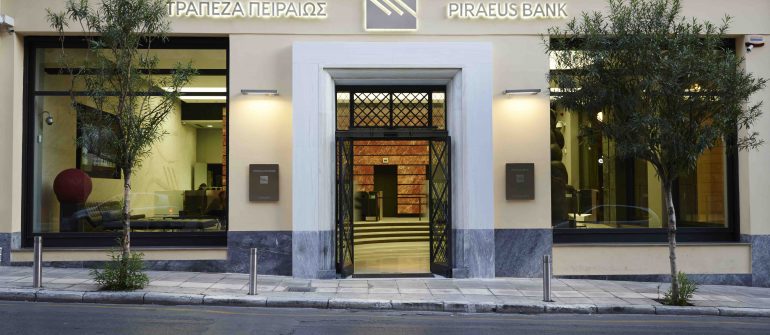
Piraeus Bank sales €400 million project Dory to a David Kempner affiliate

Piraeus Bank announced it had reached a deal to sell a portfolio of nonperforming shipping loans (NPL) to an entity affiliated with Davidson Kempner Capital Management. 

The agreed price will be about 53% of the portfolio’s gross book value of €400 million, the bank said. 

The sale of the portfolio, dubbed project Dory, is subject to approval by the Hellenic Financial Stability Fund, a shareholder in Piraeus Bank, the lender said. 

The transaction will reduce Piraeus Bank’s ratio of non-performing exposures to about 15% from 16% at the end of September 2021 and increase its NPE coverage ratio to about 40% from 39%. 

The sale’s expected capital impact will be around minus 20 basis points versus the bank’s end-September total capital ratio.

Original Story: Ekathimerini |Newsroom 
Photo: Piraeus Bank website
Edition: Prime Yield

Intrum and Serengeti AM acquire NPL from Piraeus Bank

Piraeus Bank has sold a portion of its securitized bad loans (NPL) to Intrum and Serengeti Asset Management as part of efforts to clean up its balance sheet.

The transaction is part of Piraeus Bank’s so-called Sunrise transformation program announced in March and follows the closing of its €7.2-billion Sunrise I securitization.

Piraeus, one of the country’s four largest banks, said it had sold 44% of the mezzanine notes of its Sunrise II securitized bad loans to Intrum and 7% to Serengeti Opportunities Partners.

The Sunrise II portfolio comprises about 47,000 retail and corporate loans with a gross book value of €2.7 billion.

When it announced the deal in early November, Piraeus said the implied valuation of the sale, based on the nominal value of the senior notes and proceeds from the sale of the mezzanine and junior notes, corresponded to 47.4% of the portfolio’s gross book value.

Goldman Sachs Europe and Alantra CPAI acted as arrangers and financial advisers to Piraeus, which aims to achieve a single-digit nonperforming exposure ratio by early 2022.

Piraeus Bank will retain 5% of the mezzanine and junior notes of the Sunrise II securitization in line with relevant regulatory requirements, and all of the senior notes.The bank said the capital impact of the sale represented a 50-basis point boost to its total capital ratio in September.

Original Story: Ekathimerini |Newsroom 
Photo: Piraeus Bank website
Edition:
Prime Yield

Santander launches its own servicer: Yera

Santander has already launched its new real estate ‘servicer’. The entity chaired by Ana Botín has registered the company Yera Servicer Company 2021, which will take over the management of part of the assets from Aliseda, following the agreement reached between Blackstone and the Spanish entity. 

The creation of this company is part of Santander’s internal reorganisation of the entire real estate segment. First, two years ago, it created Deva Servicer, on which this company will depend. The name of Yera is not definitive, nor is its board of directors, which is chaired by Jaime Rodríguez Andrade, together with Carlos Manzano, Juan Babio and Jaime Guasch.

What is definitive is the executive who will lead the project, Enrique Arnoso, a former senior executive of Banco Popular and Pastor who has been in charge of the Aliseda account for the last three years. Arnoso will be in charge of managing assets valued at €5 billion together with the team of 130 professionals that Aliseda is transferring to Yera.

This is a key move in the sector. Santander had not had its own servicer since it sold Altamira to Apollo in 2014. The Spanish entity holds a 15% stake in this platform, now owned by DoValue. It also has a 15% stake in Aktua, the former servicer of Banesto, now owned by Intrum, and 49% of Aliseda, Popular’s platform, in which its partner is Blackstone.

The creation of Yera means Santander is once again investing in this segment, as it did with Deva Capital, a subsidiary that advises large opportunistic funds and buys portfolios of real estate and loans from other banks. Following this agreement, Aliseda continues to focus on the management of the Quasar Project -€30 billion in assets from Popular- and on services to third parties: it is bidding for the management of Sareb’s assets together with four other servicers.

Original Story: Cotizalia| J.Zuloaga and R.Ugalde 
Photo: Santander Facebook
Translation & Edition: Prime Yield

Deva fund buys Novobanco’s NPL portfolio for €52.3 million

The Deva fund has paid €52.3 million to Novobanco for its Harvey Project, a non-performing loans (NPL) portfolio with a gross value of €164 million.

This was one of the main NPL portfolios still owned by the Portuguese bank by the end of 2021, which had been previously put in the market with an initial gross book value close to €640 million.

However, in the final stretch of the year the Portuguese bank decided to recast the portfolio composition, excluding some of the initial credits. 

The transaction was agreed with the Deva fund for €52.3 million – less than a third of the gross book value of the portfolio, which was €164.4 million.

In the statement sent to the Securities and Exchange Commission (CMVM), the financial institution writes that the sale “should have a marginal impact on Novo Banco’s capital position and income statement for 2021”.

Novo Banco assures that the sale contract “represents a reduction of €162.6 million in its stock of NPL.

Negócios understands that with this  operation the bank should reduce its NPL ratio to 5%.

Original Story: Jornal de Negócios | Hugo Neutel
Photo:
Novo Banco website
Translation & Edition:
Prime Yield

Waterwheel Capital Management joins doValue client portfolio

Waterwheel Capital Management has joined doValue’s portfolio of clients through the completion of the €3.2 billion (bn) Project Mexico HAPS securitisation in Greece.

Founded in November 2017, Waterwheel Capital Management is a US based institutional investor focused on targeted investment opportunities, and currently concentrated on Greek assets including the non-performing loan (NPL) market.

As a reminder, in H1 2021, Eurobank has started the HAPS securitisation process for the €3.2bn Mexico Portfolio (already under management by doValue). As part of Project Mexico, Waterwheel Capital Management has acquired a 90% stake in the mezzanine and junior notes related to the securitisation of the portfolio with doValue retaining the related servicing mandate of the Mexico Portfolio.

The completion of the €3.2bn Project Mexico with Eurobank and Waterwheel Capital Management (which follows the completion of the €5.7bn Project Frontier with National Bank of Greece, Bain Capital and Fortress) reinforces doValue leadership as a servicer in the Greek HAPS securitisation market.

Original Story: Market Screener | PR 
Photo: Photo by Sergey Klimkin in FreeImages
Edition: Prime Yield

BBVA securitizes project finance loan portfolio valued at €500 million

Spain’s BBVA has closed its first balance sheet synthetic securitization of a project finance loan portfolio. This a transfer of risk to institutional investors Alecta and PGGM that allows the bank to free up 80% of the capital on a portfolio of project loans that will remain on the bank’s balance sheet.

BBVA has closed a risk sharing transaction with Alecta and PGGM for a project finance loan portfolio worth 500 million euros. This portfolio represents a variety of projects, mainly in Spain and Western Europe, with one third of the portfolio consisting in renewable energy related projects, as that has been a clear focus in BBVA origination activities. The bank retains a risk alignment of minimally 20% for each project in the portfolio.

The transaction also establishes a framework for future collaborations with institutional investors PGGM and Alecta, which rely on BBVA’s origination capabilities to continue investing and provide the bank with capital that will allow it to continue promoting projects that help combat climate change.

BBVA has been actively using credit risk sharing to capitalize their small- and medium-size lending activities, and is now expanding this to its project finance loan book. This is a further step in the sophistication of risk management in its wholesale banking business. 

Original Story: Webwire | PR 
Photo: BBVA website
Edition: Prime Yield

Alpha Bank completes “Project Aurora” securitization

Alpha Bank has completed the securitization of a loan portfolio worth €1.9 billion with Christofferson, Robb & Company (CRC) as lead investor, along with AnaCap Financial Partners and the European Bank for Reconstruction and Development (EBRD).

The “Project Aurora” portfolio concerns performing corporate loans and will relieve the lender’s financial report of provisions of €1.2 billion, Alpha said.

The transaction forms part of Alpha’s announced business plan “Project Tomorrow,” and is expected to contribute some 47 basis points to its Total Capital ratio 1 as of September 30, 2021.

Original Story: Ekathimerini |Newsroom 
Photo: Alpha Bank website
Edition: Prime Yield

Novobanco sells NPL portfolio with a 70% discount

Portugal’s Novobanco completed the sale of the Project Orion, comprising non-performing loans (NPL) and related exposures, to a consortium of funds managed by British company West Invest and Luxembourg-based LX Partners (LXP). 

In a statement sent to the Securities and Exchange Commission (CMVM), the financial institution led by António Ramalho said that this portfolio, which in September 2021 had an outstanding balance of €231.3 million, was sold for a total amount of €64.7 million. That is, with a 70% discount in relation to the gross value.

The Portuguese bank stresses that the completion of this transaction “is expected to have a marginal positive impact on Novobanco’s capital position and in 2021 income statement.”

“Together these agreements represent a €168.1 million reduction of non-performing loans (“NPL”) and are an important milestone for Novobanco, allowing the Bank to pursue its strategy of converging towards EU average,” stresses the bank controlled by the American Lone Star, which this Thursday received 112 million from the Resolution Fund.

Original Story: eCO News | Luís Alexandre
Photo: Novo Banco
Edition: Prime Yield

Top