
NPL&REO News

Whitestar closes purchase of a NPL portfolio to BCP

BCP bank has closed the sale of a NPL portfolio, called “Projeto Webb”, to the consortium Group Arrow/Christofferson, Robb & Company (CRC) confirmed Whitestar Asset Solutions, a company of the Arrow Group specialized in the management of credit portfolios (NPL) and real estate.

This is a more granular portfolio whose initial value was 450 million euros, but which has been adjusted to 270 million euros.

With this transaction, in addition to the purchase of the NPL portfolio from the Novo Banco, named “Carter”, announced in December, Whitestar Asset Solutions now manages over 9 billion euros in assets.

Novo Banco sold in December a portfolio of unproductive assets with a gross book value of 79 million euros for about 37 million. This was a portfolio made up of small secured and unsecured loans, i.e. it includes both collateral and non-collateralised loan contracts.

The “Carter” operation, unlike others over the past two years, does not include assets covered by the Contingent Capitalisation Facility under the Resolution Fund.

In all, in 2020 Whitestar won the management of four portfolios of NPLs (bad loans). After winning the management of two portfolios of NPLs sold by Santander (BST52 and 53), Whitestar confirms that in December, in two competitive processes, Arrow Global’s fund (sole shareholder of the company led in Portugal by João Bugalho) won the tender for the purchase of two portfolios of unproductive assets, in consortium with Christofferson, Robb & Company (CRC). The first portfolio, the Webb portfolio, originated by BCP, has a total of 270 million euros in debt, while Carter, originated from Novo Banco, has 92 million euros in debt.

The market for the sale of problem assets remains active. The Novo Banco, for example, is in the process of selling the “Wilkinson Project” portfolio, worth 200 million. Eco reported that Davidson Kempner, Atena Equity Partners (in consortium with Blantyre), and Bank of America Merrill Lynch moved into the second phase. The market expects the financial institution to launch a new portfolio in the market earlier this year.

BCP has yet to close the sale of the “Ellis” portfolio, having been chosen as the buyer, according to Eco, the management company Davidson Kempner. Initially, the “Ellis Project” had a value of 300 million euros, but with the withdrawal of some credits the value of the portfolio was reduced to about 170 million, Eco also advanced.

Original Story: O Jornal Económico | Maria Teixeira Alves
Photo: Millennium bcp website
Edition/Summary: Prime Yield
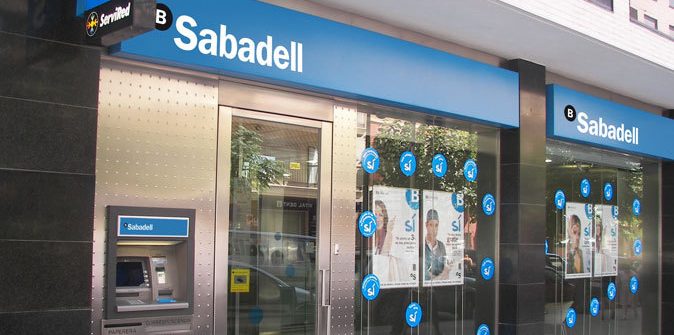

Banco Sabadell sells a portfolio of distressed assets to KKR for €130 million

Banco Sabadell has sold a portfolio of distressed assets from CAM to the US investment firm KKR for around EUR 130 million.

The sale, which was signed a few days ago, relates to the so-called “Aurora project”, with a book value of approximately EUR 500 million, according to sources close to the transaction, which were advised by Deloitte.

Bain Capital has also participated in the final bid for this portfolio, integrated by the Alicante entity’s toxic assets, which Sabadell assumed in 2011 after a bailout of the Deposit Guarantee Fund (FGD).

Nine years later, the bank presided over by Josep Oliu has managed to divest itself of the portfolio, thus concluding the Asset Protection Scheme (EPA) which it received in exchange for keeping the fund.

This sale also allows Sabadell to continue cleaning up its balance sheet, now that the merger negotiations with BBVA have failed and the group of Catalan origin wants to continue on its own and with a new management, led by César González-Bueno, who will take over from Jaume Guardiola as chief executive.

This is the second operation of this type closed by Banco Sabadell this year, after it signed the sale of a portfolio of non-performing loans to the management company Tilden Park for some 65 million euros just a few days ago.

Original Story: EFE/Expansión
Photo: Sabadell Bank site
Translation: Prime Yield

Attica Bank announces the securitization of two NPL portfolios

The Greek bank Attica has announced on late december that, following a resolution of the Board of Directors meeting of 30th November 2020, proceeded to the securitization and transfer of two portfolios of non-performing loans, totalling €712 million.

The bank transferred a portfolio of non-performing corporate loans/credits of a total amount of approx. €340.8 million to a special purpose vehicle (SPV) under the name “Astir NPL Finance 2020-1 Designated Activity Company» based in Ireland. Furthermore, the SPV issued and transferred to the Bank a Class A bond of nominal value of €159,000,000 (Senior Note), a Class B bond of nominal value €1,806,000 million (Mezzanine Note) and a Class C bond (Junior Note) of nominal value of €180,000,000. The bonds derive from the securitization of the above loan portfolio.

Attica also transferred a portfolio of non-performing retail loans/credits of a total amount of approx. €371.2 million to a special purpose vehicle (SPV) under the name “Astir NPL Finance 2020-2 Designated Activity Company» based in Ireland. Furthermore, the SPV issued and transferred to the Bank a Class A bond of nominal value of €190,000,000 (Senior Note), a Class B bond of nominal value €104,921,000 million (Mezzanine Note) and a Class C bond (Junior Note) of nominal value of €76,372,000. The bonds derive from the securitization of the above loan portfolio.

Original Story/source: Aticca Bank
Photo: Attica Bank Linked In
Edition/Summary/Adaptation: Prime Yield

Despite 9-month losses, Novo Banco halved its NPL stock up to September

Portugal’s Novo Banco, which emerged from the ruins of the collapsed Banco Espirito Santo, reported a 49% leap in its net loss for January-September to €853 million following provisions to discontinue its business in Spain.

The bank, 75% owned by Lone Star since October 2017 and 25% by the state-backed Portuguese Resolution Fund, said its results were also hit by provisions for bad loans.

The impairments and provisions for the exit from its retail network in Spain and for higher credit risk totalled around €727 million, the bank said, adding it also took a hit of €187.2 million due to the impact of the COVID-19 pandemic.

Earlier this year, sources told Reuters that Novo Banco was looking to sell its loss-making retail network in Spain, seeking to bolster its balance sheet and prevent further losses. The provisions reflect expected losses on any deal.

The bank has already sold assets in France, Asia and Cape Verde.

Novo Banco’s recurrent net income fell 30% to €98 million, but the bank said the results showed its “value-creation capacity and sustainable profitability”.

Net interest income, a measure of earnings on loans minus deposit costs, increased 9.3% to nearly €373 million.

The lender halved its non-performing loans (NPL) to €2.8 billion in September, after it sold problematic asset portfolios, and cut its NPL ratio to 9.7% from 19.9% a year earlier.

Original Story: Reuters |Sérgio Gonçalves 
Photo: Novo Banco website
Edition: Prime Yield

Spain orders banks to extend state-backed loan scheme for another 6 months

Spain ordered banks to comply with a six-month extension of a state-backed loan scheme to June next year, designed to help companies struggling with the impact of the coronavirus pandemic.

Economy minister Nadia Calvino told bank clients who have no overdue payments can request these loans. Banks should also provide these loans with longer maturities and grace periods if customers ask for them, the minister said.

“These measures are aimed at addressing potential solvency problems that may start arising and prevent viable companies from shutting down,” Calvino said.

Spain has already provided €108 billion in state-guaranteed loans to its companies, she said.

With nearly 1.5 million cases and 41,253 deaths from COVID-19, and an economy that relies heavily on tourism, Spain has been one of the countries in Europe hardest-hit by the pandemic.

The International Monetary Fund has said Spain is the euro zone country with the highest take-up of guaranteed loans.

At a regular weekly meeting, the cabinet also approved an extension until March of restrictions on forced bankruptcies of companies affected by the coronavirus pandemic to avoid the so-called cliff effect from the withdrawal of some support measures next year.

Guarantees on the state-backed credit lines, designed to help companies amid the pandemic-induced economic crisis, were extended to up to eight years from the originally planned five on most loans.

An extra year was added to the grace periods, which allow borrowers to delay payment without being charged late fees, being found in default or having their loans cancelled.

Companies had been given until December to apply for the state-guaranteed funding scheme of €140 billion. The grace period on a significant volume of loans ends in April, and many small businesses feared they would not have been able to cope with their payments that soon. 

Original Story: Reuters | Belén Carreño 
Photo: Caixa Bank website
Edition:Prime Yield

Alpha Bank receives 2 binding bids for the €10.6 billion “Galaxy” portfolio

Alpha Bank, Greece’s fourth largest lender, said it had received two binding bids for the sale of a bad loan portfolio worth about €10.6 billion. The transaction will involve a securitisation and also the sale of the bank’s loan servicing platform Cepal.

The portfolio, known as Galaxy, consists of retail loans worth €7.6 billion plus loans to medium-sized and large corporate clients worth €3 billion. The bank did not disclose further details.

Greek banks have been struggling to reduce a pile of bad loans worth about €60 billion, the legacy of a decade-long financial crisis that shrank the country’s economy by a quarter.

Alpha Bank, which is 11% owned by Greece’s bank rescue fund HFSF, wants to reduce its bad loan ratio to 13% of its total loan book.

It reported profit of €97.5 million euros in the second quarter of the year while its non-performing loans stood at 30.2%.

Original Story: Reuters | Reuters Staff 
Photo: Alpha Bank website
Edition: Prime Yield

Millennium bcp’s NPE fell by €1 billion from a year ago

Portugal’s largest listed bank Millennium bcp reported a 46% drop in its nine-month net profit to €146.3 million, dragged down by higher provisions and impairments in the wake of the coronavirus pandemic.

However, its net interest income (NII), a measure of earnings on loans minus deposit costs, was little changed at €1.15 billion from a year ago, the bank said in a statement.

On a positive note, its core net income – NII plus net fees minus operating costs – grew 1% to €835.2 million.

But loan provisions increased 25% to €374.2 million in January-September 2020 from a year ago, while other provisions and impairments skyrocketed 126% to €176.4 million, the lender said.

“We have significantly reinforced impairments in the context of the pandemic. (We’re) adapting the business to the crisis. We have moved from a growth mode to a balance sheet protection mode,” Chief Executive Miguel Maya told a news conference.

Portuguese authorities in March said bank customers could suspend loan repayments, in a move aimed at relieving pressure on businesses and individuals during the pandemic. The moratorium has been extended until September 2021.

Millennium bcp said it had already granted more than 100,000 such loan repayment holidays.

The bank said its non-performing exposures fell by €1 billion from a year ago to 3.6 € billion in September after it sold various problematic asset portfolios.

Millennium bcp, whose main shareholder is China’s Fosun group, said its fully implemented Tier 1 common equity (CET1) capital ratio stood at 12.4%, comfortably above the required 8.8%.

Original Story: Reuters |Sérgio Gonçalves 
Photo: Millennium bcp website
Edition:Prime Yield

BBVA and Sabadell in talks to create Spain’s second-biggest lender

BBVA and smaller rival Sabadell announced they are in talks to create Spain’s second-biggest domestic lender by assets, the latest move in the accelerating consolidation of the Spanish banking sector.

BBVA/Sabadell merger would mark a significant step in this process, coming after Caixabank agreed in September to buy Bankia for €4.3 billion.

If a BBVA/Sabadell deal goes ahead, the new bank would have nearly €600 billion in assets in Spain and a combined market value, Reuters calculations using Refinitiv data showed.

Taking into account both banks’ international businesses, but deducting the upcoming sale of BBVA’s U.S. division, a merged group would have around €860 billion in total assets, still below Santander’s €1.5 trillion global balance sheet.

Banks across Europe are struggling to cope with record low interest rates, and the economic downturn sparked by the coronavirus pandemic is forcing them to focus on further cost cuts, on a standalone basis or through tie-ups.

Both BBVA and Sabadell said the talks were ongoing and said no decision had been made on whether a transaction would go ahead.

“The entities have initiated a reciprocal due diligence review process as is customary in this type of transactions and have appointed external advisers,” BBVA said in a stock exchange filing.

“It is noted that no decision has been made in relation to the potential merger transaction and that there is no certainty as to whether any such decision will be made or, if that is the case, as to the terms and conditions of a potential transaction.”

Sabadell’s own statement confirmed the talks and said it had initiated a due diligence process and designated external advisers.

Original Story: Reuters | Jesus Aguado 
Photo: BBVA website
Edition: Prime Yield

Q1 2021 will be decisive for the rise of a new generation of bad loans

We will do whatever it takes” for loans in moratorium status not to drop into the irrecoverable category, Intrum Hellas chief executive Giorgos Georgakopoulos has told Kathimerini.

The executive board member of one of the biggest bad-loan managers in Europe used the famous phrase of former European Central Bank chief Mario Draghi to reflect the concern debt management companies are expressing that loans worth €26 billion currently in suspension due to the pandemic do not definitively join the stock of bad loans.

These worries mostly concern the loans that were being properly serviced until April 2020, when the moratorium was put in place. As doValue Chief Executive and President of the Association of Loan and Credit Obligation Management Companies Tasos Panousis says, “the first quarter of 2021 will be a decisive period for the absorption of shocks so that we are not led to a new generation of bad loans.”

Both banks and servicers say they are determined to ease debt repayments for borrowers hurt by the crisis, while after the second lockdown the prospect for fresh moratoriums is on the table of talks with the European regulators.

Original Story: Ekathimerini | Evgenia Tzortzi 
Photo: Photo by Jonte Remos in FreeImages.com
Edition: Prime Yield

Portuguese banks will merge over the next couple of years

According to the CEO of Portuguese State bank Caixa Geral de Depósitos (CGD), Paulo Macedo, Portugal’s banking sector will likely consolidate over the next two years.

That consolidation, which could involve mergers and acquisitions, is likely to be propelled by the financial results of the banks over the coming quarters said Paulo Macedo on a panel ‘What lies in store for the banking sector?’.

“There is a timeline of events. We will have the accounts for 2020, there will be general board meetings in May 2021, and several institutions will have to see what their prospects are in the face of these results and in terms of profitability and own capital,” said the CGD CEO when asked about possible bank mergers.

According to Paulo Macedo, bank consolidation will take place “over the next two years” since “there will be institutions which will have to look at their prospects as a result of their results,” he said without mentioning Banco Montepio which is widely believed to be in a weak position within the sector.

“Caixa, clearly, is not blind to consolidation and it will happen,” said Macedo at the conference ‘The Banking Sector of the Future’ (Banca do Futuro) organised by the newspaper Jornal de Negócios which took place on 27 October with the presence of the CEOs of the main national banks (CGD, BCP, Novo Banco, Santander and BPI).

Despite insisting that there was no acquisition on the horizon for CGD, Paulo Macedo said that CGD was not “in the least indifferent” to an eventual consolidation process.

CGD is currently following a strategic plan agreed with the European Commission which prohibits acquisitions, but that plan ends at the end of the year.

But should there be any mergers and acquisitions, “Caixa is clearly being overtaken by other banks,” he said.

“We’re not hung up on whether we are the first, second or third largest bank (in Portugal) but we do need to have size and scale in order to be a public bank,” he said, meaning that a public bank needed to be big in order to be relevant in the system.

Miguel Maya, CEO of BCP, said that he was “in no doubt” that consolidation would happen, but argued that this would be brought to bear by the influence of European consolidation. The incentives were being created which would lead to “sums of money moving away from Portugal”.

The specific position of Portugal was also favourable for European consolidation said the CEO of Millennium.

“Consolidation is something that will happen, it will be a future trend and the crisis will speed up this consolidation,” he said, giving several examples of situations which had left the Portuguese banking sector at a disadvantage against European competitors, the main one being the banking sector having to capitalise the National Resolution Fund to keep Novo Banco afloat, into which BCP pays €47 million a year.

Original Story: Essential Business | News 
Photo: Photo by Pasqual antonio in FreeImages.com
Edition: Prime Yield

Spanish banks “face asset quality slump” next year

Leading Spanish banks reported a slight recovery in Q3 domestic earnings compared to the Q2 as net fees and interest income rose, boosted by larger loan and fixed income books.

However, new restrictions that have been imposed in Spain to fight the second wave of Covid-19 are likely to increase loan loss provisions in the next few quarters putting pressure on Spanish lenders’ domestic profitability, according to DBRS Morningstar.

DBRS Morningstar posted an earnings commentary on Spain’s seven largest banks – Bankia, Bankinter, BBVA, Caixabank, Liberbank, Sabadell and Santander.

Non-performing loans (NPLs) decreased in four out of the seven banks this year but other indicators point to a “material asset quality deterioration” in the next few quarters, wrote analysts Pablo Manzano and Arnaud Journois.

These indicators include the ECB ́s latest bank lending survey; Spanish Banks have been tightening access to credit during the Q3 and expect to continue doing so for the rest of the year.

The Bank of Spain ́s stress test published on October 29, meanwhile, showed an expected negative impact on capital ratios ranging between 100bps and 200bps for large Spanish banks on its baseline scenario at the end of 2022.

Moreover, statements made by EU officials, including ECB supervisory board chair Andrea Enria suggest that NPLs at European banks could hit higher levels than the last global crisis.

Therefore, the onset of the Covid-19 second wave is likely to cause “significant asset quality deterioration” in Spain’s banking sector in 2021, according to DBRS Morningstar.

Mr Manzano and Mr Journois wrote that the slow pace of credit quality deterioration reported in the banks’ financials this year, despite the huge economic shock of Covid-19, can largely be explained by the extraordinary measures applied by governments and banks to support the economy, including loan moratoria and state guaranteed loans.

In terms of loan moratoria, an average 6.5% of lenders’ total loan books have been subject to some kind of payment holiday, according to DBRS Morningstar.

The use of ‘stage 2’ loans – loans at risk of turning bad – on the moratoria portfolio remains much higher than on the ‘normal’ portfolio, the analysts wrote, indicating that this perimeter of loans has experienced credit quality deterioration at a significantly higher rate than other parts of the loan book.

Moreover, according to Bank of Spain analysis, the moratoria granted in Spain has targeted borrowers which were already the most vulnerable households, even before the Covid-19 crisis.

In addition, Spanish banks have implemented the state guarantee scheme in Spain and in other geographies. As of September 30, banks have granted around €104 billion in lending to SMEs and corporates in Spain linked to the state guarantee scheme. Credit risk has therefore been mitigated significantly by the state guarantees approved by the Spanish government, according to DBRS Morningstar.

This scheme represents around 25% of the sector’s exposure to SMEs and corporates in Spain. In addition, the Spanish government has also approved a new state guarantee loan scheme of up to €40 billion to provide funding sources to new investment projects.

Original Story: The Banker |David Robinson 
Photo: Banco de España website
Edition: Prime Yield

Europe in favor of a band bank

The European Commission is expecting strong pressure on the capital position of Greek banks from the pandemic, leading to further growth in bad loans and the need for additional provisions. In its enhanced surveillance report released on Wednesday, the European Union executive body stressed the need for supplementary systemic solutions that will help to tackle the problem.

The Commission’s remark constitutes an indirect call for a solution such as an asset management company – i.e. a bad bank. The fact that this is coming at a time when the Bank of Greece has formally submitted such a proposal to the government makes it even more significant, as this is the first public statement by the Commission on the matte

The financial impact of the new crisis, Brussels notes, will suppress the already low profits of local lenders, with debt securitizations set to add to that effect even if they contribute to the streamlining of banks’ financial reports: Besides the one-off loss for banks’ capital, they lead to a permanent loss of revenues for banks as those loans leave banks’ assets and stop generating interest.

Original Story: Ekathimerini | Evgenia Tzortzi 
Photo: Photo by Szymon Szymon in FreeImages.com
Edition: Prime Yield

GREECE Greek banks set to suffer when payment holidays end

Greek banks have a large share of their loans subject to payment freezes, leaving them at risk in the future of increased provisioning and a deterioration in profitability, the EU Commission said.

The EU’s eighth surveillance report serves as a basis for the Eurogroup of finance ministers to decide on the release of the next set of policy-contingent debt measures for Greece, worth 767 million euros.

These measures, agreed with the Eurogroup in June 2018, include the transfer to Greece of funds stemming from central banks’ holdings of Greek government bonds under the Securities Markets Programme.

“While accommodative monetary policy conditions have allowed Greek banks to benefit from favourable liquidity conditions, the economic effects of the pandemic are expected to squeeze banks’ already low profitability going forward,” the EU enhanced surveillance report said.

It said the reduction of banks’ non-performing loans (NPLs) continued in the first half of 2020, supported by moratoria on loan repayments which are set to expire at the end of this year.

The ratio of NPLs fell to 36.7% in June but remained the highest in the euro zone.

Loan payment moratoria, coupled with a temporary supervisory flexibility, were instrumental in shielding banks’ balance sheets from the impact of the pandemic on the credit risk of their loan books, the report said.

“Banks have started to adjust their NPL reduction strategies but loan-loss provisions booked so far might only partially capture the eventual effect of the pandemic on asset quality,” the report said, noting that banks’ internal capacity to viably restructure loans “remains a challenge.”

Greek banks’ return on equity remained one of the lowest in the euro zone in the first half of 2020.

Original Story: Zawya by Redefinitv | George Georgiopoulos 
Photo: Bank of Greece (website)
Edition: Prime Yield

€871 billion in loans benefited from COVID-19 relief measures across EU

Bank loans totalling €871 billion euros benefited from COVID-19 relief measures in the European Union, the bloc’s banking watchdog said, in its first assessment of the potential pipeline for problem loans.

Moratoriums or relief measures such as payment holidays and government guarantees were rushed in after economies went into lockdown in March to fight the pandemic.

Around 17% of loans subject to relief measures were classified as ‘Stage 2’ by the end of June, meaning banks are required to start making provisions for potential losses — more than double the share for total loans, the European Banking Authority said.

“Banks should remain vigilant and continuously assess the asset quality of these exposures,” the watchdog added.

Banks in Cyprus, Hungary and Portugal had the highest share of total loans subject to relief measures, with banks in France, Spain and Portugal having the highest volumes.

The €871 billion total represents 6% of banks’ total loans across a sample of 130 lenders, with 16% of loans to small companies granted moratoriums, followed by 12% of commercial real estate loans and 7% of mortgages, the EBA said.

Around half of the loans under moratoriums were due to expire before September, with 85% of the loans due to expire before next month.

A “cliff edge” effect as moratoriums expire, coupled with a prolonged downturn, might lead to a sudden significant increase in the level of non-performing loans, the EBA said.

It noted that the second wave of COVID-19 had already led some countries to extend moratoriums beyond year-end, but warned: “The continuation or persistence of moratoria may also have the side-effect of potential systemic risk for financial stability, as borrowers may develop a ‘non-paying’ culture.”

The EBA will publish the results of its Transparency Exercise to provide detailed bank-by-bank data on loans on Dec. 11.

Original Story: Reuters | Huw Jones 
Photo: Photo by Svilen Milev in FreeImages.com
Edition: Prime Yield

EUROPE Wave of NPL is threat in Europe

Pandemic payment breaks on European loans totalling billions of euros threaten to undermine efforts by the region’s banks to put the coronavirus crisis behind them.

Some of the millions of borrowers who were given repayment holidays by banks and governments across Europe shortly after the outbreak of the pandemic still need relief as a second wave of lockdowns squeezes the economy and puts people out of work.

But the longer their loan repayments are kept on ice, the bigger the potential problem for banks as debts stack up, making them more difficult to tackle.

The European Central Bank’s chief supervisor Andrea Enria has warned of a “huge wave” of unpaid loans that could top €1.4 trillion and has cautioned against postponing writing them off, warning that waiting for loan moratoria to expire could see many borrowers “unravel at once”.

Although the volume of loans on pause fell sharply over the summer, a Reuters survey and analysis of the latest data available shows that loans totalling about €320 billion were still on a payment holiday at 10 of Europe’s biggest banks.

Personal debt in Europe, whether for houses, white goods or cars, is at a record high, European Union data shows. Although some countries cut back in the past decade, consumers in Britain, France and Germany borrowed roughly one fifth more.

So when payment holidays became widespread during the first wave of coronavirus lockdowns in Europe, lenders prepared for losses, with financial results showing that the 10 have set aside some 45 billion euros to cover the cost of unpaid loans.

An analysis of loans still on a payment break at ten of Europe’s largest banks, Santander SAN.MC, HSBC HSBA.L, Barclays BARC.L, Societe Generale SOGN.PA, BNP Paribas BNPP.PA, ING INGA.AS, Intesa ISP.MI, UniCredit CRDI.MI, Deutsche Bank DBKGn.DE and Credit Agricole CAGR.PA, show many thousands are still delaying resuming monthly repayments.

For banks looking to avoid a return to the dark days of the debt crisis a decade ago, there is a delicate balancing act between meeting government requests to go easy on borrowers and not putting their loan books in jeopardy.

Calculating default risk is complicated and banks take many factors into consideration such as the type of loan, the circumstances of the borrower and the wider economy.

Spain’s Santander, which has €39 billion of loans on hold, made 9.6 billion euros of provisions for unpaid debt, while Italy’s Intesa, with €48 billion of loans on moratoria, set aside just 2.7 billion euros this year.

A spokesman for Intesa said customers that took payment holidays were resilient and their exposure to tourism, hard hit by the crisis, was low. Santander declined to comment.

Central banks in Germany, which told banks to prepare for the “worst case” and Portugal, which cautioned of the risks of winding down economic support measures, are worried that if personal debt problems spiral it could suck in banks too.

 “Some banks have more than 20 per cent of their loans on payment holiday. When will gravity kick in? At some point, you have to return to normal business,” Jerome Legras of Axiom Alternative Investments said.

In Italy, payment breaks rose to roughly 10 per cent of mortgage loans at the height of the pandemic, while in Britain it reached more than 15 per cent, calculations by the European Datawarehouse, which collects the data for investors, show.

Payment holidays in Portugal reached 12 per cent, it estimated.

Since then, the majority of borrowers have resumed paying.

But problems linger.

“There is a significant amount of distressed debt throughout Europe,” Ed Sibley, Deputy Governor of the Irish Central Bank said. “And that distress will increase because of COVID-19.”

A recent study by Ireland’s central bank found that although the number of payment breaks had fallen by more than a quarter since June, 9 per cent of Irish loans remain on hold.

It found that hotels and restaurants, among the worst hit by the pandemic, were the most likely to still be on a break.

“For now, job protection measures are in place. But this will start coming to an end,” said Ernest Urtasun, a Spanish lawmaker in the European Parliament. “The number of distressed borrowers will explode in the coming months.”

Banks, however, are hopeful government support, which is being extended around Europe, will help.“Withdrawing support to companies and the economy ahead of time is the time bomb,” said Miguel Maya, CEO of Portugal’s Millenium bcp. “We have to give the economy time to breathe.”

Original Story: Cyprus Mail | Reuters News
Photo: Photo by Lotus Head in FreeImages.com
Edition: Prime Yield

New Iberian Mortgage Market Assumptions Show Coronavirus Impact

The coronavirus pandemic will push residential mortgage default rates up and home prices down in Spain and Portugal, Fitch Ratings says in a new report. Payment holidays have cushioned mortgage performance from the pandemic’s impact, but job losses mean some borrowers will face payment shocks as their payment holidays come to an end.

We have updated our key analytical assumptions for Iberian mortgage portfolios to reflect the continuing credit effects of the pandemic. Under our ‘Bsf’ rating scenario reflecting our base-case expectation plus a small cushion, the lifetime default rate of a representative mortgage pool has increased to 9.7% in Portugal and 7.8% in Spain, from 9% and 7% respectively”,  says the agency in a note.

Banking system non-performing loan (NPL) ratios have not yet risen from pre-pandemic levels, as payment holidays suppress and delay mortgage defaults. But while payment holidays will have helped some borrowers avoid default, the roll-rate to default for payment holiday loans will be mostly influenced by underlying employment dynamics. Historical data from legacy Spanish portfolios indicates that default rates on payment holiday loans could be about 20% higher than on standard loans.

Borrower support measures may have also delayed evidence of house price drops, amid very low interest rates and expansionary ECB monetary policy. Nevertheless, Fitch Ratings forecasts Spanish nominal house prices to decline approximately by 10% in 2020-2021, and had increased its “Bsf’ rating scenario current-to-trough house price decline (HPD) assumption to 24% from 17%, “mainly because of weakening affordability and fragile consumer confidence due to the pandemic’s impact on GDP and employment.

Unlike Spain, Portugal saw mortgage lending volumes grow in the first half of 2020, supporting nominal price growth in the high single digits. However, Fitch analysts believe lower domestic demand, and a more cautious approach by lenders and also by cash and foreign buyers (who together have accounted for more than half of housing market activity in recent years), will see prices fall by around 2% over the next one-two years. Our current-to-trough HPD assumption for Portugal is unchanged at 26%.

Original Story: Fitch |  Fitch Ratings
Photo: Photo by Xexo Xeperti for FreeImages.com
Edition: Prime Yield

ECB funding help Greek banks to face profit’s challenges

Greek banks will be able to face challenges to profitability from the coronavirus crisis with the help of increased funding from the European Central Bank (ECB), said the credit rating agency Moody’s.

According to its latest credit outlook report, Moody’s expects Greek banks’ profitability to weaken as coronavirus-related market disruption shrinks quality lending opportunities and erodes fee and commission income, mainly due to fewer disbursements of new loans.

The ECB’s move in April to accept Greek government bonds as eligible loan collateral, despite their ‘B1-stable’ non-investment-grade rating, led to a steep rise in Greek banks’ ECB borrowing, Moody’s said.

Greek banks increased their ECB funding to €21.5 bn in April, around 8% of Greece’s total banking assets, from €12.4 bn in March and €8.1 bn in December 2019.

The banks borrowed through the ECB’s longer-term refinancing operations mechanism (LTRO), offered to euro zone commercial banks at -0.5%.

“We believe that Greek banks’ increased ECB funding was concurrent with their reduced interbank repo funding, which was around €13.5 bn at year-end 2019,” Moody’s said, noting that repo costs had risen due to the coronavirus pandemic.

The -0.5% cost of funding via the ECB’s LTRO, along with increased private-sector deposit balances of around €145 bn as of March at a cost not higher than 0.14%, will support banks’ net interest margins and profitability, Moody’s said.

Moody’s expects net interest income and margins at the country’s large banks – Piraeus, National, Eurobank and Alpha – to remain under pressure from falling loan balances and very low interest rates.

“However, we expect limited deterioration since banks will continue to accrue interest despite government relief measures that suspend borrowers’ repayment of loan capital for six months,” Moody’s said.

Original Story: Reuters | George Georgiopoulos 
Photo: Photo by Jonte Remos from FreeImages.com
Edition: Prime Yield

Number of mortgages dropped 14.6% in March

The number of mortgages taken out by Spaniards fell in March by 14.6% year-on-year, the government’s statistics body said, reflecting the hit from the coronavirus outbreak.

March’s 26,382 mortgages also represented a 26.8% decrease from February, the National Statistics Institute said.

One of the worst-hit nations in the world by the COVID-19 disease, Spain began a strict lockdown on March 14.

Mortgages in April, the first full month under lockdown, are likely to fall even more starkly. Analysts expect the near standstill in Spain’s economy to have a direct impact on banks’ mortgage books, which account for 40% of their credit portfolios or around €500 bn.

State-owned Bankia, one of the most-exposed lenders to mortgage loans, said during first quarter results new mortgage lending had fallen around 60% in April against March, though it expected a post-lockdown recovery.

Lockdown measures prevented individuals from conducting property visits, taking out mortgages, and relying on public notaries – who were only permitted to practise in emergency cases.

To mitigate the impact of the epidemic, which led to hundreds of thousands of job losses, the government approved mortgage holidays in March.

Spain’s economy relies heavily on both tourism and real estate activity, making it particularly vulnerable to the pandemic which has killed 27,117 people.

Property prices, however, held steady despite the economic ravages, with Spain’s largest property portal Idealista reporting a 0.5% rise in home prices in April.

Original Story: Reuters| Clara-Laeila Laudette
Photo: Photo by Svilen Milev from FreeImages.com
Edition: Prime Yield

10% of households with credit are in default

For the fourth month in a row there is an increase in the percentage of households in credit default situation, according to the latest data released by Portugal’s Central bank (BdP). And, in April about 10% of households with loans were unable to pay their instalments, the highest percentage since May 2018.

Overdue loans in consumer credit rose for the third consecutive month, to 6.8% from 6.7% in March. As for the mortgage loans, the default ratio stabilized at 4.4%.

The total amount of default credit by households fell in April to €2,429.8 mn, from the €2,445.7 mn in the previous month. 

The percentage of default is also increasing for nonperforming corporate credit. Withing the hospitality and F&B sector, 25% of the borrowers were in default in April, comparing with the 21,8% in March and the 21,3% recorded one year before. This increase corresponds to the forced lockout period due to the State of National Emergency established in March 18th and that last until May 2nd.. During that time, several companies closed – some of which permanently – and the unemployment rose, as well as the layoff. 

Before the pandemic crisis, the credit granted to households hit new records. During the first trimester of 2020, the credit applications rose to €4.9 billion. This increase was even felt in the consumer credit, which Portugal Central Bank has been struggling to brake with the reinforcement of limits for its concession.

Original Story: Dinheiro Vivo | Elizabete Tavares 
Photo: Photo by Hugo Humberto Plácido da Silva from FreeImages.com
Translation & Edition: Prime Yield

NPG and Alpha bank up provisions to cover coronavirus loan impact

National Bank (NBG) and Alpha, two of Greece’s largest lenders, increased provisions to cover anticipated loan impairments from the coronavirus crisis as they kicked off the first quarter earnings season for the sector on Thursday.

The coronavirus pandemic struck just as Greece’s banks were making headway in their bid to sell, write off or restructure billions of euros of bad debt accumulated during the last financial crisis.

The country’s economy is seen contracting by 6% this year, under the central bank’s baseline scenario, hit by restrictive measures to slow the spread of the virus, the global recession and an expected sharp drop in tourism.

The stock of non-performing loans (NPLs) declined by 16% last year but remained at a high 40% of gross loans, hampering banks’ ability to lend and finance economic recovery.

National Bank NBG, 40% owned by the country’s HFSF bank rescue fund, posted net profit from continued operations of €409 million in the first quarter, up sharply from €18 million in the fourth quarter of 2019 and boosted by gains in Greek government bonds.

Loan impairment provisions amounted to €486 million, up from €107 million in the fourth quarter, reflecting the full absorption of anticipated COVID-19 related lending losses.

Peer Alpha Bank, 11% owned by the HFSF, fell to a net loss from continuing operations of €10.9 million versus net earnings of €5.4 million in the previous quarter, due to higher loan impairment provisions and weaker trading income.

«We expect the €24 billion of stimulus measures, at 13% of GDP, to limit the recessionary impact of COVID-19 in 2020 and pave the way for a strong recovery in 2021,» the bank’s CEO Vassilis Psaltis said.

Alpha’s NPLs inched down to 30% of its loanbook from 30.1% in the fourth quarter.

National Bank’s ratio of non-performing exposures (NPEs), which includes NPLs and other credit likely to turn bad, fell to 30.9% of its loanbook from 31.3% in December.

The economic fallout from the coronavirus pandemic will likely delay planned securitisations to shift legacy bad loans off balance sheets. In response to the crisis, Greek banks have introduced moratoria on debt payments to individuals and businesses that were performing before the outbreak. 

Original Story: Reuters | George Georgiopoulos 
Photo: Photo by Michalis Famelis / Wikimedia Commons
Edition: Prime Yield

Top