NPL&REO News

More than 28% of Greek households had bank loans in 2020

A 28.4% of Greek households were burdened with bank loans (excluding mortgages) in 2020, of which 20.1% had one loan, 6.4% had two loans, 1.6% had three loans and 0.3% had four loans, while 71.6% of Greek households did not any loan, Hellenic Statistical Authority revealed.

The statistics service said that 16.1% of poor households had at least one loan, while non-poor households with at least one loan totaled 30.9%. Of these, 55.1% of loans covered the purchase of assets, 45.8% daily expenses, 9 %were for education, 7.7% for a vehicle, 6.9% for holidays, 3.7% for medical services and 1.7% financed a private company while 1.4% refinanced a loan. Bank or other financial institution accounted for 98.3% of funding, followed by a private source (relatives, friends, etc) with 1.5%.

The average sum paid in interest and capital for household loans (excluding mortgages) was 236.15 euros. Greek households spent 295.82 euros last month to buy food and beverages, 120.46 euros to consume food and beverage outside the home and 150.36 euros for the use of private transport means.

Original story: The National Herald | Athens News Agency 
Photo: Photo by Takis Kolokotronis in FreeImages.com
Edition: Prime Yield

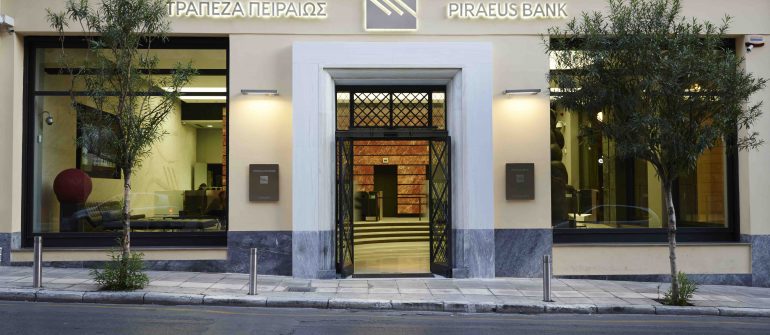
Piraeus Bank in talks with Bain Capital to sell leasing portfolio

Piraeus Bank, one of Greece’s four largest lenders, is in talks with Bain Capital to sell a portfolio of leasing contracts as part of efforts to clear non-performing loans (NPL) from its balance sheet, bankers close to the talks told Reuters.

Greek banks have been making headway in their bid to sell, write off or restructure billions of euros of bad debt accumulated during the last financial crisis.

Recently, ratings agency Moody’s upgraded the four largest Greek banks and gave them a positive outlook, saying the move was primarily driven by their improving asset quality and good prospects for further boosting their recurring profitability.

Piraeus Bank’s portfolio of leasing contracts, dubbed project Sunshine, has a gross book value of about 530 million euros.

Bain Capital is a multi-asset alternative investment firm.

In June last year Bain Capital Credit, a unit of the group, bought 1.6 billion euros of corporate NPL from Greece’s National Bank.

In 2018, Piraeus Bank agreed to sell a 1.45 billion euro portfolio of secured, non-performing business loans to Bain Capital Credit as part of moves to reduce its bad debts.

Original story: Reuters | Staff 
Photo: Piraeus website
Edition: Prime Yield

GREECE Greece’s NPL ratio to fall to single digit next year

The Greek banks’ non-performing loans (NPL) stock should fall to single-digit rate in 2022, Finance Minister Christos Staikouras said.

The correct, serious and methodical work done in the last two years, under the coordination of the former deputy Finance Minister George Zavvos, continues,” the Finance Minister said in an announcement.

“According to Bank of Greece data, Greek banks’ NPLs totalled 29.4 billion euros in June 2021, 20.3% of total loans, recording an impressive decline during the last two years”.

The stock of NPLs has fallen by around 46 billion euros since New Democracy took over the government of the country (it was 75.3 billion euros in June 2019) and around 78 billion down from the peak in March 2016 (107.2 billion euros).

This significant reduction is the result of an integrated and coherent strategy followed by the finance ministry through the successful programme ‘Hercules’ which has been expanded, and specific interventions implemented to contain the creation of a new wave of non-performing loans because of the pandemic crisis.”

Original Story: : Greek City Times |Athens Bureau
Photo: Photo by Jonte Remos in FreeImages.com
Edition: Prime Yield

Bank deposits rise in July to almost €172 billion

The bank deposits of individuals and companies stood at €171.7 billion at the end of July, a €1.8 billion increase from June, according to Bank of Greece data.

Corporate deposits increased by over a billion, including €477 million from insurance companies.

Overall, corporate liquidity stood at €35.3 billion at the end of July, €11.4 billion more than in March 2020, when the first pandemic lockdown hit the economy.

Insurance companies’ liquidity stood at €5.1 billion.

Term deposits declined by €976 million month-on-month to €31.6 billion, as lower interest rates have been dissuading depositors from locking in their money. 

Original StoryEkathimerini |News
Photo: Photo by Jonte Remos from FreeImages
Edition: Prime Yield

Alpha Bank to get rid of over €8 billion in NPL

Alpha Bank wants to get rid of over €8 billion in bad loans through securitization and other operations in 2022, aiming to reduce its bad loans ratio into the single digits.

In its Cyprus subsidiary, €2.2 billion in bad loans have been transferred to special purpose vehicles.

Cyprus and Romania will remain Alpha’s sole foreign subsidiaries.

Original Story: Ekathimerini | News
Photo: Alpha Bank website
Edition: Prime Yield

NBG selects DoValue-led consortium as preferred bidder

DoValue revealed that a consortium of the financial company, Bain Capital and Fortress has been chosen by National Bank of Greece (NBG) as the preferred bidder in relation to Project Frontier for a short period of talks.

NBG, Greece’s second-largest lender by assets, is looking to offload a portfolio of soured loans known as Project Frontier.

Earlier, NBG said it was in exclusive talks with the consortium for the sale of non-performing credit.

Original Story: Reuters| Reuters Staff 
Photo: Photo by Michalis Famelis / Wikimedia Commons
Edition: Prime Yield

Foreign funds control a third of all bank loans in Greece

One in three loans owed by households and corporations are already owned by foreign funds, fueling their growing presence and turning them into vital players in economic developments. By the end of the year, in fact, they are expected to control 50% of entire private sector debt.

The sum of the credit system loans, serviced or not, comes to 155 billion euros according to end-March data, with 43 billion euros of that already in foreign hands. By year-end, and after the conclusion of the securitizations planned by the four systemic banks, that sum will rise to 70 billion euros, and is set to grow further next year, which is when the streamlining of banks’ financial accounts will have been completed through the state asset protection mechanism known as “Hercules.”

The increase in the volume of loans being passed onto funds is marked by the completion of National Bank’s transactions for the “Frontier” package amounting to 6 billion euros, the Sunrise 1 and 2 securitizations by Piraeus and the Mexico package securitization by Eurobank within this year.

Alpha and National have planned sales and securitizations worth over 10 billion euros next year.

Original Story: Ekathimerini | Evgenia Tzortzi
Photo: Photo by Markellos P. from FreeImages
Edition: Prime Yield 

Parliament approves the 18-month extension of the Hercules program

The Greek Parliament voted for the 18-month extension of the Hercules program, designed to reduce the stock of nonperforming loans.

The bill also included amendments to the bankruptcy code and passed on the strength of ruling New Democracy votes alone. All opposition parties rejected it, with the exception of support for single articles.

Arguing in support of the controversial bill, Deputy Finance Ministers George Zavvos and Apostolos Vesyropoulos called the bill a result of “the government’s strategic decision to reduce NPLs to single-digit numbers in order to boost the real economy.”Opposition parties accused the government of boosting the banking system without guaranteeing smaller businesses access to funding, and without protecting vulnerable borrowers from foreclosure auctions.

Original Story: Ekathimerini |Newsroom 
Photo: Photo by Jonte Remos from FreeImages
Edition: Prime Yield

Pandemic-created NPLs “will be manageable” says Finance Minister

Any increase in the stock of nonperforming loans create by the pandemic crisis is expected to be “manageable” for the country’s four systemic banks, Deputy Finance Minister Giorgos Zavvos said.

Speaking in Parliament, Zavvos said that the European Central Bank and the Single Supervisory Mechanism have not offered any evidence of an imminent explosion of NPLs because of the pandemic, adding that “the evidence we have so far from the four systemic banks showed that the stock of nonperforming loans from the pandemic will not exceed 4-5 billion euros. In other words, it will be a sum that is completely manageable under the Hercules program which is implemented by the government and operates with the confidence of international investors.”

The Hercules program, designed to reduce the stock of NPLs, has tangible results, the Greek minister said, adding that it helped in the reduction of NPLs by 32 billion euros during the initial period of its implementation “without costing Greek taxpayers even a single euro.”

Original Story: Ekathimerini | Newsroom 
Photo: Photo by Takis Kolokotronis from FreeImages
Edition: Prime Yield

Greek banks on right path to NPL reduction

The Bank of Greece (BoG) considers it possible that the rate of nonperforming loans (NPL) in the country will drop below 10% by the end of 2022, despite the uncertainties and the new bad loans created as a result of the pandemic.

Therefore, the central bank noted in its latest monetary policy report, “banks ought to review the sufficiency of their provisions on credit risk, particularly the repayment capacity of borrowers hurt by the pandemic, given that the state measures distort the real picture.”

The BoG warns that the NPL reduction strategy will increase the share of funds corresponding to deferred tax credits. It notes that in the year’s first quarter, both the Common Equity Tier 1 (CET1) index and the capital adequacy index posted a slight reduction from 2020, but remained at satisfactory levels (13.6% and 15.6% respectively). Still, “they are now lagging the European average.”

Amid the adverse impact on the capital adequacy indexes of banks from the loan securitizations, the Bank of Greece considers particularly positive the capital strengthening initiatives of banks, such as the 1.4-billion-euro share capital increase and the €600 million bond issue by Piraeus Bank, and the €500 million bond issue plus the €800 million share capital increase by Alpha Bank this week.

On the other hand, the central bank finds there are concerns about the “relatively weak capital adequacy figures of certain non-systemic lenders,” implying that some cooperative banks had better resort to share capital increases.

At end-March 2021 the NPL stockpile within Greece’s banking sector amounted to 47.3 billion euros, with about 58% of that concerning business loans, 28% mortgages and the rest consumer loans. Approximately half of the sum has to do with loan contracts banks have already called, followed by loan deals with uncertain collection and loans delayed by more than 90 days that have not yet been called. The NPL ratio of all loans remained high at end-March at 30.3%, almost 12 times higher than the eurozone average.

The activation of the new bankruptcy code that will contribute, as the BoG notes, to the improvement of banks’ assets and generally the strengthening of economic activity, is also considered a positive by the central bank.

Original Story: Ekathimerini | Evgenia Tzortzi 
Photo: Bank of Greece website
Edition: Prime Yield

Piraeus announces the sale of Sunrise I portfolio of Non-Performing Exposures amounting to €7.2bn Gross Book Value

Piraeus Financial Holdings S.A. (“Piraeus”) announced to have reached definitive agreements with Intrum AB (publ) and Serengeti Asset Management LP for the sale of 49% and 2% of the mezzanine and junior notes of the Sunrise I NPE portfolio respectively.

The Sunrise I portfolio consists of retail and corporate NPEs. It comprises c.205k loan exposures and a gross book value of €7.2bn, as at 30.09.2020. 

The implied valuation for the Transaction, based on the nominal value of the senior notes and the sale price of the mezzanine and junior notes, corresponds to 34.5% of gross book value. 

The transaction is part of the wider Sunrise transformation programme Piraeus announced on 16 March 2021 and underlines the rapid progress in Piraeus’ c.€19bn NPE clean-up plan, leading to a single-digit NPE ratio within less than 12 months. 

Piraeus Bank has already filed an application for the inclusion of the Sunrise I senior notes in the Hellenic Asset Protection Scheme (the “Hercules” scheme). The application relates to the provision of a guarantee by the Greek State on the senior notes of c.€2.45bn.

The Transaction will be classified as held for sale in Q2.2021. Together with Phoenix and Vega NPE transactions that are also pending completion this quarter, the Piraeus NPE ratio will radically drop to c.23% from the reported 46% of March 2021. Subject to the required approvals, the loans within the Sunrise I securitization perimeter are expected to be derecognized from Piraeus Financial Holdings consolidated statement of financial position within H2.2021.

The expected capital impact of the Transaction stands at c.2.7 percentage points over the December 2020 total capital ratio, taking into account the P&L effect and the RWAs relief of the Transaction.

Original Story: Piraeus Site
Photo: Piraeus Bank
Edition: Prime Yield

National Bank of Greece sells €174 million Romanian NPLs portfolio to Bain Capital Credit

National Bank of Greece (NBG) has completed the disposal of a 174 million euro ($212 million) Romanian-risk corporate non-performing loans (NPLs) portfolio to Bain Capital Credit.

The transaction is capital neutral, NBG said in a press release.

NBG announced the NPLs sale in December.

At the time, NBG said that the transaction is being implemented in the context of NBG’s non-performing exposure deleveraging strategy and in accordance with the Operational Targets submitted to the Single Supervisory Mechanism and has a neutral capital impact to the bank.

The National Bank of Greece is a global banking and financial services company with its headquarters in Athens, Greece. Some 85% of the company’s pre-tax pre-provision profits are derived from its operations in Greece, complemented by 15% from Southeastern Europe, according to its website.

In January 2020, ​NBG announced the completion of the sale of its 99.28% stake in Banca Romaneasca to Export-Import Bank of Romania (EximBank).

The Greek group is now present in Romania with leasing company NBG Leasing and Insurance company Garanta Asigurari, according to its website.

Original Story: SeeNews.com | Nicoleta Banila
Photo: Photo by Michalis Famelis / Wikimedia Commons
Edition: Prime Yield

Greece gains EU okay to extend ‘Hercules’ bad loan reduction scheme

Greece already secured approval from EU competition regulators to extend its “Hercules” bad loan reduction scheme to help banks reduce the mountain of impaired credit burdening their balance sheets.

The scheme was launched in October 2019 to help the country’s banks offload up to 30 billion euros of bad loans by turning bundles of impaired loans into asset-backed securities that can be sold to investors. Athens wants to prolong the scheme to October 2022.

The European Commission said its approval was on the basis that not state aid would be involved.

I welcome the prolongation of the Hercules scheme, which has already been very successful in providing a market conform solution to remove non-performing loans from the balance sheets of Greek banks, without granting aid or distorting competition,” European Competition Commissioner Margrethe Vestager said in a statement.

Original Story: Reuters | Staff
Photo: Photo by Szymon Szymon in FreeImages.com
Edition: Prime Yield

Impact from the pandemic on Greek banks to intensify in 2021

The impact of the pandemic on the banking sector is expected to intensify in 2021, mainly in the form of a new wave of NPLs, as well as an anticipated worsening of the Deferred Tax Credits (DTCs) as a share of total prudential own funds, according to the Bank of Greece, the country’s central bank. 

In the governor’s annual report, the central bank said that it has estimated that new NPLs in 2021 will amount to 8-10 billion euros.

In addition to the twin problem of NPLsand DTCs, Greek banks face a number of serious challenges, common to most euro area banks, such as low core profitability, increased competition from non-banks, challenges stemming from the incomplete banking union, and others associated with the impact of climate change and cyberattacks,” the bank said. 

“Non-performing loans (NPLs) stood at 47.4 billion euros at end-December 2020, down by about 21 billion euros from a year earlier. The NPL ratio to total loans remains high, at 30.2% compared with an EU average of just 2.6%. However, compared with its March 2016 peak, the stock of NPLs has declined by roughly 60 billion euros, mainly through loan sales and write-offs, and much less through recoveries from active NPL management. 

By the time the Hercules plan is completed in the course of 2021, theNPL ratio will likely have fallen to about 25%and the average capital adequacy ratio to below its current levels, with a simultaneous increase in the share of DTCs. These estimates do not take into account the new NPLs that are expected to be added to the current stock as a result of the pandemic shock,” the report added.

Against this background, additional measures need to be taken to facilitate the frontloaded recognition of credit losses on account of the pandemic, as well as the fast repair of bank balance sheets together with addressing the DTC problem. To this end, the Bank of Greece called on the government, as a complement to the Hercules plan currently underway, to establish an Asset Management Company (AMC). 

The Bank of Greece proposal simultaneously addresses the problem of DTCs. The government is examining the advisability of establishing an AMC, as proposed by the Bank of Greece, and has applied to the European Commission’s DG Competition for an extension of the Hercules plan. Should the proposal of the Bank of Greece not be selected by the authorities, an alternative way of addressing the problem of DTCs will need to be found that is compatible with the applicable capital requirement legislation,” stressed the bank. 

The commitment of sizeable public funds in the form of state guarantees, to support NPL securitisation through the Hercules plan, which was a decision in the right direction, should ensure a definitive and comprehensive solution to the twin problem of NPLs and the high share of DTCs in banks’ regulatory own funds, it said. 

Original Story: Ekathimerini | Newsroom
Photo: Bank of Greece Website
Edition: Prime Yield

Greek banks will absorb additional NPL disposals, says DBRS Morningstar

A few days after upgrading the outlook of the Greek credit sector from stable to positive, DBRS Morningstar said in a commentary it believes that recent subordinated debt issuance and capital actions should enable the banks to absorb the impact of additional nonperforming exposure (NPE) disposals.

Nevertheless, the global credit rating agency considers external factors such as investor appetite and the macroeconomic environment to be key to the banks’ success. It noted that the Greek banks combined reduced their NPE stock by 50% year-on-year on a pro forma basis as of end-2020 and have announced further NPE disposal plans.

Strengthened capital bases through restored and ongoing access to the subordinated debt capital markets along with capital actions should enable the banks to absorb the impact of the newly announced NPE disposal plans, DBRS Morningstar said, adding that continuous investor demand and the pace of the economic recovery, which will likely dictate the performance of the loans that have been granted payment holidays, will be crucial for the banks to achieve their targets.

Following significant NPE reduction in a challenging year and recent announcements for further de-risking, we consider that strengthened capital bases should enable the Greek banks to absorb the impact of the additional NPE disposals. The economic recovery along with the level of investor demand will be key in the banks’ meeting their targets.” the rating agency commented.

Original Story: EkathimeriniAuthor: newsroom
Photo: Photo by Lotus Head in FreeImages.com
Edition: Prime Yield

Piraeus Bank gets shareholder approval for 1bln euro equity offering

Piraeus Bank, one of Greece’s four largest lenders, got the green light for a planned equity offering to raise about 1.0 billion euros from shareholders at an extraordinary meeting.

The bank, 61.3% owned by Greece’s bank rescue fund, the Hellenic Financial Stability Fund (HFSF), has said the offering of new shares will dilute the HFSF’s stake to a minority holding without any blocking power, meaning below 33%.

Chief Executive Christos Megalou told shareholders that the plan would help the bank to cut the ratio of bad loans within its overall debt portfolio.

The reduction of our stock of non-performing exposures (NPEs) is the priority of the ‘Sunrise’ plan … to get us to a single-digit NPE ratio,” Megalou said.

Piraeus Bank’s NPE ratio at the end of last year was 45%, not counting two securitisations that will be concluded later this year.

He said cleansing of the bank’s balance sheet of bad loans would “allow the sustainable funding of Greece’s economy”.

The bank said 99.3% of shareholders at the meeting voted in favour of the plan to issue new shares.

The equity offering will be a combined international placement with institutional investors via bookbuilding, and a domestic public offering that will take place simultaneously.

The issue price of the new shares will be determined in the bookbuilding and will be the same for both institutional and domestic investors.

Original Story: Reuters
Photo: Piraeus Bank Site
Edition: Prime Yield

Moody’s upgrades Greek Bank’s outlook to positive

Moody’s Investors Service changed Greek banks’ outlook to positive from stable.

In a report, the credit rating agency said that its decision reflected mainly expectations for a further improvement in reducing the high levels of non-performing loans, as banks sell off legacy problem loans and move on with securitizations, combined with expectations for a gradual strengthening of Greek banks’ profits (core earnings).

The outlook reflects Moody’s assessment of the basic credit conditions that will affect Greek banks’ credit rating in the next 12-18 months.

Original Story: The National HeraldAuthor: Athens News Agency
Photo: Photo by Jonte Remos in FreeImages.com
Edition: Prime Yield

Alpha Bank enters into definitive agreement with Davidson Kempner over Euro 10.8 billion Galaxy portfolio

Alpha Bank announced on 22nd February that it has entered into a definitive agreement with Davidson Kempner Capital Management LP referring to the sale of 80% of its loan servicing subsidiary Cepal Holdings Single Member S.A. (“New CEPAL”), and the sale of 51% of the Mezzanine and Junior securitization notes of the Euro 10.81 billion NPE portfolio (the “Galaxy Securitizations”) (together with the sale of New CEPAL, the “Transaction” or “Project Galaxy”).

Vassilios Psaltis, CEO of Alpha Bank, said:”We are excited to enter into a long-term agreement for Project Galaxy with Davidson Kempner, a highly experienced US investor. This is a turning point for our Bank as we are making a decisive step in dealing conclusively with the legacy asset quality issues from the long-lasting recession in Greece.In spite of the unprecedented conditions we experienced due to Covid, we are proud to have managed to sign such a complex transaction in just eight months from launch, to attract significant international investor interest and to fully meet our targeted capital envelope for this transaction. Alpha Bank now continues with undivided attention to implement the last mile in its de-risking strategy and to drive forward the implementation of its transformation plan so as to capture superior growth opportunities.”

Original Story: Alpha Bank Press Release
Photo: Alpha Bank Website
Edition: Prime Yield

National sells NPL portfolio to Bain Capital for €1.6 bln

The National Bank of Greece Group on Friday announced the completion of a transaction for the disposal of a nonperforming, predominantly secured, corporate loan portfolio to the investment firm Bain Capital Credit for a total principal amount of 1.6 billion euros.

In a statement, National Bank said that Morgan Stanley & Co International Plc acted as financial adviser, Karatzas & Partners and Milbank LLP as local and international external legal counsel, respectively, and Deloitte Greece as transaction and accounting adviser to NBG.

Original Story: Ekathimerini | Newsroom
Photo: Photo by Michalis Famelis / Wikimedia Commons

Banks have €28.4 billion of loans on ice

Banks and servicers are in a race against time to reach settlement agreements over nonperforming loans (NPL) and suspended loan tranches in a bid to stem the impact of the pandemic crisis, according to Finance Ministry data. The data show that the loans on ice amounted to €28.4 billion at end-2020, while the debts on which a settlement deal had been reached with lenders and NPL management companies added up to €21.2 billion.

From March to December 2020, repayments of a total of 405,473 loans were suspended for up to nine months, a measure that ends on March.

From July 2019 to December 2020, settlement deals for 396,621 loans (mortgage, consumer and corporate) were reached with banks and servicers.In the context of the Gefyra program for the protection of borrowers’ main residences, the state subsidized the repayment tranches of 110,037 loans of 69,443 borrowers up to end-January, disbursing €47.9 million. Applications submitted up to the end-October deadline numbered 160,477, with 74,420 already approved by end-December.

Original Story: Ekathimerini | Evgenia Tzortzi 
Photo: Photo by Markellos P. from FreeImages
Edition: Prime Yield

Top