NPL&REO News

Rio de Janeiro

Banks project growth for Brazil’s economy

Economists and financial institutions consulted by the country’s Central Bank estimate that the Brazilian economy should have ended 2019 with a growth of 1.17%. As for 2020, the projection is for a 2.30% Gross Domestic Product (GDP) expansion.

As to inflation, the estimate for the Extended National Consumer Price Index (IPCA) increased for the eighth time running, to 4.04% in 2019. For 2020, the inflation estimate increased to 3.61%. The projection for the following years remains at 3.75% for 2021 and 3.50% for 2022.

The benchmark interest rate, known as Selic, is currently at 4.5% per annum designed by the Monetary Policy Committee (Copom) and, according to the financial institutions, should remain at this level until the end of the year. The institutions estimate that Selic will end 2021 at 6.38% per annum. As for the end of 2022, the projection remains at 6.5% per annum. 

Original Story: Brazilian Arab News Agency |Agência Brasil 
Photo: Photo by Bruno Leiva /FreeImages.com
Edition: Prime Yield

Santander Brazil takes full stake of Banco Olé

Santander Brazil closed the agreement to buy the remaining 40% of Olé Bonsucesso Consignado SA for €355 million. The Brazilian subsidiary of Santander will have 100% control of the company’s share capital, according to a statement sent to the Sao Paulo Stock Exchange.

«By fully assuming the control of Olé Consignado, we have a great opportunity ahead of us to boost our growth in the Brazilian market,» said the executive vice president and chief financial officer of Santander Brasil, Ángel Santodomingo.

Banco Olé specializes in consigned credit – loans whose fees are deducted from the payroll – and the operation depends on the approval of the corresponding competition authorities. Banco Santander obtains in Brazil about 30% of the group’s total profit, its largest market, with 3,680 branches and about 50,000 employees.

Santander Brasil and Banco Bonsucesso agreed on a joint venture in 2015, with stakes of 60% and 40%respectively.

Original Story: The Corner | News 
Photo: Santander
Edition: Prime Yield

Brazil’s Government proposed central bank bill to gird against banking crises

On December 23rd Brazil’s government sent Congress a bill designed by the central bank to regulate financial firms during a banking crisis that mandates the use of public money for bailouts, but only as a last resort.

If approved, the bill would create two new mechanisms that would dictate how different financial firms would be treated.

The first – the so-called Stabilization Regime – is aimed at larger banks that pose a risk to the country’s banking system, but will require specific secondary legislation to dictate how firms are chosen.

The second, known as the Compulsory Settlement Regime, would be aimed at smaller entities and focus on removing the company’s senior managers and board. The company and shareholders’ money would be prioritized in the case of any losses.

Failing that, losses would aim to be covered by the industry itself, with contributions from other banks to an emergency fund known as the Credit Guarantee Fund.

Only as a last resort would the government step in and provide a publicly funded bail-out, according to the bill.

Brazil’s Fiscal Responsibility Law currently bars the government from bailing out banks, although specific laws can be passed during times of financial crisis to circumvent the law and provide public assistance.

The latest bill aims to modernize the Brazilian government’s actions during a banking crisis and place greater responsibility on the banks themselves to cover their losses, meaning less of a burden on Brazilian taxpayers, said Climerio Leite Pereira, the head of the central bank’s resolution and sanctions department.

Original Story: Investing.com | Reuters 
Photo: Photo by Cesar Fermino /FreeImages.com
Edition: Prime Yield

Brazil’s Economic recovery boost stronger loan demand in 2020

The expected economic recovery in Brazil is set to drive stronger loan growth next year but banks are likely to see their profitability under pressure due to fiercer competition from fintechs.

After an expansion of around 1% in 2019, Latin America’s biggest economy is expected to grow almost 2.5% in 2020.

Loans could grow 8.2% compared to an estimated 6.6% in 2019, according to a survey from local banking federation Febraban. 

This year’s expansion is likely to be driven by commercial banks, while development bank BNDES is expected to take a more conservative approach in terms of subsidized loans.

Loans from commercial banks are projected to grow 12.3% in 2020, while subsidized loans are expected to increase 2.5%. 

The government and the central bank are embarked on a strategy to reduce high concentration in the banking industry by making it easier for fintechs to enter the market. 

The five largest banks, Banco do Brasil, Caixa Econômica Federal, Itaú Unibanco, Bradesco and Santander Brasil, command nearly 80% of all loans in the country. 

In a recent interview, the CEO of Bradesco, Octavio de Lazari Junior, said that the era of «stratospheric gains» are over for Brazilian banks as interest rates have fallen to record-low levels and fintech competition is escalating. 

Brazil’s Selic base interest rate is at 4.5%, the lowest level ever, and banks can no longer park large portions of reserves in government bonds and obtain high returns as they did for years when the Selic was in double-digit territory.

Real Estate segment shines bright

The rapid growth of fintechs have put banks under pressure in several market segments but they still reign supreme in terms of mortgage lending. 

Loans for the purchase and the construction of homes with funds from Brazil’s saving and loan system (SBPE) has shown strong growth this year.

SBPE-based mortgage financing totaled R$ 70.0Bn reais at the end of November, up 36.4% year-on-year, according to Brazilian real estate loan and saving association Abecip.

In the period, 266,290 homes were financed compared to 204,940 units in the previous 12-month period.

The segment is attractive for banks as the long-term mortgage loans carry low default risk and give banks ample opportunities to cross-sell other products and services.

Original Story: Bnamericas |News 
Photo: Photo by Bruno Neves /FreeImages.com
Edition: Prime Yield

BRAZIL Brazil’s economy’s benchmark interest rate hits a 30-year low

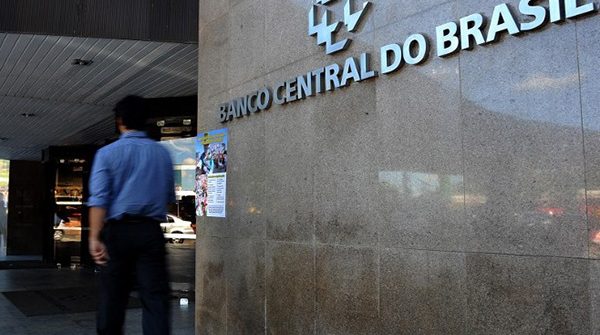
On December 11, 2019, the Brazilian Central Bank lowered the economy’s benchmark interest rate — for the fourth consecutive time. Its committee unanimously decided to reduce the Selic rate to 4.5% a year, a 0.5% percentage point cut. The move had been expected by analysts.

The benchmark interest rate is used in the negotiation of bonds in the country’s Special Clearance and Escrow (Selic) system and provides a gauge for other interest rates in the economy. It is also the central bank’s main tool to curb official inflation (Broad Consumer Price Index, i.e., IPCA).

The decision brings Selic to its lowest level since this time series was initiated by the Central Bank, in 1986.

In a statement, the bank’s Monetary Policy Committee, or Copom, said it will act cautiously and keep the rate at 4.5% a year for a long period, never failing to assess the economy’s conditions. The financial institution stressed the need to continue the structural reforms in the Brazilian economy so the rate may stay low for long.

The Selic’s historic low comes as unemployment is slowly coming down, economists are raising their growth forecasts for this year and 2020, and the outlook is for inflation to remain under control.

Many economists nevertheless expect the central bank will keep the Selic on hold at its next meeting, on February 5 (2020), while watching out for price pressures such as a recent surge in meat prices caused by higher demand in China, a major importer of Brazilian food commodities.

Original Story: Indrastra | News 
Photo: Banco Central do Brasil site
Edition: Prime Yield

Brazil’s private sector banks are firmly in ‘risk-on’ mode

Brazil’s private sector banks are firmly in ‘risk-on’ mode, after the third-quarter reporting season.

The economy is expected to grow GDP a little under 1% this year, but the banks are anticipating stronger growth to come and are ramping-up their credit portfolios to retain – or even gain – market share. 

Amid many eye-catching statistics, one highlight was the fact that Itaú overtook state-controlled Banco do Brasil in terms of its credit portfolio: Itaú grew its total credit by 8.27% to R$688.9 billion, just ahead of Banco do Brasil’s R$686.7 billion. Analysts expect Itaú to extend this newly claimed leadership in the quarters ahead, as Banco do Brasil continues to focus on profitability. The bank increased its return on equity (ROE) to 18.0% in the third quarter by de-risking its loan book, which fell by 0.68% in the quarter.

Meanwhile, the other private sector banks were also aggressively extending loans. Bradesco – the second-largest bank in terms of assets and deposits – grew the most, with a double-digit increase in its credit portfolio (10.49%).

Bradesco outgrew Santander Brazil (which grew credit by 7.35%), but remains less profitable: with an ROE of 20.2% (up from 19.0% 3Q18), compared with Santander Brasil’s ROE of 21.1% (up from 19.5%). 

As well as becoming the largest bank, Itaú also continues to skew its portfolio to higher margin business – the fall in the country’s interest rate makes corporate loans less attractive to both the banks and the companies, with domestic capital markets issuance booming.

Itaú grew its loans to individuals and small and medium-sized enterprises (SMEs) by 17.3% year on year, which helped net interest income (NII) to expanded 9% year on year. This growth in the risker, unsecured segments of consumer banking is notable for Itaú.

In recent years, the bank has been the most conservative in the system – in some calls, analysts have been actively advocating for the bank to increase its risk appetite. Now it seems management is prepared to add that risk. 

Candido Bracher, CEO of Itaú, conceded on the analyst conference call that «we have been growing more in credit card loans and personal loans than in mortgage, vehicle or payroll loansThis, I think, is one of the reasons behind the mild increase in NPL 90 in individuals’ portfolio [NPLs in the individuals segment moved up 20 basis points to 4.7% in Brazil]».

Original Story: Euromoney | Rob Dawyer 
Photo: Santander Site
Edition: Prime Yield

Brazil is the second largest emerging banking market worldwide

In a table dominated by Chinese banks, and despite economic pressures, Brazil maintains second place in the Global Finance’s top-50 Biggest Emerging Markets Banks ranking, being now the only Latin American country represented in this classification.

In 2019, China is even more dominant in Global Finance’s list of the 50 Largest Emerging Markets Banks, accounting for nearly half: 23 institutions, up from 22 in 2018, with the entry of Guangzhou Rural Commercial Bank. 

The top 14 banks by assets are all Chinese entities, up from 13 last year. With the exception of Export-Import Bank of China, all appear in our Global 50 Biggest Banks list as well. These include state-owned and policy banks, while others are joint-stock commercial banks as well as institutions with rural and city bank classifications. 

The seven South Korean banks in this ranking experienced modest 2% growth from 2018, and their positions were largely unchanged. With the addition of Axis Bank, India now contributes four banks to the ranking. 

Six Brazilian banks make the cut; this group experienced a decline in assets of 10% on average, reflecting slow domestic growth of 1.1% in 2018 and an expected further deterioration of the outlook to 0.8% in 2019, according to the OECD. Contagion from the ongoing economic deterioration in Argentina and Venezuela will continue to put pressure on growth prospects for these institutions.

Brazil is now the only Latin American country represented among the 50 Biggest Emerging Markets Banks. Banesco Banco, a Venezuelan institution, dropped out this year after placing 37th in 2018. To be eligible for inclusion in Global Finance’s rankings, banks—including the largest—must have at least one agency rating.  Because the rating agencies have withdrawn their coverage of Banesco Banco, it was not eligible this year. 

Original Story: Global Finance |David Sanders
Photo: FreeImages / Bruno Neves
Edition: Prime Yield

Itaú Unibanco meets loan growth and cost control targets in Q3 2019

Brazil’s biggest private-sector lender Itau Unibanco Holding SA posted a 10.9% gain in third quarter recurring net income, as loan growth and cost control offset higher provisions.

Recurring net income, which excludes one-time items, came in at R$7.165 billion ($1.78 billion) in the third quarter, in line with a Refinitiv analysts’ consensus estimate.

The bank’s loan book picked up pace, rising 4.4% from the previous quarter to R$689 billion, as corporate loans resumed growth.

Both lending and trading gains boosted Itaú’s net interest income, which grew by 9.6% from the same period a year earlier. Return on equity came in stable at 23.5%, the highest among Brazilian banks.

Loans in arrears for more than 90 days stood stable at 2.9%. Still, loan loss provisions grew by 38% from a year earlier. Itaú said that the increase was caused by retail loan book growth in the period.

Itaú showed belt-tightening on the cost side, with a small increase of 1.2% in operating expenses from the same period a year earlier.

To fight back new competitors, mainly financial technology startups, Co-Chairman Roberto Setubal said in September that the bank would step up its emphasis on cost cutting.

Earlier this year, Itau launched a voluntary severance program. The bank said in a statement that 3,500 workers took part, triggering an estimated R$2.4 billion in one-time costs.

Other Brazilian banks such as Banco Bradesco SA and Banco do Brasil SA have also announced measures to slash costs amid tougher competition from online startups.

Original Story: Reuters |Carolina Mandl
Photo: Itaú Site
Edition: Prime Yield

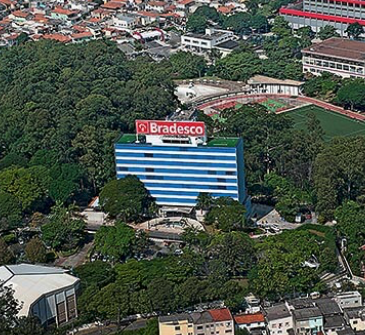
Bradesco NPL ratio stands at 3.6% up to September

Banco Bradesco SA, Brazil’s second-largest private sector lender, reported that third-quarter recurring net income rose 19.6% to R$6.542 billion, in line with a Refinitiv analysts’ estimate, boosted by insurance results and consumer lending.

Analysts at Credit Suisse remarked in a note to clients that operating expenses had disappointed on higher marketing and personnel expenses.

Fee income also came in below the bank’s target, but CEO Octavio de Lazari Junior told the journalists it is likely to end 2019 in the 3% to 7% growth range set at the beginning of the year.

Lazari said he expects the bank to post a return on equity around 20% in the coming quarters, in spite of Brazil’s all-time low interest rates. Bradesco reported a profitability ratio of 20.2% in the third quarter.

The bank aims to speed up growth to hit its target.

«Gains of scale will be essential for the bank to maintain its profitability amid lower interest rates,»Lazari told journalists.

Bradesco’s loan book grew by 3.2% in the quarter, mainly driven by consumer lending and small companies. The CEO said consumer loan growth is likely to keep up its fast pace in coming quarters.

Loans in arrears over 90 days rose to 3.6%, up 0.4 percentage point. The bank said the rise was caused by issues with corporate loans. Loan loss provisions rose 4% from the second quarter.

Original Story: Reuters | Carolina Mandl
Photo: Site Bradesco
Edition: Prime Yield

Brazil’s loans default held steady at 3.9%

Loan defaults in Brazil held steady at 3.9% while lending spreads narrowed to 30.8% from 31.6, the lowest since January, according to the latest figures released by the country’s Central Bank.

As for the outstanding loans in Brazil, its total amount rose 1.0% in September from the previous month to 3.36 trillion reais ($835 billion), the central bank said.

Original Story: Reuters | Jamie McGeever and Marcela Ayre
Photo: FreeImages / BrunoNeves
Edition: Prime Yield

Brazil Central bank approves 4 credit bureaus for positive credit database

Brazil’s central bank has approved four credit bureaus to act as operators of the country’s positive credit database, or cadastro positivo.

Authorizations have been granted to SPC, Serasa Experian, Boa Vista and Quod. With these approvals, the bureaus can now receive data on borrowers from financial institutions.

The measure was seen as being the last necessary step for the system to go into effect, which was launched on July 9 without key rules for authorities to allow non-financial institutions to have access to financial data.

Without these rules, banks and non-bank companies were unable to share their clients’ payment information. 

Brazil’s monetary council (CMN) had already issued regulations also deemed essential for the operation of the database.

The bureaus are now working on an unified system to standardize the sharing of information. This system is under development and should be ready by the end of the year.

The positive credit database was created in 2011 to be a payment history registry of «good borrowers», comprising information from both individuals and companies.

The main idea was to allow banks and other lenders to offer lower interest rates and faster loan approvals to borrowers with a positive credit history.

However, before the new law was passed, borrowers had to opt in to have their information in the database, which meant there was little information as many borrowers either refused to do so or forgot to join the system.

Furthermore, the system has the potential to expand access to credit, as even workers who do not have a formal job will be able to demonstrate their ability to meet their payment obligations, according to Serasa.

According to a study by the Serasa, the cadastro positive could benefit about 137 million Brazilians, or 88.5% of the adult population, 22.6 million of whom are currently outside the credit market.

The drop in interest rates could reach 74% of over 18s who now have access to credit.

Serasa also estimates that the adoption of the database could add up to 1.3tn reais (US$318bn) to the country’s economy.

Original Story: BNAmericas | News 
Photo: Banco Central do Brasil
Edition: Prime Yield

Brazil economic recovery stalls in July

Economic activity in Brazil fell slightly in July, a central bank indicator showed, running counter to other data that had suggested the economy started the third quarter on a solid footing.

The central bank’s IBC-Br economic activity index, a leading indicator of gross domestic product (GDP), fell 0.16% in July from June, the first decline in three months.

Other economic data reports for the month of July released earlier this week showed bumper retail sales and strong activity in the dominant service sector, both rising at the fastest pace this year.

Friday’s figures might serve as a reminder that the economic recovery remains uneven and lacking sustained momentum. The index has risen only two months this year, in May and June.

So far this year, activity is up 0.78% on the same period in 2018, the IBC-Br index shows, largely in line with consensus market, government and central bank estimates that the economy will grow by around 0.8% this year.

Over the last 12 months, activity is up 1.07%, the central bank said.

Both these longer-term trends reflect the tepid recovery from the 2015-16 recession, a key reason why the central bank is widely expected to cut interest rates again next week.

The economy expanded by 0.4% in the second quarter, having contracted by 0.2% in the first. Economy Ministry officials reckon the worst is now behind it, although unemployment remains high and the global outlook is increasingly challenging.

Original Story: Reuters |  Jamie McGeever 
Photo: Photo by Bruno Neves from Free Images
Edition: Prime Yield

Brazil: outstanding loans go down, default go up in July

The amount of outstanding loans in Brazil fell 0.2% in July from the previous month to R$ 3.290 trillion, representing some 46.9% of gross domestic product, the central bank said.

Loan defaults edged up to 4.0% from 3.8% in June, while lending spreads widened to 31.6 percentage points from 31.5 percentage points the month before, the central bank said.

Original Story: Reuters | Auhtor: Marcela Ayres 
Photo: Photo by Cesar Fermino from Free Images
Edition: Prime Yield

BTG Pactual’s loan book expected to growth by 30% in 2019

Latin America’s largest independent investment bank, Banco BTG Pactual SA, expects its loan book to grow at least 30% this year, Chief Financial Officer João Dantas told Reuters.

«Companies started to ask for loans at a more regular pace and the potential approval of a pension reform is likely to increase demand for loans,» said Dantas, adding that the bank has appetite for a higher pace of growth in loans.

BTG’s expanded loan book stood at R$ 43.6 billion in June, up 33% from a year earlier and 8.5% from March.

Besides extending loans to large companies, BTG has been seeking small- and medium-sized corporate clients as a way to expand its loan book.

Dantas said the bank targets providers of services and products to its own big clients through a digital platform of receivables-backed credit.

In addition to loans, Dantas said the bank will offer checking accounts for small companies next year.

BTG’s move comes as an increasing number of digital platforms has been targeting smaller companies, such as C6 Bank and Nubank.

BTG posted a 50.2% jump in second-quarter recurring profit, as trading and proprietary investment gains increased, as well as management fees.

Recurring net income, which excludes onetime items, rose to R$ 1.029 from R$ 685 million a year earlier.

BTG’s total second-quarter revenues came in at R$ 2.181 billion, up 76% from the same period a year earlier, mainly helped by trading gains.

Original Story: Reuters | Author: Carolina Mandl 
Photo: BTG Pactual site
Edition: Prime Yield

ITAU Unibanco loan book to grow at end of forecast

Brazil’s largest lender, Itau Unibanco Holding SA, sees its loan book growing near the low end of its forecast range in 2019, reflecting the cut in the country’s economic growth estimate, Chief Financial Officer Milton Maluhy told journalists.

At the beginning of the year, Itau said its loan book was likely to grow between 8% and 11% this year.

Itau’s prediction comes as Brazil’s economy has been struggling to rebound and demand for corporate loans has been weak.

The bank’s second-quarter loan book grew by 5.9% from the same period a year earlier, mainly driven by consumer demand for credit cards and auto loans.

Itau also faces a more competitive banking arena, executives said. Partly as a result, fee income growth this year is unlikely to exceed 3.5%, the midpoint of its outlook provided in January, Maluhy said.

On Monday, the bank reported recurring net income of 7.034 billion reais ($1.86 billion), up 10.2% from a year earlier, helped by loans to individuals and trading gains.

Original Story:Reuters |Carolina Mandl |
Photo: Site ITAÚ
Edition: Prime Yield

Brazil’s largest lender launches voluntary severance program


Brazil’s largest lender, Itaú Unibanco Holding SA,  announced it has closed nearly 200 brick-and-mortar branches and that was launching a voluntary severance program to slash costs amid rising competition.

The bank revealed the cost-cutting moves even as quarterly estimates met analysts’ forecasts. It reported recurring net income of 7.034 billion reais ($1.86 billion), up 10.2% from a year earlier, helped by loans for individuals and trading gains.

Itau said in a securities filing that it will offer buyouts to some employees aiming to «adjust the company’s structures to the reality of the market,» but did not disclose the number of reductions targeted.

Its workforce had already decreased by 1.2% in the quarter as the bank closed branches.

Still, Itau said it has hired new employees for its technology department as it seeks to speed up its digital transformation.

In May, Itaú said it would tighten its belt to compensate for fiercer competition, especially in the card-processing business.

Itau is not alone in its cost-cutting efforts. On Monday, state-controlled lender Banco do Brasil also announced a voluntary severance program, seeking to cut personnel.

Itau’s quarterly results showed that while its client revenues are under pressure, they are still on an upward trend. The bank’s fee income increased by 3.5% from the year-ago period, helped by its investment banking and asset management units.

The bank’s net financial income came in at 18.4 billion reais, up 6.7% from the same period a year earlier.

The bank’s loan book grew by 2%, reaching 659.7 billion reais in the quarter, mainly boosted by loans for individuals and small companies.

Loans in arrears for more than 90 days stood at 2.9% of its portfolio in June, down 0.1 percentage point from March. Loan-loss provisions grew by 12.3% from a year earlier, driven by higher provisions in loans for individuals.

Still, Itau’s return on equity came in nearly in line with the previous quarter, at 23.5%.

Original Story:Reuters | Carolina Mandl
Photo: ITAÚ
Edition: Prime Yield

Brazil’s deficit falls 14% y-o-y in the first half of 2019

In the first half of 2019, Brazil’s deficit stood at 186 billion reais (about USD $49.5 billion dollars), value at 14.05% lower than the deficit for the same period in 2018, the Central Bank reported.

The deficit is the difference between revenues and expenditures of the Brazilian public sector in the first six months of this year, and dropped by 22.71% in comparison with that of the same period in 2017, according to government data.

The sharp fall in the fiscal deficit reflects the success of the measures taken by the government of President Jair Bolsonaro to reduce public spending, one of his main objectives.

Since assuming office on January 1, Bolsonaro has promoted a liberal economic policy that seeks to reduce the size of the state, privatize non-strategic state companies, and cut costs to reduce deficits and Brazil’s crushing debt load.

The Ministry of Economy has already announced two cuts amounting to 31.2 billion reais (about USD $8.326 billion) in public expenditures provided for in the budget approved by Congress last year.

Bolsonaro also presented to Congress a project to reform Brazil’s troubled pension system, which is considered vital both to set in order Brazil’s public spending and to boost the economy; the legislation has already passed its first vote in the lower house.

The deficit in the Brazilian public sector accumulated so far this year is equivalent to 5.35% of Brazil’s Gross Domestic Product (GDP), a significant improvement upon the figure of 6.53% of GDP in the first half of 2018, and 7.53% in the same time period in 2017.

According to the report released by the Central Bank, the nominal public deficit of Brazil over the course of the last twelve months amounted to 456.8 billion reais (about USD $121.192 billion dollars), equivalent to 6.54% of GDP.

In 2018, Brazil registered a nominal deficit in its public accounts of 487.442 billion reais (about USD $124,985 billion), equivalent to 7.14% of GDP and the lowest in the last four years.

Brazil’s deficit amounted to 10.22% of GDP in 2015 and 8.98% of GDP in 2016, but was reduced by fiscal measures promoted by the then president, Michel Temer, who decreed the freezing of public expenses, a strategy now reinforced by Bolsonaro.

In June, the negative balance in the public accounts was 30 billion reais (about USD $7.9 billion), a value 48.05% lower than the same month last year.

The balance in public accounts measures the difference between the income and the expenses of the state in general, including those of the central government, state companies, and the regional and municipal administrations, as well as the resources destined for the payment of interest on debt.

The Central Bank also reported that the Brazilian national debt rose in March to 5,498 trillion reais (about USD $1.488 trillion dollars), equivalent to 78.7% of GDP, a slight increase from 77.2% of GDP, where it stood in December of 2018.

In April, however Brazil’s national debt stood at 79.1% of GDP, its highest level since the data began to be measured with the current criteria in December 2001.

This is one of the indicators that most worries the risk rating agencies, since, according to the data of the International Monetary Fund, the gross debt of other emerging countries such as Brazil is less than 50% of GDP.

Original Story:PANAM Post | EFE 
Photo: Site do Banco Central do Brasil
Edition:Prime Yield

Rio de Janeiro

Bank lending rises 0,4% and loan defaults down 0,1% in June

The amount of outstanding loans in Brazil rose 0.4% in June from the previous month at 3.296 trillion reais ($873 billion), representing some 47.2% of gross domestic product, the central bank said on Friday.

Loan defaults edged down to 3.8% from 3.9% in May, while lending spreads widened to 31.5 percentage points from 31.1 percentage points the month before.

In the first half of the year, the total stock of outstanding loans in Brazil rose 1.2%, the central bank said.

Original Story:Reuters | Marcela Ayres and Jamie McGeever
Photo: Bruno Leiva for FreeImages
Edition:Prime Yield

Mortgage granting soared 33% in the first semester

The volume of home-buying and building loans with funds from Brazil’s system of savings and loans (SBPE) increased sharply in the first half of the year.

Mortgage financing totalled 33.7bn reais (US$9.1bn), up 33.3% year-on-year, according to real estate credit and savings association Abecip.

In the period, 129,200 homes were financed compared to 98,840 units in the first semester of 2018.

Original Story: EXAME |Juliana Elias
Photo: Bruno Neves for FreeImages
Translation & Edition:Prime Yield


Reform progress paves way for Brazil rates to hit a new low

Expectations that Brazil’s central bank will soon embark on an aggressive interest rate-cutting cycle gathered momentum, after a measure of annual inflation fell to its lowest in over a year in mid July.

Economists at Bank of America Merrill Lynch slashed their end-year forecast for the benchmark Selic rate to 4.75%, Goldman Sachs said the easing cycle will start now, and Capital Economics said the mid-month inflation print for July «surely seals the deal» on a rate cut very soon.

The IPCA measure of mid-month inflation fell to 3.27% in July from 3.84% in June, lower than economists had expected and the lowest since May last year.

Economists at BAML, already among the most dovish on Brazil’s rate outlook, now expect the Selic rate to be cut to a new low of 4.75% this year compared with their previous call of 5.50%, starting with a 50 basis point reduction by the mid of July.

In a note to clients, they said a global shift towards a more dovish policy stance among central banks, concrete progress on Brazilian pension reform approval, structurally weak inflation and disappointing growth all point to substantially lower rates.

They also lowered their 2019 economic growth forecast to 0.7% from 1.2% and next year’s projection to 1.9% from 2.2%.

The Selic has been held at a record low of 6.50% for well over a year, but possibly not for much longer.

«We believe Copom will initiate a moderate easing cycle at the July 31 meeting. We expect 100 bps of rate cuts before the end of the year,» said Alberto Ramos, head of Latin American research at Goldman Sachs in New York.

Interest rate futures markets are pricing in around 100 basis points of easing over the next year.

On July 23rd, the International Monetary Fund slashed its outlook for Brazil’s gross domestic product growth this year to 0.8% from 2.1%, in line with the government, central bank and market consensus.

Original Story:Reuters | Jamie McGeever
Photo: São Paulo /Brazil
Edition: Prime Yield

Top