NPL&REO News

BTG Pactual aims to become Brazil’s 6thlargest retail bank

Brazil’s largest independent investment bank Banco BTG Pactual SA aims to become the country’s sixth largest retail bank by client total, new senior partner Amos Genish announce4d.

Genish, Telecom Italia SpA’s former chief executive, will lead a full-service digital retail bank that BTG Pactual launched in the end of May.

The bank’s market capitalization has almost doubled so far this year to nearly R$51 billion.

Genish said high margins and growth prospects in Brazil’s heavily concentrated banking sector have prompted BTG to expand into the digital retail business.

«BTG does not have the legacy of branches that traditional banks have,» he said. «And BTG has a strong balance sheet that fintechs do not have

Genish said he would work to integrate BTG’s four retail units in the coming months: Banco Pan, insurance Too Seguros, loan for mid-sized companies, and its digital investment platform BTG Pactual Digital.

Original Story:Nasdaq |Carolina Mandl 
Photo: Site BTG Pactual
Edition:Prime Yield


Brazilian banks’ results are positive despite worsening economy

Brazilian banks are showing their prowess in making money under any circumstance, with profits jumping even as the country’s economy fails to recover, and unemployment remains stuck in the double digits.

In the beginning of 2019, the country’s four biggest publicly-traded banks – Itau Unibanco Holding SA, Banco Santander Brasil SA, Banco do Brasil SA and Banco Bradesco SA – completed their best quarter since 2015, according to data analysis firm Economatica. Their profits increased 17% yearly between January and March, a period marked by political turbulence, fizzling confidence and plunging growth expectations.

On top of that, they padded profits even as policy makers held the benchmark rate at a record low and forged ahead with efforts to lower banking spreads and boost competition. While the sector’s reputation for making money is already known, its recent success amid such a tough backdrop has caught the eye of central bank officials who wrote in a report that profitability has returned to levels seen before Brazil’s two-year recession.

«Banks will continue with high levels of profitability, and there’s room to grow,» said Tatiana Brandt, a bank equity analyst at Eleven Financial Research. «We haven’t seen spreads fall, and banks are working with that. They are being successful with their portfolio mix and increase in services at a time of greater competition in Brazil

Their financial success shows that banks have become «detached» from a much weaker economy, said Andre Perfeito, chief economist at Necton. Brazil’s economy is expected to grow a mere 1.23% this year, little more than it did in 2018 and 2017. That disparity also raises chances of political pressures, particularly if popular discontent over a feeble recovery increases, he said.

Original Story:Bloomberg | Mário Sérgio Lima 
Photo: FreeImages.com / CesarFermino
Edition:Prime Yield


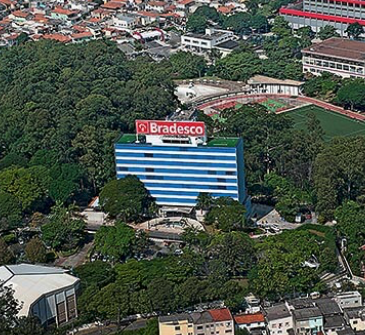
Bradesco’s NPL ratio hit all-time lows in Q1 2019

Brazil’s second largest private lender Banco Bradesco SA posted a 22% gain in quarterly recurring net income, meeting forecasts, as default ratios hit all-time lows.

Bradesco managed to grow its loan book at a fast pace while improving asset quality. It was the latest sign of strength for Brazil’s top banks even as the country’s economy struggles to recover.

CEO Octavio de Lazari said he also sees its Non-Performing Loans (NPL) ratio falling further this year after they declined in the quarter, adding that the bank expects full-year profitability to rise.

«There is still room for improvement in the delinquency ratio, although it is smaller now,» Lazari said. The default ratio over 90 days came in at 3.3%, down 0.2 percentage point from the fourth quarter of 2018.

Analysts highlighted in notes that the main negatives of Bradesco’s results were fee income and operating expenses, as both came in outside the bank’s guidance range.

Bradesco’s first quarter profit rose to 6.238 billion reais ($1.56 billion). Declining losses on bad loans also boosted Bradesco’s results. Loan-loss provision fell by 8.4 % from the same quarter a year earlier.

Itau BBA’s analysts said in a note to clients they were surprised by improvements in Bradesco’s asset quality in the first quarter.

Loan book growth

The bank’s loan book reached 548.3 billion reais, up 3.1% in the quarter, as lending to both individuals and companies increased. Bradesco expects its loan book to grow between 9% and 13% in 2019.

Lazari said the bank’s growth in lending outpaced what it was expected for Brazil’s still sluggish economic recovery, helped by new tools that allow Bradesco to infer clients’ income without requesting a paycheck.

Bradesco’s return on equity, a barometer of profitability, rose to 20.5%, in line with analysts’ expectations. It was up 0.8 percentage points from the previous quarter.

Original Story:Reuters | Carolina Mandl
Photo: Site Bradesco
Edition:Prime Yield


Caixa will offer discounts on delinquent loans to raise up to R$4 billion

Brazilian state-owned bank Caixa Econômica Federal will offer indebted retail clients discounts on their delinquent loans, in an attempt to raise up to 4 billion reais ($990.52 million) for the lender’s coffers, CEO Pedro Guimarães announced.

As explained by the responsible, these loans had already been written off, so if successful this initiative would raise extra revenue. The move will allow Caixa to offer new products and services to clients after they pay off their loans.

According to Reuteurs, the discounts will range between 40% to 90%.

Original Story: Reuters | Marcela Ayres and Carolina Mandl
Photo:Rodrigo de Oliveira
Edition:Prime Yield

Brazil’s Central Bank holds interest rates at 6.5%

Brazil’s central bank held fire on interest rates despite lackluster growth in Latin America’s biggest economy and uncertainty over President Jair Bolsonaro’s ability to push through a much-needed pension reform.

In a unanimous decision, last May 8th the bank kept the key Selic rate, its main instrument for controlling inflation, at the historic low of 6.5%. That is unchanged since March 2018.

The bank expects the rate to stay at that level for the rest of the year, but flagged a possible rise to 7.5% in 2020, according to a statement released after its meeting.

The government’s proposed overhaul of Brazil’s unsustainable pension system, which Bolsonaro has warned would bankrupt the country if the changes are not adopted, is seen as crucial to the president’s chances of making good on his other promised economic reforms.

A parliamentary committee is currently scrutinising the bill which analysts fear could be diluted after it sparked heated debate in the Congress.

Brazil’s commodities-driven economy, which is still struggling to recover from a record 2015-2016 recession, is expected to expand by 1.49% this year, according to a recent central bank survey of economists.

That would be only slightly faster than the 1.1% growth recorded in 2017 and 2018.

Original Story: The Business Times | AFP 
Photo: Site Banco Central do Brasil
Edition: Prime Yield

Brazil’s largest private bank sets lower targets for 2019

Brazil’s largest private-sector lender Itau Unibanco Holding SA posted a higher first-quarter recurring profit, but set lower targets for gains with clients in 2019, indicating it sees fiercer competition for consumers.

Itau revised its 2019 guidance nearly three months after releasing its estimates, as competition sharply rose among credit card processors. The bank owns Rede, and has decided to stop charging interest rates to advance payments for merchants using its machines.

Itau reduced estimates for fee income growth to a range of 2% to 5% in 2019. Earlier this year, the bank had expected growth of 3% to 6%.

The bank also predicted slower growth in its financial margin with clients, of 9% to 12%, instead of 9.5% to 12.5%.

The bank’s recurring net income totalled 6.87 billion reais ($1.73 billion), up 7.1% from the year-ago period and roughly in line with a Refinitiv analysts’ consensus estimate.

Profit was boosted by higher financial margins with clients as Itau extended more loans to consumers and small companies.

The bank’s loan book reached 647.061 billion reais, up 1.6% from the previous quarter, boosted by car, payroll and personal loans. Corporate loans shrank during Brazil’s slow economic recovery.

Earlier this year, the bank had foreseen its loan book would grow between 8% and 11% this year, below competitors’ targets.

Itaú’s return on equity, a gauge of profitability, came in at 23.6%, up 1.8 percentage point in the quarter. For the year, the bank expects to reach 24% profitability.

Loans in arrears for more than 90 days were at 3% in March, up 0.1 percentage point from December.

Total loan-loss provisions remained stable year-over-year, but grew 11.4% in the quarter to 3.8 billion reais.

Original Story:Reuters | Carolina Mandl 
Photo: Itaú site
Edition:Prime Yield

Santander Brasil loan book will reach R$400 billion by December

Banco Santander Brasil SA’s aggressive pace of growth in lending may decelerate this year, as Chief Executive Sergio Rial recently said that demand for corporate loans has been weak and competition is likely to be fiercer.

Rial told journalists he expects the bank’s extended loan book to reach around 400 billion reais ($101.5 billion) by December. «We will surpass 400 billion reais. If not, we will be close to 400 billion reais,» he said.

If Santander does not surpass this target, it would mean a loan book growth of roughly 3.5% in 2019, around one-third of the 11.2% growth posted in 2018.

Santander Brasil’s loan book remained at 386.9 billion reais in the first quarter, stable from the previous quarter, although lending for consumers grew.

The bank had been outpacing its competitors in previous quarters by extending loans to consumers shunned by other mainstream banks. However, Banco Bradesco SA, Brazil’s second largest lender, is closing the gap with Santander.

Still, the bank beat analysts’ first-quarter profit estimates.

Recurring net income at the Brazilian unit of Spain’s Banco Santander SA rose 21.9% to 3.485 billion reais and topped the 3.296 billion reais expected by analysts, according to Refinitiv data, helped by lower loan-loss provisions.

The bank’s return on equity remained stable at 21.1%.

Brazil made up 29% of the euro zone’s biggest bank by market value in the first quarter. Latin America’s importance has increased for Santander, as its businesses in the region have posted higher profitability growth, compensating for lower gains in Europe.

Its 90-day delinquency rate also remained stable at 3.1% from the previous quarter.

Chief Executive Sergio Rial, who also became the bank’s regional head for South America earlier this month, said he intends to boost the bank’s consumer finance business in the region at his new position. In Argentina, the bank will launch a consumer finance unit soon.

Spain’s Santander reported a net profit fall of 10 pct due to restructuring costs in Britain and Poland.

Original Story:Reuters | Carolina Mandl and Paula Laier
Photo: Santander site
Edition:Prime Yield


FinanZero secures $11 Million trough Series B Funding Round

FinanZero, a marketplace for consumer loans in Brazil, had recently announced it secured $11 million through its Series B funding round. Participants of the round were Atlant Fonder, Dunross & Co, and Vostok Emerging Finance.

The company describes itself as an independent broker for loans that negotiate with the customer’s loan application with several banks and credit institutions, to find the loan with the best interest rate and terms for the consumer. The lender also handles the lending process from start to finish. FinanZero has handled more than 600,000 loan applications and over the next 12 months, the expectation is to grow the volume of intermediated loans 10 times.

«FinanZero has simplified the way to apply for all type of consumer loan products in Brazil. We are a cost-free marketplace that allows you to compare loans online and choose the option that fits your needs with the lowest interest rate and best terms

Olle Widén, CEO of FinanZero, commented: «FinanZero will improve its technical platform and invest heavily in marketing to increase the visibility of the brand. We have already received more than 3 million loan applications in three years of operation in the Brazilian market. Today, the company has a growth of 50% per quarter, which adds up to more than 1 million visitors on our site per month»

Speaking about the investment, David Nangle, CEO of Vostok Emerging Finance, went onto add: «Brazil remains our favored fintech market globally, and through FinanZero we have one of the best ways to play its extremely attractive consumer finance market. With a strong team, partnerships and growing traction, we are more than happy to continue to support team FinanZero on this exciting journey».

Original Story: Crowdfunding insider |Samantha Hurst
Photo: FinanZero Site
Edition:Prime Yield


Banco Hyundai Brasil kicks off with R$ 300 million

Banco Hyundai Capital Brasil has been launched with initial capital of 300 million Brazilian reais ($76.8 million) to support customers and dealers of carmaker Hyundai Motor with financial services, Hyundai Capital said.

The consumer financing service provider unit stemmed from a joint effort by Hyundai Capital, the financial arm of Hyundai Motor Group, and Santander Brasil, a listed subsidiary of Spanish commercial banking group Santander.

Hyundai Capital and Santander Brasil equally hold 50%  stakes of the Sao Paulo-based joint venture, according to Hyundai Capital. The capital was raised in two rounds in May 2018 and February this year.

This marks the first time for a Seoul-based captive financing company dedicated to automotive financing and leasing to gain a license to operate an offshore lender in a South American market.

Hyundai Motor has about 9% market share, the fifth-largest in the Brazilian automotive market as of end-2018. Hyundai Capital said it sees great potential in the Brazilian automotive industry on the back of rising demand for new cars in Brazil.

«Hyundai Capital is supporting Hyundai Motor’s sales with a localization strategy based on the expertise that the company has accumulated in the market for many years.» Yoono Hwang, global president of Hyundai Capital, said in a statement.

The announcement came two months after Hyundai and Santander received authorization to operate a joint lender by the Brazil Central Bank in February.

Prior to the launch of the lender, Hyundai Motor’s Brazilian unit has been offering captive financial support by Hyundai Financiamentos, operated by Santander Brasil. Hyundai Capital said the contracts with Financiamentos customers will be gradually updated to Banco Hyundai Capital Brasil.

Original Story: The Investor | Son Ji-hyoung
Photo: Hyundai Motors Brasil site
Edition: Prime Yield


Brazil’s President proposes formal central bank autonomy

Brazil’s President Jair Bolsonaro issued a draft bill late on Thursday, April 11,  proposing to formalize the independence of the country’s central bank, a move that would align the country with other major economies where those who make monetary policy are legally protected from political interference.

Bolsonaro, who took office in January, campaigned on an orthodox economic platform and had promised to cut spending and ensure the central bank’s independence.

According to the document, the bank would be governed by a board of governors with fixed four-year mandates, with the possibility of being re-elected once. The four-year terms would not be simultaneous with the country’s presidential term, which is also four years.

Original Story: Reuters | Carolina Mandl
Photo: Site Banco Central do Brasil
Edition:Prime Yield

Households drive credit growth in Brazil

The household credit demand will pick up in Brazil over 2019, supported by a stronger labour market, low interest rates and broadly positive sentiment, Fitch says.

In a report released last April 8th, the rating agency maintains its view that credit growth in the Brazilian system will pick up over the coming quarters, in line with stronger economic activity. «Our core view remains that economic activity growth will rise modestly, driven by a cyclical rebound in consumption», says Fitch.

Latest figures show that Brazil’s total credit was up 5.5% y-o-y in February, led by a 9.0% rise in lending to individuals, well outpacing growth in the corporate sector.After a period of deleveraging, the household debt servicing ratio is at multi-year lows, at 19.8% overall in January and 17.4% when mortgages are excluded. While unemployment has risen in the first two months of 2019, the labour market is improving, adding a net 489,520 formal jobs in the year through February, of which 207,452 were added in January and February. Consumer sentiment is improving, in part reflecting optimism over the Bolsonaro administration’s ability to improve the economy, suggesting a stronger willingness to take on debt.

Regarding asset quality, «non-performing loans (NPL) in Brazil are likely to remain moderate over the coming quarters, benefiting from low interest rates and rebounding economic activity», Fitch forecasts. Until 2015, NPLs had steadily declined since 2012, when an economic slowdown – following a significant run-up in household debt levels – saw NPLs hit 4.0% of the total portfolio. This was largely due to an increase in non-performing credit from households. NPLs are beginning to fall, supported by improving economic growth and low interest rates. According to the rating agency, total NPLs came in at 2.9% in February.

Fitch forecasts real GDP growth will rise to 2.0% y-o-y in 2019, from 1.1% in 2018.

Original Story:Fitch Solutions | Fitch Solutions Press Release
Photo: FreeImages.com/ Afonso Lima
Edition:Prime Yield

Brazil central bank cuts 2019 growth forecast

Brazil’s central bank will take its time analysing the economic impact from an increasing number of shocks from abroad and rising political tension at home that appear to be slowing the government’s reform process, its president said.

In his first press conference as central bank chief, Roberto Campos Neto also said that volatility and uncertainty have increased lately, but noted that the current global economic slowdown is not severe enough to threaten global liquidity.

Speaking after the central bank cut its 2019 economic growth forecast to 2.0% from 2.4% in its quarterly inflation report, Campos Neto said policymakers must look through short-term market, economic and political volatility when deciding policy.

«Regarding recent shocks, the main message is inflation risks are now symmetrical, down from asymmetrical (to the upside), so we need more time,» he told reporters, noting that this signals policymakers have no bias regarding their next move.

Specifically, growth and inflationary pressures have weakened recently due to persistent slack in the Brazilian economy, a global slowdown, and rising uncertainty over domestic reforms, he added.

Campos Neto said he is confident the government’s signature plan to slash social security spending will be approved but admitted that the political environment had deteriorated recently, and market optimism has diminished.

This has slammed Brazilian markets, prompting the central bank to carry out a US$ 1 billion repurchase operation to relieve pressure on the Real. This is an “appropriate” step at the appropriate time, Campos Neto said, and does not represent a change in strategy.

Interest rate traders are almost fully discounting a central bank rate hike from the current record low 6.50% within the next year. Last week, they attached a 50-50 probability rates would be cut.

Original Story: MercoPress| News
Photo: FreeImages.copm/BrunoNeves
Edition:Prime Yield


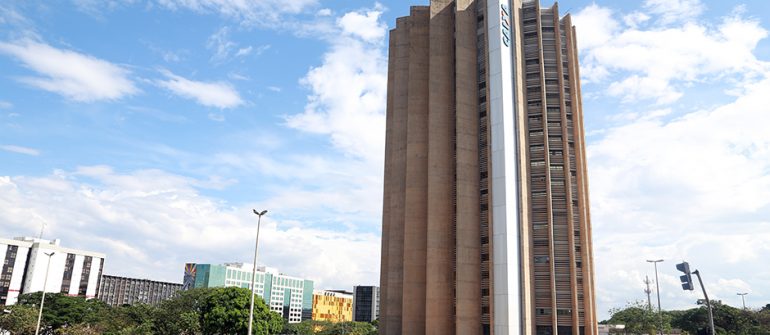
Brazil’s Caixa Económica Federal plans to sell real estate to repay public debt

Under new management, the biggest state-owned bank in Brazil, Caixa Economica Federal,plans to restructure itself by selling distressed real estate and equity stakes in subsidiaries.

Chief executive officer Pedro Guimaraes is overseeing this planned asset sales by the State-owned bank to repay perpetual bonds issued by the Brazilian government that total approximately $R 40 billion ($11 billion).

Caixa has assets valued at R$ 1.3 trillion, and all extraordinary gains from asset sales “will be used to repay that debt,” Guimaraes said in an interview with Bloomberg.

Guimaraes has approached investors focused in distressed real estate to gauge their interest in buying assets that Caixa has seized. The bank valued its portfolio of seized assets, mostly defaulted mortgages, at nearly R$ 8 billion as of September, more than any other Brazilian bank.

Caixa also may sell some non-distressed real estate assets, including all or part of 15 buildings in Brasilia, where the bank is based, and seven buildings on Paulista Avenue in Sao Paulo.

In recent years, the bank has struggled with low returns on assets and controversy, including allegations that Caixa officials have loaned money in exchange for bribes.

The new CEO of Caixa plans dual listings in Brazil and New York to sell minority stakes in bank subsidiaries in the insurance and bank-card businesses.  Guimaraes said the bank’s lottery and asset-management subsidiaries will go public in 2020. The bank could collect R$ 15 billion in proceeds from the four sales.

Among other plans, Caixa would auction the right to use its 26,000 offices – the largest branch network in the Brazilian banking industry – to sell insurance and card-processing products that generate fees for the bank.

Caixa has a loan portfolio valued at R$ 694 billion, which has grown nearly 10-fold over the past 10 years, largely because of efforts by previous administrations of the national government to provide low-cost credit through state-owned banks.

The Brazilian government supported that effort by lending Caixa $40 billion through a perpetual bond issue.

Original Story:  The Real Deal | Mike Seemuth / Bloomberg
Photo: Caixa Econômica Federal
Edition: Prime Yield

Caixa Económica Federal aims to raise R$3.9 billion through subsidiary listings

State-owned Brazilian bank Caixa Economica Federal is hoping to raise R$15 billion through the listing of four of its subsidiaries, chief executive Pedro Guimaraes told newspaper O Globo in an interview published on Saturday.

The bank aims to list its insurance, asset management, lottery and credit card subsidiaries in the second half of 2019 or first half of 2020, Guimaraes said. In January, he had said they could be listed within 12 months.

The company had previously disclosed that it plans to sell minority stakes in the subsidiaries through listings in Sao Paulo and New York.

Original Story:CNBC | Reuters
Photo: Caixa Econômica Federal
Edition:Prime Yield


Rental prices outpaced inflation for second consecutive month

Residential rental prices in Brazil continued to show positive movement in January rising 0.41%. After December’s rise of 0.38%, this was the second consecutive month rental prices outpaced the month’s inflation rate, which in January was 0.32%, as calculated by the IPCA/IBGE (National Consumer Price Index/Brazilian Institute of Geography and Statistics).

The latest rental figures were published in the FipeZap Rental Index, which tracks real estate rental listings across Brazil’s twenty-five largest cities.

Seventeen of the twenty-five cities in the survey registered increases in January with Brasília (2.15%), São José do Rio Preto (1.48%), São José (1.28%), and Joinville (0.96%) showing the biggest increases.

Notably, Rio de Janeiro showed a nominal increase in rental prices in January of 0.30% but still fell just short of the month’s inflation rate.

Meanwhile, rental prices in São Paulo registered an increase greater than inflation of 0.73%.

Of the eight cities in the survey that showed declines in January, the biggest declines were seen in Salvador and Fortaleza, where residential rental prices in the two cities declined 0.96% and 0.51% respectively.

Looking at the last twelve-month period, average rental prices in Brazil overall have increased 2.39%, but was still short of the period’s inflation rate of 3.72%.

São Bernardo de Campo had the biggest increase in that period, up 9.92%, with the city of Joinville in Santa Catarina not too far behind, up 9.48%.

Over the twelve-month period, Rio de Janeiro rental prices decreased 3.09%, while São Paulo prices increased 4.03%.

January’s survey also showed the average price per square meter of the twenty-five cities. São Paulo city held the distinction of having Brazil’s most expensive residential rental prices in January with an average price of R$37.02/sqm.

Barueri, also in São Paulo state, was a distant second with rental prices hovering at R$31.96/sqm. Rio de Janeiro rounded out the top three in January at R$30.21/sqm.

Within the city of São Paulo, the upscale neighborhood of Vila Olímpia, which is home to the Brazilian offices of several multinational companies including Google, Yahoo!, and Microsoft, had the most expensive rental prices in the entire country with listings averaging R$75.99/sqm.

Meanwhile in Rio, Leblon and Ipanema had the highest rental prices in the city at R$54.83/sqm and R$51.75/sqm respectively.

The FipeZap Index monitors real estate sale prices across fifteen Brazilian cities and is a monthly gauge of property prices. It is prepared jointly by the university research center, Fipe (Economic Research Institute Foundation) and the Brazilian online real estate platform, Zap Properties.

Original Story:The Rio Times | Nelson Bele
Photo: FreeImages.com/Carlos Eduardo Livino
Edition:Prime Yield
 

Brazil’s BTG Pactual management business grows 30%

Brazil’s Banco BTG Pactual SA expects its assets under management to grow roughly 30% in 2019, says Reuters after an interview with the banks Chief Financial Officer, João Dantas.

Net inflows to its wealth and asset management businesses were 26 billion reais ($6.94 billion) in 2018. Total assets under management reached 327 billion reais in December.

The bank forecast follows new hirings for its asset management unit earlier this month, such as former Finance Minister Eduardo Guardia to be chief executive and a veteran BlackRock Inc portfolio manager to be head of equity funds.

Asset management firms in Brazil have benefited from the country’s gradual recovery and all-time low interest rates, which tend to push investors into investments with higher fees and out of plain vanilla government bond funds.

BTG reported a 4.4% decrease in fourth-quarter recurring profit to 711 million reais on February 25th, as expenses went up and offset higher revenues.

The bank’s total revenues rose 13% from the year-ago quarter to 1.549 billion reais, mainly driven by higher fees from asset and wealth management.

Dantas also foresaw the bank’s loan book will expand 30% in 2019, with disbursements to companies in Brazil, Colombia and Chile. Last year, it rose 32.9%, reaching 38 billion reais.

«We already see a higher demand for corporate loans and we have capital to support loan book growth,» the CFO said.

The Sao-Paulo based bank reported an annualized return on equity, a measure of profitability, of 15%, up 0.7 percentage points from the previous quarter.

Original Story: Reuters |Carolina Mandl 
Photo: BTG Pactual
Edition:Prime Yield

NPL’s sales from Brazil’s top banks gain momentum in 2019

The credit recovery market in Brazil is seen gaining momentum in 2019 with the country’s largest banks expected to put 40 billion Brazilian reais of non-performing loans (NPL) up for sale, Valor Econômico reported, citing forecasts from managers who specialize in bad loan trading

Banks put about 30 billion reais in face value of delinquent loans up for sale in 2017 and 2018 each, according to the report.

The projected uptick is based on Caixa Econômica Federal’s plans to revisit the market this year after a court ruling suspended such sales for the state-run bank in mid-2016. The company is reportedly in the final stages of securing approval to resume the sales.

The strategy of Brazilian banks has reportedly been to partner with managers who specialize in debt recovery and sell the oldest tranches of their nonperforming retail loan portfolios.

In October 2018, Banco Bradesco SA agreed to purchase 65% of asset manager RCB Investimentos SA’s NPL servicing platform in Brazil. In doing so, it joined fellow Brazilian lenders Itaú Unibanco Holding SA, Banco Santander (Brasil) SA and Banco do Brasil SA, all of which either own or have stakes in similar asset recovery firms.

«Selling portfolios is more a matter of efficiency and focus» as opposed to revenue, Valor quoted Eurico Fabri, Bradesco’s vice president of retail banking, as saying.

Although Brazil’s debt recovery market is expected to grow this year, current unemployment levels suggest improvement will only solidify in the years to follow as the country’s economic situation continues to improve.

Original Story: S&P Global Intelligence| David Feliba
Photo: FreeImages.com/CesarFermino
Edition: Prime Yield

Rio de Janeiro

Brazil’s Government claims the need of pension system reforms to avoid recession

Brazil’s Economy Ministry has just released a report on which warns that the economy will slip into recession next year and official interest rates could more than double unless Congress approves measures to reduce the deficit in the country’s pension system.

The warning comes days after President Jair Bolsonaro presented his ambitious social security reform plan to Congress, which aims to save over 1 trillion reais ($295 billion) in the next decade.

Overhauling the creaking social security system is seen as critical to shoring Brazil’s public finances, boosting investor confidence, fostering growth and keeping interest rates and inflation under control, most economists say.

In its first official forecast on the potential impact on the economy over the next five years of reform or no reform, the Economy Ministry laid out starkly contrasting scenarios.

«In the event of no pension reform, GDP growth in 2019 will be 1% lower and Brazil will enter recession in the second half of 2020, approaching the level of losses seen in the 2014-2016 period», the ministry’s economic policy division warned in the report.

It said growth this year would slump to 0.8% from 1.3% last year — far weaker than the market consensus of around 2.5% and much worse than the 2.9% «best case» scenario of reform being passed.

Recessionary forces would also deepen over coming years if the pension system stays unchanged, the ministry said. The economy would shrink by 0.5% in 2020, by 1.1% in 2022 and as much as 1.8% in 2023.

The document also adds that benchmark interest rates will soar past 11% by year end from the current record low of 6.50% , and as high as 18.5% by 2023. Most economists expect rates to be on hold for the rest of this year.

But if reform is passed, growth will accelerate, job creation will surge and interest rates will fall, the Economy Ministry predicted.

The benchmark Selic rate could be reduced to a new low of 6.0 % later this year while the economy could create as many as 8 million new jobs by 2023, it said.

Economists have already factored in pension reform into their forecasts and say the outlook is not that strong even if something is approved this year, most likely a diluted version of Bolsonaro’s bill.

Corporate and household balance sheets have not been fully repaired since the 2014-16 recession, the international picture is cloudy, and not everyone is convinced the new administration will deliver on its pledges.

Original Story:Reuters |Jamie McGeever
Photo: FreeImages.com/Bruno Leiva
Edition:Prime Yield

Brazil holds interest rates at a record low

Brazil’s central bank held interest rates at a record low on last February 6thas expected, signalling it is in no rush to change them even though inflationary pressures have cooled, notices Reuters.

The bank’s monetary policy committee, known as Copom, voted unanimously to keep the benchmark Selic rate at 6.50% for the seventh straight meeting. According to Reuters, economists and investors are beginning to consider the possibility that rates could even be cut later this year. Although inflation risks have eased since its December meeting, Copom gave no indication it is moving in that direction too.

«The Committee judges that, since its previous meeting, notably related to the global outlook, inflationary risks have moderated,» Copom said in a statement accompanying the decision.

The central bank said the shifting global risks included greater odds of a global slowdown and easing short-term risks associated with normalizing interest rates in advanced economies.

Much will depend on how the economy performs in the coming months and the fate of the government’s economic reform agenda, which some see stimulating growth in the second half of 2019.

Based on market exchange rate and interest rate projections, Copom forecast inflation of 3.9% this year, unchanged from December but still below its 4.25% annual target.

The Brazilian real has strengthened around 5% since December’s policy meeting, largely on growing optimism that new right-wing President Jair Bolsonaro will deliver on his promise of ambitious economic reforms.

The central plank of that reform agenda is overhauling Brazil’s pension system, which could save the state up to 1.3 trillion reais ($350 billion) over the next decade and help the central bank to keep rates low — or even cut them further.

A stronger Brazilian currency will also help to cool price pressures. Interest rates futures markets are already pricing in around 20 basis points of easing by the end of the year.

Original story:Reuters |Jamie McGeever
Photo: FreeImage.com/ Svilen Milev
Edition: Prime Yield


Brazil Government supports foreign land purchases

Brazil’s land issues secretary within the Agriculture Ministry said that the government offers its support for foreign investors interested in buying land in Brazil, a practice which is currently prohibited.

A change to the law to allow foreigners to directly purchase land would require Congressional approval, Secretary Nabhan Garcia told reporters.

Original story: Reuters | Jack Spring and Anthony Boadle
Photo: FreeImages/ Marcel Krings
Edition: Prime Yield

Top