NPL&REO News

Caixa Económica Federal aims to raise R$3.9 billion through subsidiary listings

State-owned Brazilian bank Caixa Economica Federal is hoping to raise R$15 billion through the listing of four of its subsidiaries, chief executive Pedro Guimaraes told newspaper O Globo in an interview published on Saturday.

The bank aims to list its insurance, asset management, lottery and credit card subsidiaries in the second half of 2019 or first half of 2020, Guimaraes said. In January, he had said they could be listed within 12 months.

The company had previously disclosed that it plans to sell minority stakes in the subsidiaries through listings in Sao Paulo and New York.

Original Story:CNBC | Reuters
Photo: Caixa Econômica Federal
Edition:Prime Yield


Rental prices outpaced inflation for second consecutive month

Residential rental prices in Brazil continued to show positive movement in January rising 0.41%. After December’s rise of 0.38%, this was the second consecutive month rental prices outpaced the month’s inflation rate, which in January was 0.32%, as calculated by the IPCA/IBGE (National Consumer Price Index/Brazilian Institute of Geography and Statistics).

The latest rental figures were published in the FipeZap Rental Index, which tracks real estate rental listings across Brazil’s twenty-five largest cities.

Seventeen of the twenty-five cities in the survey registered increases in January with Brasília (2.15%), São José do Rio Preto (1.48%), São José (1.28%), and Joinville (0.96%) showing the biggest increases.

Notably, Rio de Janeiro showed a nominal increase in rental prices in January of 0.30% but still fell just short of the month’s inflation rate.

Meanwhile, rental prices in São Paulo registered an increase greater than inflation of 0.73%.

Of the eight cities in the survey that showed declines in January, the biggest declines were seen in Salvador and Fortaleza, where residential rental prices in the two cities declined 0.96% and 0.51% respectively.

Looking at the last twelve-month period, average rental prices in Brazil overall have increased 2.39%, but was still short of the period’s inflation rate of 3.72%.

São Bernardo de Campo had the biggest increase in that period, up 9.92%, with the city of Joinville in Santa Catarina not too far behind, up 9.48%.

Over the twelve-month period, Rio de Janeiro rental prices decreased 3.09%, while São Paulo prices increased 4.03%.

January’s survey also showed the average price per square meter of the twenty-five cities. São Paulo city held the distinction of having Brazil’s most expensive residential rental prices in January with an average price of R$37.02/sqm.

Barueri, also in São Paulo state, was a distant second with rental prices hovering at R$31.96/sqm. Rio de Janeiro rounded out the top three in January at R$30.21/sqm.

Within the city of São Paulo, the upscale neighborhood of Vila Olímpia, which is home to the Brazilian offices of several multinational companies including Google, Yahoo!, and Microsoft, had the most expensive rental prices in the entire country with listings averaging R$75.99/sqm.

Meanwhile in Rio, Leblon and Ipanema had the highest rental prices in the city at R$54.83/sqm and R$51.75/sqm respectively.

The FipeZap Index monitors real estate sale prices across fifteen Brazilian cities and is a monthly gauge of property prices. It is prepared jointly by the university research center, Fipe (Economic Research Institute Foundation) and the Brazilian online real estate platform, Zap Properties.

Original Story:The Rio Times | Nelson Bele
Photo: FreeImages.com/Carlos Eduardo Livino
Edition:Prime Yield


Brazil’s BTG Pactual management business grows 30%

Brazil’s Banco BTG Pactual SA expects its assets under management to grow roughly 30% in 2019, says Reuters after an interview with the banks Chief Financial Officer, João Dantas.

Net inflows to its wealth and asset management businesses were 26 billion reais ($6.94 billion) in 2018. Total assets under management reached 327 billion reais in December.

The bank forecast follows new hirings for its asset management unit earlier this month, such as former Finance Minister Eduardo Guardia to be chief executive and a veteran BlackRock Inc portfolio manager to be head of equity funds.

Asset management firms in Brazil have benefited from the country’s gradual recovery and all-time low interest rates, which tend to push investors into investments with higher fees and out of plain vanilla government bond funds.

BTG reported a 4.4% decrease in fourth-quarter recurring profit to 711 million reais on February 25th, as expenses went up and offset higher revenues.

The bank’s total revenues rose 13% from the year-ago quarter to 1.549 billion reais, mainly driven by higher fees from asset and wealth management.

Dantas also foresaw the bank’s loan book will expand 30% in 2019, with disbursements to companies in Brazil, Colombia and Chile. Last year, it rose 32.9%, reaching 38 billion reais.

«We already see a higher demand for corporate loans and we have capital to support loan book growth,» the CFO said.

The Sao-Paulo based bank reported an annualized return on equity, a measure of profitability, of 15%, up 0.7 percentage points from the previous quarter.

Original Story: Reuters |Carolina Mandl 
Photo: BTG Pactual
Edition:Prime Yield

NPL’s sales from Brazil’s top banks gain momentum in 2019

The credit recovery market in Brazil is seen gaining momentum in 2019 with the country’s largest banks expected to put 40 billion Brazilian reais of non-performing loans (NPL) up for sale, Valor Econômico reported, citing forecasts from managers who specialize in bad loan trading

Banks put about 30 billion reais in face value of delinquent loans up for sale in 2017 and 2018 each, according to the report.

The projected uptick is based on Caixa Econômica Federal’s plans to revisit the market this year after a court ruling suspended such sales for the state-run bank in mid-2016. The company is reportedly in the final stages of securing approval to resume the sales.

The strategy of Brazilian banks has reportedly been to partner with managers who specialize in debt recovery and sell the oldest tranches of their nonperforming retail loan portfolios.

In October 2018, Banco Bradesco SA agreed to purchase 65% of asset manager RCB Investimentos SA’s NPL servicing platform in Brazil. In doing so, it joined fellow Brazilian lenders Itaú Unibanco Holding SA, Banco Santander (Brasil) SA and Banco do Brasil SA, all of which either own or have stakes in similar asset recovery firms.

«Selling portfolios is more a matter of efficiency and focus» as opposed to revenue, Valor quoted Eurico Fabri, Bradesco’s vice president of retail banking, as saying.

Although Brazil’s debt recovery market is expected to grow this year, current unemployment levels suggest improvement will only solidify in the years to follow as the country’s economic situation continues to improve.

Original Story: S&P Global Intelligence| David Feliba
Photo: FreeImages.com/CesarFermino
Edition: Prime Yield

Rio de Janeiro

Brazil’s Government claims the need of pension system reforms to avoid recession

Brazil’s Economy Ministry has just released a report on which warns that the economy will slip into recession next year and official interest rates could more than double unless Congress approves measures to reduce the deficit in the country’s pension system.

The warning comes days after President Jair Bolsonaro presented his ambitious social security reform plan to Congress, which aims to save over 1 trillion reais ($295 billion) in the next decade.

Overhauling the creaking social security system is seen as critical to shoring Brazil’s public finances, boosting investor confidence, fostering growth and keeping interest rates and inflation under control, most economists say.

In its first official forecast on the potential impact on the economy over the next five years of reform or no reform, the Economy Ministry laid out starkly contrasting scenarios.

«In the event of no pension reform, GDP growth in 2019 will be 1% lower and Brazil will enter recession in the second half of 2020, approaching the level of losses seen in the 2014-2016 period», the ministry’s economic policy division warned in the report.

It said growth this year would slump to 0.8% from 1.3% last year — far weaker than the market consensus of around 2.5% and much worse than the 2.9% «best case» scenario of reform being passed.

Recessionary forces would also deepen over coming years if the pension system stays unchanged, the ministry said. The economy would shrink by 0.5% in 2020, by 1.1% in 2022 and as much as 1.8% in 2023.

The document also adds that benchmark interest rates will soar past 11% by year end from the current record low of 6.50% , and as high as 18.5% by 2023. Most economists expect rates to be on hold for the rest of this year.

But if reform is passed, growth will accelerate, job creation will surge and interest rates will fall, the Economy Ministry predicted.

The benchmark Selic rate could be reduced to a new low of 6.0 % later this year while the economy could create as many as 8 million new jobs by 2023, it said.

Economists have already factored in pension reform into their forecasts and say the outlook is not that strong even if something is approved this year, most likely a diluted version of Bolsonaro’s bill.

Corporate and household balance sheets have not been fully repaired since the 2014-16 recession, the international picture is cloudy, and not everyone is convinced the new administration will deliver on its pledges.

Original Story:Reuters |Jamie McGeever
Photo: FreeImages.com/Bruno Leiva
Edition:Prime Yield

Brazil holds interest rates at a record low

Brazil’s central bank held interest rates at a record low on last February 6thas expected, signalling it is in no rush to change them even though inflationary pressures have cooled, notices Reuters.

The bank’s monetary policy committee, known as Copom, voted unanimously to keep the benchmark Selic rate at 6.50% for the seventh straight meeting. According to Reuters, economists and investors are beginning to consider the possibility that rates could even be cut later this year. Although inflation risks have eased since its December meeting, Copom gave no indication it is moving in that direction too.

«The Committee judges that, since its previous meeting, notably related to the global outlook, inflationary risks have moderated,» Copom said in a statement accompanying the decision.

The central bank said the shifting global risks included greater odds of a global slowdown and easing short-term risks associated with normalizing interest rates in advanced economies.

Much will depend on how the economy performs in the coming months and the fate of the government’s economic reform agenda, which some see stimulating growth in the second half of 2019.

Based on market exchange rate and interest rate projections, Copom forecast inflation of 3.9% this year, unchanged from December but still below its 4.25% annual target.

The Brazilian real has strengthened around 5% since December’s policy meeting, largely on growing optimism that new right-wing President Jair Bolsonaro will deliver on his promise of ambitious economic reforms.

The central plank of that reform agenda is overhauling Brazil’s pension system, which could save the state up to 1.3 trillion reais ($350 billion) over the next decade and help the central bank to keep rates low — or even cut them further.

A stronger Brazilian currency will also help to cool price pressures. Interest rates futures markets are already pricing in around 20 basis points of easing by the end of the year.

Original story:Reuters |Jamie McGeever
Photo: FreeImage.com/ Svilen Milev
Edition: Prime Yield


Brazil Government supports foreign land purchases

Brazil’s land issues secretary within the Agriculture Ministry said that the government offers its support for foreign investors interested in buying land in Brazil, a practice which is currently prohibited.

A change to the law to allow foreigners to directly purchase land would require Congressional approval, Secretary Nabhan Garcia told reporters.

Original story: Reuters | Jack Spring and Anthony Boadle
Photo: FreeImages/ Marcel Krings
Edition: Prime Yield

Brazil current account deficit doubles, FDI inflows rise in 2018

Brazil’s current account deficit doubled in 2018 as economic growth fuelled demand for foreign goods and services, while foreign investment reached its highest share of GDP since 2001, reveals the country’s central bank.

The deficit remains narrow enough not to dim the generally positive outlook for Brazil that is taking shape among international investors for the year ahead.

Brazil’s current account deficit last year rose to $14.51 billion, or 0.77% of gross domestic product (GDP), almost exactly double the $7.235 billion shortfall registered the year before, equivalent to 0.35% of GDP.

Imports rose 21% on the year while exports rose 10%, which narrowed the trade surplus to $53.59 billion from $64 billion the year before.

But economists at Citi said the current account deficit, a broader measure of trade and capital flows, remains «comfortable» at less than 1% of GDP.

Investors are paying close attention to plans of the government to increase Brazil’s economic competitiveness via a mix of tax cuts, privatization and, most importantly, pension reform. The latter could save up to 1.3 trillion reais over the next decade, according to Economy Minister Paulo Guedes.

Some $88.3 billion of foreign direct investment (FDI) poured into Brazil last year, the central bank said, exceeding its earlier projections of $83 billion. Net FDI flows over the 12 months to December totaled 4.7% of GDP, the highest since June 2001, the central bank said.

Investors pulled funds out of Brazilian financial markets last year, however. Central bank figures showed that foreign investors withdrew $4.265 billion from Brazilian stocks in 2018, the most in a decade.

The pace of foreign inflows into Brazilian financial assets is expected to pick up this year, however, with investors attracted by Bolsonaro’s market-friendly policies and by relatively high interest rates.

Amundi, Europe’s largest fund manager with 1.45 trillion euros of assets under management, already said that Brazil is emerging as one of the most attractive destinations for long-term investment in local currency debt instruments.

Brazil’s benchmark Selic interest rate stands at 6.50%. That may not rise much if at all this year, thanks to the uncertain global economic outlook, but a growing consensus among international investors is that is an investment risk worth taking.

Original story:Reuters |Jamie McGeever and Marcela Ayres
Photo: FreeImages.com/Bruno Neves
Edition: Prime Yield

Banking sector has just moved to a new lending cycle

Analysts believe that the Brazilian banking sector has just moved to a new lending cycle.

Brazil’s central bank latest data (from November 2018) shows that origination for earmarked loans picked up sharply over the last year, reaching R$302 billion ($80.2 billion), the highest level since December 2015.

After two years of contraction in the loan book, 2018 was a year of inflection; with economic activity picking up in 2019, analysts expect this accelerating trend to continue.

UBS’s financial analyst Philip Finch believes the recent compression in NIMs will be alleviated during the year: «We expect the Selic rate to start increasing in mid 2019, reaching 8% by the end of the year, which together with better mix should offset competition pressure on NIMs. We currently forecast NIMs flat in 2019, on average, for the banks under our coverage

Consensus expectations are for system-wide credit growth of around 8% year on year, with volumes and a better mix (skewed towards SMEs and consumer growth) boosting profitability.

Better NPL ratios

Strong credit growth should also coincide with better asset quality – reductions in non-performing loans and lower provisions – which will drive the large Brazilian banks.

Marcelo Telles, analyst at Credit Suisse, says: «[90 day] delinquency ratios have declined substantially from its recent peak in mid-2016. Delinquency for individuals currently stands at the lowest level in 10 years, while corporate delinquency has declined to pre-crisis levels, though seemingly with plenty of room to improve, as it still stands substantially higher than historical levels».

Provision expenses should increase below loan growth, slightly lowering the cost of risk from 2.90% to 2.85%, below the previous annual low of 3.1% in 2014.

«We see upside risk to our [forecasts],» says Finch. «Most banks still have high levels of excess provisions, meaning that a better economic activity level can lead to clients’ ratings upgrades, translating into lower provisioning. Moreover, as sector loan mix has become considerably more defensive, with a greater portion of collateralized lending, we believe there is scope for [cost of risk] to fall to new lows, although how much lower could also depend on how quickly banks re-risk their loan books.»

Telles agrees: «We expect cost of risk to continue to improve in the next few quarters, driven mainly by Bradesco and Banco do Brasil. After gradually normalizing two years down the road, we assume the cost of risk will start to rise again, as credit growth, expected to pick up this year, should be led by high-yield segments

«In other words, we attribute the higher cost of risk to changes in the portfolio mix, not to any deterioration in delinquency levels on a product-by-product basis, thus not necessarily affecting risk-adjusted returns

Original story:Euromoney |  Rob Dwyer
Photo: FreeImages.com/Marcel Krings
Edition: Prime Yield

Brazil’s banks outperformance expected to 2019

Multiple positive factors point to outperformance of Brazil’s banks in 2019, but pensions reform risks remain.

UBS’s financial analyst Philip Finch believes that a potent mix of stronger than-expected-loan growth, improving net interest margins (as the country’s base rate, Selic, rises), a falling cost of risk (if pensions reform is passed) and improved efficiency ratios from branch rationalization will improve the profitability of Brazil’s leading banks.

Floating all these specific boats is the cyclical recovery of the Brazilian economy that should come this year. These strong numbers are based on expected growth of 3% (rebounding from a small recovery of 1.5% in 2018 and 0.5% in 2017 and a deep recession between 2014 and 2016).

As Finch notes, pensions reform is the key variable. All of the projections of 3%-plus growth are based upon the new administration of president Jair Bolsonaro being able to pass meaningful reform – and there have been encouraging noises that the new administration is making this social security reform a priority.

However, William Jackson, Capital Economics’ chief emerging markets economist, highlights the downside risks to this assumption: «The latest noises don’t mean pension reform is guaranteed. For one thing, it’s not clear that Bolsonaro himself is as committed to the reform as his economic team – it seems he has yet to sign off on the higher retirement ages being suggested and the shorter transition phase».

The politics are also obtuse: the plan will be politically unpopular and Jackson points out that it isn’t clear if the appetite exists within congress to push through unpopular and painful changes to the pension system.

Pensions notwithstanding, other banks are more bullish on this year’s macro-economic scenario: Bank of America Merrill Lynch forecasts growth of 3.5% in 2019 – above the 2.6% consensus – driven by «higher confidence indices and lower market rates, in our view, which should lead to a decline in unemployment rate and an improvement in credit market conditions, favouring especially private consumption and investment

Finch expects an average of 17.6% earnings growth for the large Brazilian banks in 2019, with return on equity improving 147 basis points to 19.5%.

Original story:Euromoney | Rob Dwyer
Photo:FreeImages.com/Bruno Neves
Edition:Prime Yield

Brazil’s new finance minister faces difficult economic challenges

Brazil’s newly appointed Finance Minister, Paulo Guedes, faces a daunting challenge: to bring Latin’s America’s biggest economy back to full health, following the worst recession in the country’s history.

Making matters more difficult, Guedes will have very limited time to implement urgent fiscal and structural reforms to avoid a new crisis.

For now, the country’s economy is evolving positively: GDP grew at an annualized rate of 1.4% in the third quarter if 2018, at the fastest pace in 18 months. Investment rose 1.6%, marking the first positive reading in four years. Although positive, it seems a fragile recovery as we look at the 13 million unemployed workers, a staggering fiscal deficit and a massive debt-to-GDP ratio.

Guedes, who will also be in charge of planning and development, has been dubbed by the Brazilian press a “super minister.” A former pupil of Milton Friedman at the University of Chicago, he argues for smaller government and privatization.

«As a ‘Chicago Boy,’ Guedes would like to privatize everything,» says Alfredo Saad-Filho, professor of political economy at SOAS University of London. «However, his ambitions have already fallen victim to the conflicts between the president and other players close to the administration, to the extent that Bolsonaro has already intervened repeatedly to contain Guedes.» It now appears that while utility companies Petrobras and Eletrobras will be privatized, lenders like Banco do Brasil and Caixa Economica Federal will remain state-owned, Saad-Filho notes.

Another challenge is restructuring the country’s pension system. «The sooner the better,» Guedes has stated to the press. The current structure—which disproportionately benefits public servants, who can retire in their mid-50s—costs 12% of GDP.

While Guedes economic views are fairly clear, it remains to be seen where Bolsonaro and a divided and unpredictable Congress land. As some observers have already pointed out, the country’s fate is in the hands of an economist who is getting his first taste of public service—and new lawmakers who don’t know much about the economy. «A very public conflict is mounting,» says Saad-Filho, «and it started when the administration was not even in power yet

Original story: Global Finance |  Luca Ventura 
Photo: Valter Campanato/Agência Brasil
Edition: Prime Yield

«The expectations are now very high in Brazil»

Brazil’s Outgoing central bank President told Swiss newspaper Le Temps that conditions remain in place for strong economic growth, while he warned against inflated expectations under the country’s new populist government.

In an interview quoted by Bloomberg, Ilan Goldfajn told that «the expectations are now very high in Brazil». The responsible, who is to be replaced as central bank president by Roberto Campos Neto, said the same source that to keep inflation in check Brazil must continue with economic reforms under the new government of Jair Bolsonaro.

«The idea is to continue the reforms and increase the flexibility of the economy», he said. «If the new government comes to put the accounts in order, the economy will gain in productivity».

Goldfajn also said Brazil’s inflation is under control and can remain so in coming years, with interest rates at a low level to stimulate the economy. He expects economic growth of 2.5% in March.

Original Story:Bloomberg |Andy Hoffman
Photo:  Arquivo/Marcelo Camargo/Agência Brasil
Edition: Prime Yield

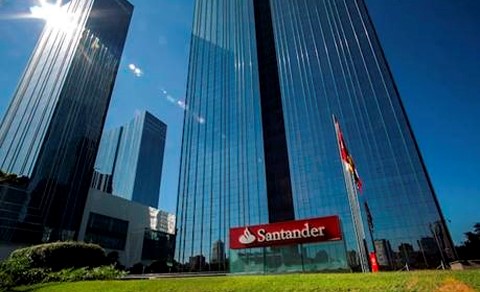
Santander’s Brazil is driving growth with car loans

Banco Santander grabbed 25% of the market for car loans in Latin America’s largest country, Brazil, in part by extending credit to borrowers shunned by other mainstream banks. As Reuters explained, that means financing working-class customers in need of cheap motorcycles and cars up to two decades old.

According to the same article, that business line helped power Madrid-based Santander through Brazil’s recent recession, even as domestic rivals Itau Unibanco Holding SA and Banco Bradesco SA hit the brakes, and other foreign banks such as London-based HSBC Plc and U.S. Citigroup sold their struggling Brazilian retail businesses.

Despite the risks of the high rates of default in this specific consumer credit niches, the fact is Santander is cruising in Brazil, where is the third-largest private sector bank. Its 90-day default ratio is the lowest among Brazil’s largest private banks, at 2.9% in September.

Year-over-year consumer loan growth in Brazil hit 22.6% in September, more than triple the industry average of 7%. Brazil unit profitability, which for years has lagged peers, jumped to 19.4% from 16.3% in the same period. That beat Bradesco, the country’s second largest private lender, and narrowed the gap with industry-leading Itau.

Santander’s increasing reliance on Brazil shows how emerging markets can still provide a jolt of growth. The Brazilian unit contributed 26% of group profits in the first nine months of 2018, up from 19% four years ago. Santander Brasil’s stock price has surged more than two thirds in the last 12 months, vastly outperforming the shares of its parent company, as well as those of Itau and Bradesco.

Still, Santander Brazil’s outsized auto loan portfolio, and its willingness to bet on borrowers and vehicles avoided by competitors, could presage a bumpier road ahead in a country with a history of economic volatility.

«Certainly, Santander’s growth strategy is a success story so far,» said Andre Martins, an analyst at XP Investimentos, to Reuters. «But the bank will be the one most exposed to defaults if the Brazilian economy turns down.»

Around 80% of the Brazil unit’s auto loans are on cars aged four years or less, and down payments are hefty, averaging 36%. «If Santander’s loan book were problematic, it would already have popped after a 3-year historic recession,» said Angel Santodomingo, chief financial officer for Santander Brasil. «Our success in credit quality is related to our ability to analyze and price individuals’ risk

Big data at the service of consumer credit

The bank is harnessing big data to glean information beyond borrower income and savings. And Brazil risk officers are using company tools that have proven successful elsewhere, including the United States, where Santander is a major subprime auto lender.

The bank has also embraced the internet to grow its business, leveraging online sales generated through WebMotors, a top car-selling website that it owns. Two years ago it launched an app that allows dealers to arrange car loans within minutes for buyers who provide eight pieces of information, an innovation that is now being copied by other Brazilian banks. That process had previously taken at least a day and required car buyers to provide reams of documentation. If a loan is approved, clients sign the contract digitally.

Santander plans to use that model to grow its consumer finance business in Brazil with loans for vacations, building materials and solar panels, according to Andre Novaes, head of Santander’s consumer finance unit. Many Brazilian banks have avoided such lending because of the high default risk and shaky collateral.

To safeguard its portfolio, Santander said it has encouraged highly-indebted clients to refinance and consolidate different types of loans in arrears into a single loan with more amicable terms.

Some bankers, however, view the practice as a way to mask Santander’s default ratio. We must remember that severe losses in 2011 forced Itau and Bradesco to stop financing low-end motorcycles, and to ban cars aged ten years and older from their portfolios. They also increased down payments and shortened loan maturities, which had stretched as long as 70 months.

Original Story: Reuters | Carolina Mandl
Photo: Santander
Edition: Prime Yield

Bradesco is back on track

With its focus on SME’s, Brazilian Bradesco banc is well set to grow with the country’s economy, according to Euromoney.

Third-quarter 2018 results back up this optimism. The bank’s earnings grew 6% during the quarter and 14% year on year, which was the strongest bottom line expansion among the large banks.

Following the announcement of the results, Bradesco’s president, Octavio de Lazari, predicted further growth next year. «We have the appetite to continue to grow our credit portfolio and to grow a lot,» he said – though he declined to give any specific forecasts for either credit or earnings growth in 2019.

Perhaps more importantly, the bank also had the best net interest margin versus non-performing loan performance ratio in the market, with core net interest income increasing by 4% while NPLs (90 days) fell by 30 basis points. In the bank’s critical small and medium-sized enterprise segment (to which it has a larger exposure than its competitors), it managed to cut NPLs by an impressive 74bp in the quarter – with corporate NPLs stubborn due to three specific large defaults.

The performance in SMEs is encouraging for the bank. The loan portfolio to this sector increased by 3.6% in the quarter (corporates by just 0.4% and the individual’s segment by 1.8% quarter on quarter).

Bradesco’s overall loan portfolio is tilted more to the higher-returning segments than its competitors, which leads analysts to argue that it is best positioned to grow with the Brazilian economy.

BTG Pactual bank analyst, Eduardo Rosman, hailed the third quarter results as showing that the turnaround, “something investors have been waiting for some time”, has arrived.

«The big improvement in NPLs and particularly the better dynamics seen in the SME business line make us more positive on the prospects for the bank,» Rosman wrote in his third-quarter results report to clients. «In a scenario where Brazil’s GDP recovers, we tend to believe Bradesco’s ROE has room to expand and reduce the gap to its main competitor Itaú. It could also get back the number two ROE position recently lost to Santander

Bradesco’s ROE was 19.1% in the third quarter and Carlos Firetti, market relations director at Bradesco, thinks this level will more likely be a new floor rather than a peak. «We believe we have reached a new level of ROEs and we still focus for expanding,» he says. «We believe that the economy, the improvement in the economy, the opportunities that will arise from it, with more loan growth, and also the maturity of many of our initiatives, will allow us to actually look for higher profitability levels

Original Story: Euromoney
Photo: Bradesco
Edition: Prime Yield

US FICO acquires Brazilian Risk Management Firm GoOn

US data analytics firm FICO has acquired Brazilian credit risk management consultancy GoOn, gaining wider access to thousands of potential clients in the Brazilian financial market. The values involved in the deal were not disclosed.

Founded in 2002, GoOn provides risk consulting services for the entire consumer credit life cycle. It is reported to have many deep-pocketed clients in Brazil’s banking, retail, insurance, and real estate sectors. Moreover, it has trained more than 12,000 credit management professionals and most of whom work for its clients.

FICO’s technology assets, combined with Goon’s skilled human talent, will create a powerful company in Brazil’s credit market, say analysts.

Original Story: Nearshore Americas | Narayan Ammachchi
Photo: GoOn
Edition: Prime Yield

Brazil’s state-controlled banks to depend less on Treasury funding

The new heads of two Brazilian state lenders, BNDES and Caixa Econômica Federal, said in during their swearing-in ceremony that they will depend less on Treasury funding in coming years, in a sign President Jair Bolsonaro government wants to redefine the role of public-sector banks.

According to the officials, the new administration also plans to make development bank BNDES and mortgage lender Caixa Econômica Federal speed up repayment of Treasury loans. The strategy marks a departure from an economic model championed by previous left-wing administrations that funneled public funds to BNDES and other state banks to create “national champions.”

Economy Minister Paulo Guedes said such policies are «regressive» in a speech where he pledged that public-sector lending by public banks should focus on credit for the unprivileged and let the private-sector handle most lending.

At a swearing-in ceremony for the bank executives, new BNDES head Joaquim Levy said its lending activity should be adjusted in line with the equity of its shareholder, the federal government.

Carlos Thadeu de Freitas, the financial director of BNDES, told two local newspapers that the bank aims to return up to 100 billion reais ($27 billion) in loans owed to the Treasury in 2019.

BNDES had planned to repay 26 billion reais to the Treasury this year, but raising that figure would allow the government to cut public debt faster as is the desire of Bolsonaro’s new economic team, Freitas said.

«The BNDES has to reinvent itself,» Freitas was quoted as saying in newspaper O Estado de S.Paulo. «It cannot compete with private banks, providing working capital to companies which have other means to access such lines.»

In the same vein, Caixa will sell stakes in four subsidiaries to repay loans to the Treasury, said Pedro Guimarães, its new chief executive. The plan will involve the insurance, cards, asset management and lottery units.

Original Story: Reuters |Marcela Ayres
Photo: Caixa Economica Federal
Edition:Prime Yield

Credit granting should grow by 10% in Brazil next year, says S&P

Standard & Poor’s Global (S&P) expects Brazilian banks to significantly raise credit granting in 2019, given the greater economic growth prospects. The international rating agency forecasts a 10% expansion in the total credit portfolio next year. As for 2018, S&P anticipates a growth between 4% to 6%, after years of contraction.

If this scenario is confirmed, the total credit ratio to GDP will rise to 47% in 2018 and 49%. The NPL ratio (for non-performing loans over 90 days), for its hand, should continue to gradually fall over the next two years, receding from the 3% level recorded in September. The Banks’ asset quality is expected to continue to improve and there should be a further moderation within the loan renegotiation levels, states S&P.

The credit growth should continue be headed by private banking institutions.

Original Story: Valor Económico | Sérgio Tauhat
Translation & Edition:Prime Yield

Brazil banks going to deliver proposal to cut loan rates

Brazil’s main banking lobby is going to deliver proposals aimed at reducing loan interest rates to the newly President-elect Jair Bolsonaro once he is inaugurated in January.

The information was told to Reuters by Bradesco’s Chief Executive, Octavio de Lazari, who explained that the proposals from industry group Febraban will include revamping brazil’s bankruptcy law and reducing mandatory notary services that elevate credit costs.

According to Reuters, the move comes as Brazil’s central bank has been looking for ways to cut consumer interest rates that average around 260% annually for revolving credit lines (central bank data). That figure compares with 6.5% for the country’s benchamark Selic rate.

Lazari also said that Bradesco expects its loan book to grow at a faster pace in 2019 than this year, as the Brazilian economy accelerates. Its corporate loan book is expected to grow close to 10% in 2019, and credit to individuals may grow at even higher rates, he said.

Original Story: Reuters | Authors: Tatiana Bautzer, Carolina Mandl, Rodrigo Campos
Photo: Banco Central do Brasil
Edition:Prime Yield

Brazilian state bank freezes part of housing subsidy program

Brazil’s state bank Caixa Económica Federal has suspended the issuance of some new home loans in the “Minha Casa, Minha Vida” housing subsidy program.

In a statement to Reuteurs, the bank said it was not extending new loans in the so-called “bracket 1.5” of the subsidy program until the end of this year due do budgetary restrictios. Loans in that segment, which offer favourable terms to families earning up to 2,600 reais ($690) per month, will be restarted next year, the bank explained.

The announcement of this move knocked the shares of homebuilders and dealing a blow to low income consumers who rely on the program.

Original Story: Reuteurs
Photo: wikimedia commons /Gaf.arq
Edition:Prime Yield

Brazil election poses risks for housing subsidy programms

Even as all major candidates in Brazil’s presidential election have expressed support for housing subsidy programs, the country’s October vote still brings risks for major homebuilders, a Moody’s executive said on Tuesday.

Airline profits could also take a hit if the election results hurt the value of Brazil’s real currency, Moody’s added.

Marianna Waltz, head of the ratings agency’s Latin America corporate finance team, said in an interview that no candidate was planning structural changes to Brazil’s popular “Minha Casa, Minha Vida,” housing program, which is key for homebuilders’ bottom lines.

But she said any deterioration in public finances following the election or a decrease in consumer confidence would leave the sector significantly exposed.

«It doesn’t seem that we are going to have material changes in the current regulatory framework, which is positive. That said – if the economy isn’t doing well, if there is a reversal in market sentiment, demand isn’t going to be there», she said. «In addition to that, if government fiscal accounts are not in good shape, maybe the policy framework is there, but in practice the money will not be there to be lent».

Waltz’s comments highlight risks to some of Latin America’s largest homebuilders. Real estate executives have sought to assure investors in recent months that any housing subsidy changes will be minor, though some analysts have flagged possible cuts post-election when politicians may have fewer qualms about cutting popular programs.

Brazilian go to the polls on Oct. 7 to vote for president, governors, and state and federal lawmakers. In the presidential race, right-wing Congressman Jair Bolsonaro is likely to face off against leftist former Sao Paulo Mayor Fernando Haddad in a tight runoff.

Original story: Reuters | Gram Slattery 
Photo: Governo do Brasil (www.brasil.gov.br)
Edition: Prime Yield

Top