NPL&REO News

Italian banks struggle to pacify ECB NPL push

Only two weeks into his new job as the eurozone’s single banking supervisor, Andrea Enria is already at the sharp end of rebukes from Italy’s populist government.

In mid-January, Monte dei Paschi di Siena, now majority state-owned, announced details from the December draft version of its annual supervisory review and evaluation process (SREP). This included an unexpected European Central Bank (ECB) recommendation to bring coverage of its bad-debt pile up to 100% within seven years – something the market thought only stronger banks would have to do.

For Italy’s deputy prime minister Matteo Salvini, the ECB might have been exerting unfair pressure on the country. «The new attack by the ECB supervisor on the Italian banking system and Monte dei Paschi shows once again that the banking union … not only does not make our financial system more stable, but it causes instability,» says Salvini, according to Reuters.

Italy has Europe’s biggest non-performing-loan (NPL) pile, but this coverage policy is eurozone-wide – and, anyway, Italian bank stocks soon recovered. The large and mid-tier Italian banks all issued statements denying a «significant» or «material» impact on their financial forecasts, even though the ECB is also pushing them to reach 100% NPL coverage earlier than many investors imagined.

Gross bad debt in Italy alone still amounts to about €200 billion, after all, with average coverage ratios ranging from about 45% to 60%, according to UBS.

Moving towards provisioning 100% of existing NPLs will cost Italian banks on average about 47 basis points of capital annually for the next two years alone, with the total cost (€63 billion) about three times more than for the laxer targets the market had assumed, according to Giovanni Razzoli, banks analyst at Equita in Milan. «There will be an increase in banks’ coverage from these requests,” he says. «The banks are trying to downplay the situation, but the impact on some is quite significant».

Original Story:Euromoney | Dominic O’Neill
Photo: FreeImages.com/ Matic Zupancic
Edition:Prime Yield

Portugal’s NPL stock is still too high, says ESM

Despite all the progress towards the reduction its NPL stock pile since 2016’s peak, Portugal’s bad debt level is still among the highest within the Eurozone, warns the European Stability Mechanism (ECB), while recalling the need to further enhance the efforts to reducing it.

At a conference organized by Fitch in Lisbon a few days ago, Matjaž Sušec, the assistant director of the Strategy and Institutional Relations of the ESM, noted, that the Portuguese banking sector is definitely more resilient, «but some of the challenges are still there».

Four recapitalizations allowed for the banking system to go through a major «clean-up» of its accounts. The NPL level is now one third below the peak recorded in 2016, and in 2018, the country’s banking system presented its best results since the crisis. However, regardless of these signs of progress «Portugal still presents very high levels of NPL, one of the highest in the Eurozone», Sušec added.

For the ESM’s director, «enhancing asset quality a very important step if we want to improve the banking system’s resilience and its capacity to finance the economy».

The specialist also noted that the debt pile of the country was still very high, but that the current recovery has allowed for the country to have a larger fiscal buffer, as fiscal revenue increases and debt progressively decreases.

During his speech, the ESM’s representant noted that Portugal has reinforced its status as a country which «successfully overcame the crisis» and that the country’s positive economic performance has opened the door to new financial markets, making it «less vulnerable to shocks».

Original story:Dinheiro Vivo | DV/Lusa
Photo: FreeImages.com / Svilen Milev
Translation & Edition:Prime Yield

Greece: Political storm, NPLs delay issue

Greece’sFinance Ministry is putting off the issue of a five-year bond, which is all set-in technical terms, until the domestic political dust settles and the effort to reduce the credit sector’s bad-loan stock results in a breakthrough.

The anticipated conclusion of the parliamentary process over the Prespes agreement will remove one of the two main obstacles blocking Greece’s return to the money markets, but the issue of the nonperforming loans still needs to be resolved before a new bond issue.

The milestone that Finance Minister Euclid Tsakalotos has set for the process to start in the markets is the submission to the European Commission’s Directorate General for Competition (DG Comp) of the plan for the reduction of banks’ NPLs processed by the Hellenic Financial Stability Fund and presented by the minister to the creditors’ mission chiefs this week.

The government expects that to give the markets a strong signal that the process of bringing NPLs down to a more manageable level is under way.

The government hopes to have the plan submitted before the end of February, as Brussels’s approval will formally open the way for the implementation of the HFSF blueprint, granting political points to the ruling party ahead of the general election. As Fitch stressed this week, the NPL reduction plan could be a game changer for the sector, decisively helping toward the restoration of confidence.

The planning of the Public Debt Management Agency provides for the issue of a five-year paper whose value will not exceed 2-3 billion euros. Analysts estimate that the interest rate could come to 3.5-3.75%, noting the favourable climate in the markets that the government should make the most of.

As Swiss daily Neue Zuericher Zeitung noted, the hunt for yields has resumed internationally, and the next one to benefit from that could be Greece, following the recent issues by Italy, Ireland, Portugal and Spain. After all, the secondary market rate of Greece’s five-year bond has dropped to six-month lows in the last 10 days.

Original Story:Ekathimerini |Eleftheria Kourtali
Photo: FreeImages.com/Takis Kolokotronis
Edition:Prime Yield

Portuguese REITS have come into force

Starting February 1st, a REITs regime has come into force in Portugal.

Known as SIGI – Sociedades de Investimento e Gestão Imobiliária, the Portuguese REITS are regulated by the legislative decree nº19/2019, published in Diario da República on 28thJanuary.

This legislation sets a minimum share capital of €5 million to create a SIGI, which has to be listed into the stock market. Among all the other requirements which can be found in the diploma, for instance these societies have also a limited indebtedness level correspondent to a maximum of 60% of its total assets value.

Aiming to boost even further the real estate investment activity in Portugal, and particularly the home rental market, the SIGI portfolios must include property assets dedicated rental or to be explored in other ways of long term economic use. Even though the residential market is appointed as its main focus, it is not obligatory as the SIGI may also invest in other asset classes, such as retail, logistics or offices, for instance.

Original Story: Vida Imobiliária | Fernanda Cerqueira
Photo: FreeImages.com/Hugo Humberto Plácido da Silva
Translation and Edition:Prime Yield

Novo Banco puts its focus in NPL and Real Estate sales

Focused on cleaning its balance sheets and in the reduction of its NPL stock, Portuguese Novo Banco has advanced with the sale of a NPL portfolio worthing €1 billion and of other €500 million in real estate assets.

According the Jornal de Negócios, which quotes Debtwire, the Portuguese bank led by António Ramalho is already receiving proposals from financial advisores for the placement of the real estate portfolio in the market, which is expected to happen still in this quarter. In the race to advise this sale are well known names such as Alantra, Deloitte and PwC, among other. The sales process is expected to be completed by June.

So, after “Project Nata”, a NPL portfolio with a gross book value of €2.15 billion sold last December to a JV from KKR and LX Partners, the bank is now putting for sale the “Project Nata 2”, other NPL portfolio worthing €1 billion.

Also, in progress is the sale of “Project Viriato 2”, a €500 million real estate portfolio consisting mainly of commercial and industrial assets spread in the Lisbon region, writes the same publication, remembering that the disposal of “Projecto Viriato 1” generated a sales result of €388 million.

Original Story: Idealista | Idealista News
Photo: Novo Banco
Translation and Edition:Prime Yield

IFIS NPL acquires €1.16 bn NPL portfolio from Monte dei Paschi di Siena

IFIS NPL, the company owned by Banca IFIS Group dedicated to the acquisition, managing and transformation of non-performing loans (NPL), bought from Monte dei Paschi di Siena, a NPL portfolio with gross book value of €1.16 billion.

The portfolio acquired includes over 83,000 debtors. Ca. 16%, equal to €192 million gross book value, is represented by consumer loans. The remaining 84%, ca. € 967 million gross book value, consisted of unsecured small ticket banking NPLs.

In a note, Banca IFIS confirms its dynamic strategy in purchasing and managing NPLs.

After buying in the third quarter eight portfolios with a gross book value of ca. €1.83 billion, in the fourth quarter of 2018 the Bank purchased, in addition to the above mentioned MPS’s transaction, other four portfolios with a total gross book value of €93 million and ca. 30,000 positions. In 2018, total purchases amounted to €3.6 billion gross book value, in line with company targets.

As a result of these transactions, IFIS NPL’s portfolio amounts today at €15.7 billion (gross book value) with over 1.6 million positions.

Original story: Globe News Wire | PR
Photo: IFIS Finance
Edition: Prime Yield

Eurozone banks expect slower borrowing in the first quarter

The credit demand in the Eurozone should ease in the first quarter, as factors braking the single currency area loom larger, says the latest European Central Bank (ECB) bank survey.

«Net demand continued to increase across all loan categories in the fourth quarter of 2018, but banks expect some moderation in demand over the next three months», the ECB said in a statement.

Over the fourth quarter of 2018, low interest rates encouraged both firms and households to borrow, with businesses using cash for investment and mergers and acquisitions, while a rising housing market spurred individuals to seek mortgages.

During the first quarter of 2019, firms’ and households’ demand for loans should be higher, but banks expect some moderation in demand, forecasts the same report.

Banks’ non-performing loans have tightening impact on credit standards

With regard to the impact of non-performing loans (NPLs) on banks’ lending policies, the report shows that euro area banks’ NPL ratios had a tightening impact on their credit standards for loans to enterprises and housing loans over the past six months.

Looking forward, over the next six months, they expect a net tightening impact of their NPL ratios on credit standards across all loan categories. Banks’ NPL ratios affected their lending policies over the past six months mainly through their impact on access to market financing.

Original story: The Express Tribune | AFP
Edition: Prime Yield

National Bank of Greece ready to sell-off €3 bn NPL portfolio

The National Bank of Greece (NBG) is ready to sell-off roughly €3 bn worth of non-performing loans (NPL), from which about €2 bn correspond to loans granted to companies and the other €1 bn to consumer loans.

The first tranche, known in the local market as the “Symbol Project”, includes collateral of approximately 5,000 commercial properties.

NBG is expected to hold an “investment day” in London in March, where, among others, it will announce new targets for reduction of NPLs and NPEs, along with the sale of subsidiaries, efforts to reduce operating costs and what the oldest Greek commercial bank calls its presence in the post-bailout period.

Original Story:Naftemporiki
Photo: National Bank of Greece
Edition: Prime Yield

European banks improve their resilience while profitability remains weak

The European Banking Authority (EBA) has just published its Risk Dashboard, which confirms improvements in both asset quality and capital ratios in the EU banking sector in the third quarter (Q3) of 2018, while profitability remained subdued.

Together with the Risk Dashboard, which summarizes the main risks and vulnerabilities in the EU banking sector using quantitative risk indicators, the EBA published the results of its Risk Assessment Questionnaire, which includes the opinions of banks and market analysts on the risk outlook collected in autumn 2018.

The document shows that European Banks’ capital ratios remain high with a modest increase since Q2 2018. The CET1 ratio on a transitional basis increased from 14.5% in the last quarter to 14.7% in Q3 2018 as the result of both an increase in CET1 capital and a decrease in total risk exposures. Banks representing 99.6% of total assets have a CET1 ratio above 11%. The fully loaded CET1 ratio increased to 14.5% in Q3 2018.

Good news for the quality of the EU banks’ loan portfolio, which has improved further. In Q3 2018, the ratio of non-performing loans (NPLs) to total loans kept the downward trend and stood at 3.4%, its lowest level since the NPL definition was harmonized across European countries in 2014.

This declining trend of the NPL ratio is due to the growth of total loans as well as due to the continuous decline of NPL, which now stand at €714.3 bn. Looking forward, banks expect further improvement in the quality of their portfolios, while market analysts seem to be more cautious on the asset quality outlook. Profitability in the EU banking sector needs to improve further.

The average return on equity (RoE) has been stable at 7.2%, with the share of banks with RoE above 6% decreasing from 67.1% in Q2 to 62.8%.

The answers to the Risk Assessment Questionnaire show that banks expect profitability to remain subdued, with only about 30% with a positive outlook in the next 6-12 months. In order to improve profitability, banks target increasing fees and commission income and decreasing operating expenses.  The loan to deposit ratio has remained broadly stable.

In Q3 2018, the ratio increased marginally by 10bps to 118.4%, driven by a growing numerator as well as denominator. The leverage ratio (fully phased-in) remained stable at 5.1%. Asset encumbrance ratio increased slightly to 28.2% from 28% in Q2 2018. The liquidity coverage ratio (LCR) improved to 148.5% in Q3 2018, the highest value since Q3 2016 and well above the 100% requirement.

The figures included in the Risk Dashboard are based on a sample of 150 banks, covering more than 80% of the EU banking sector (by total assets), at the highest level of consolidation, while country aggregates may also include large subsidiaries.

Original Story: EUReporter | EUReporter Correspondent
Photo:FreeImages.com/Szymon Szymon
Edition:Prime Yield

European NPL Sales reach a €205.2 bn peak in 2018

The European non-performing loan (NPL) market reached a new peak in 2018, with disposals totalling €205.2 bn in gross book value (GBV), according to the new European NPL FY report from Debtwire ABS.

Debtwire’s report tracked 142 transactions, recording a particularly intense pace of activity in the last quarter, given that at the end of 3Q18, closed deals totalled € 125bn.

Italy was the most active country in 2018, producing half of the total NPL sales. Debtwire identified 64 closed NPL sales with a GBV of € 103.6bn, almost half of which were via securitisations within the government’s Garanzia sulla Cartolarizzazione delle Sofferenze (GACS) scheme, which runs only until 6 March 2019.

At the same time, sales started to slow down in Spain as large Spanish banks near end of their balance sheet clean-ups.However, a massive € 43.2bn was completed in 2018 across 27 deals and most of these have involved two jumbo buyers, Cerberus Capital Management and Lone Star Funds.

Other significant trend is that the sales are starting to accelerate in other Southern European countries, still the ones with the highest NPL ratios, and market participants expect to see more in 2019. In 2018, Greek banks closed eight sales for a total volume of €13.9bn, Portuguese banks closed 16 NPL and REO deals for a total volume of €8bn and Cyprus saw two deals for €2.9 bn.

In Ireland, there were eight deals for EUR 14.3bn, while in the United Kingdom the bad bank UKAR dominated the loan disposal market with £5.8bn of sales out of a total £6.5bn. Germany has also seen disposal of NPLs connected with troubled local banks. HSH Nordbank’s € 6.3bn portfolio, sold together with the bank to Cerberus, made up most of the €7.7bn volume in the country.

«The NPL market has reached a peak that will not be topped in 2019. This is especially the case in Italy, where the GACS effect will slow down, with most large banks having already taken advantage of the program and now needing to focus on unlikely to pay (UTP) portfolios. Still, with European regulators pushing for banks to dispose of their bad loans quickly, activity will remain consistently intense across the continent» said Alessia Pirolo, Head of NPL Coverage, Debtwire.

Original Story: Property EU| Jane Roberts
Photo: 
Edition:Prime Yield

More NPL portfolios go up for sale in Greece

National, Piraeus, Alpha and Eurobank, Greece’s four systemic banks, want to speed up the sale of NPL portfolios in 2019. So far, between them, these banks have sold bad loans with a gross book value (GBV) of €9bn. A value that should be largely surpassed in 2019.

National and Piraeus will be the first to make new sales in 2019, conceding four new portfoliosadding up to €3 bn.

Alpha leads the pack in loan sales, having already completed the concession of four portfolios with a total nominal value of €3.5 bn. National has sold a major portfolio of €2 bn, Piraeus two portfolios totaling €1.8 bn and Eurobank another two packages worth €1.6 bn.

Now National will concede NPLs from small and medium-sized enterprises totaling €1.6 bn in the portfolio “Symbol,” as well as a package of consumer loans – without collateral – worth €700 Mn. Both sales are expected to be completed within the first half of the year.

Piraeus will also put up for grabs a package of consumer loans without collateral with a nominal value of €400 Mn, named “Iris,” along with a portfolio of a similar size containing shipping loans and named “Nemo.”

Interest from international investors appears to be strong, as reflected by the prices achieved during previous sales and by the entry of strong players in the Greek market.

Original Story: Ekathimerini | Evgenia Tzortzi
Photo: FreeImages.com/Takis Kolokotronis
Edition: Prime Yield

Global economic growth should slow down in 2019, according to UBS

Global economic growth is expected to slow down in 2019, according to UBS, as tighter monetary policy, weaker earnings growth and political challenges confront the world’s major economies.

After seeing a growth of 3.8% in 2018, UBS said in its outlook for the year ahead that it expected global economic growth to slow to 3.6% in 2019.

«The decline in global growth will mean a weaker tailwind for global markets, which could begin to anticipate an end of the economic cycle as 2019 progresses,» the investment bank said in a note.

In the meantime, solid domestic demand in the euro zone will not be sufficient to offset reduced export growth, UBS’s economists said.

On the bright side, UBS said a recession looks unlikely given current rates of consumption, investment and employment growth «and we think the typical causes of a downturn are unlikely to materialize in 2019

«Our base case is for inflation to stay contained, allowing central bankers to remain sensitive to growth. We don’t foresee a major fiscal policy shift or a commodity price shock. Consumer balance sheets are in solid shape and improvements in banking sector capitalization since the financial crisis reduce the risk of a global credit crunch

It also noted that there are growth opportunities and pockets of value.

Tighter monetary policy

Among the biggest challenges facing the world’s largest economies is a new era of tighter monetary policy following a decade of stimulus after the financial crisis of 2008.

Central banks in the U.S., U.K., euro zone, Japan and elsewhere introduced a mixture of low interest rates and expansionary monetary stimulus programs, known as “quantitative easing” (QE) — essentially large-scale asset purchases — in a bid to boost spending in the economy.

While these tools were useful in re-establishing stability in global financial systems, central banks are keen to “normalize” such policies.

The U.S. has already stopped its QE program and hiked interest rates four times in 2018 while the European Central Bank confirmed in December that QE would end at the end of the month, with bond purchases falling from €15 bn ($17 bn) a month to zero. Amid ongoing Brexit uncertainty, meanwhile, the Bank of England has yet to say when its own QE program will end, although interest rates have been raised slightly.

UBS noted that the coming year will represent the first time since the global financial crisis when central bank balance sheets are on track to end the year smaller than they were at the start of it.

Original story: CNBC | Holly Ellyatt
Photo: Freeimages.com/Sergey Klimkin
Edition: Prime Yield

Axactor acquires large unsecured NPL portfolio in Spain

Axactor has closed its biggest one-off transaction in 2018, with a large Spanish financial institution. The purchase is an unsecured portfolio with an outstanding balance of approximately €940 Mn across more than 100.000 claims. The portfolio comes with a significant number of paying cases, increasing the existing revenue from unsecured portfolios by more than 40% in 2019.

«Complementing recent announcements in Germany, Italy, Sweden and Finland this portfolio shows real commitment by Axactor in growth and diversification across both continental Europe and the Nordics. Combining this with existing forward flow commitments, Axactor is well placed for significant growth into 2019 and beyond» says Endre Rangnes, CEO, Axactor Group, in a press release.

«Axactor Spain is delighted to have secured this large portfolio in the last quarter of 2018. It provides us with momentum into 2019 across the whole business. It will complement our wins in the other product areas, 3PC, Secured and REO» says David Martín and Andrés López, General Directors of Axactor Spain.

Axactor plans to make this acquisition through their jointly owned SPV with Geveran and will finance the transaction using existing cash and credit facilities.

Original story: Property Magazine International
Photo: Axactor Spain
Edition: Prime Yield

ECB takes over Italian’s troubled Banca Carige

The European Central Bank’s (ECB) decision to take temporary control of Italy’s troubled bank Banca Carige means the government doesn’t have to consider state aid yet.

Thanks to ECB’s intervention, Italy’s populist government – an increasingly uneasy coalition of the anti-establishment 5Star Movement and the far-right League, which put banks at the top of its list of enemies — doesn’t have to find a solution to the bank’s financial problems, avoiding (for now) the use of state aid, which would have enraged many of the coalition partners’ voters.

In the root of ECB’s decision, was the risk that the failure of Carige to raise needed capital of up to €400 million could reverberate across the entire Italian banking system, possibly sparking a systemic crisis. That’s a risk the seven-month-old government wouldn’t be able to afford, as it remains torn between ambitious spending plans and modest growth forecasts for this year.

«If there was a risk of contagion from Banca Carige, that has been averted for now,» said an official close to the European banking supervisory authorities, who declined to be named. «The ECB supervision grants continuity and gives more time to the bank to find a partner and pursue its turnaround plan.»

The ECB appointed a six-person team to manage Carige, Italy’s 10th-largest bank, after most of its board of directors resigned following the collapse of efforts to raise fresh capital. It was the first time the ECB had made such a move since it acquired expanded powers in 2014 to supervise European lenders.

Italian banks and their balance sheets, burdened by Europe’s biggest pile of bad loans, have been a constant source of concern for both the ECB and the Bank of Italy.

We must note that the two new ruling parties have been among the staunchest critics of Italian banks’ costly rescue plans, and reimbursing savers hit by the crisis was among their main electoral promises. Now, faced with their first banking trouble, they have been surprisingly tight-lipped.

Original Story:EPO/ AICEP
Photo: Banca Carige
Edition: Prime Yield

Spanish NPLs fall more than 60% since 2013’s peak

The figures for Non-Performing Loans (NPL) has fallen more than 60% from the highs observed in 2013 in Spain.

According to the latest figures published by the Bank of Spain, the level of non-performing loans (NPL) fell to 6.08% in October, 1.7 points lower than in September and far bellow the 8.41% recorded a year ago.

These figures represent a new low in the level of NPL in recent years. The fall has been more intense in the absolute figures of non-performing loans, accelerating its annual rhythm of descent to 28.4%.

In October a rhythm of decent was maintained in the balance of credit, with an annual fall of 3%, explained by the continuing efforts of households to reduce debt and the efforts of the banks to reduce the non-performing assets inherited from the crisis.

However, new credit grew in October at an annual rate of 12%.

Original Story: The Corner |  J.L.N Campuzano
Photo: Banco de España
Edition: Prime Yield

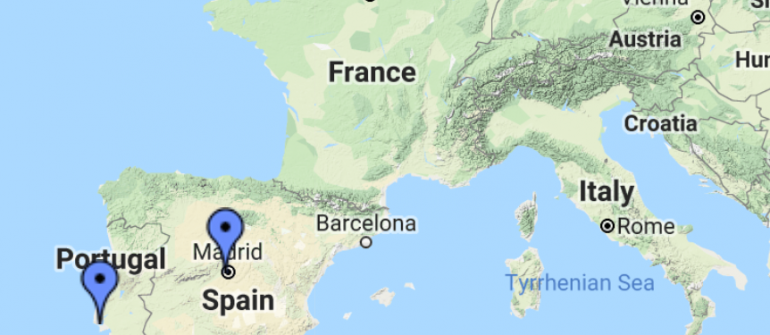
Spain and Portugal are better placed than Italy for transaction to post-QE, says Moody’s

The governments of Italy (Baa3, stable), Spain (Baa1, stable) and Portugal (Baa3, stable) will need to continue to diversify their funding sources to meet their still very elevated gross borrowing requirements when the European Central Bank (ECB) ends new purchases of euro area sovereign debt at the end of the year, Moody’s Investors Service said in a new report.

Untitled Governments of Italy, Spain and Portugal; Spain, Portugal better placed than Italy for transition to post-QE environment”, the report shows that debt-to-GDP ratios close to or above 100%, as well as continued budget deficits, mean that Spain and Italy will face gross borrowing requirements of around 17 and 18% of GDP respectively in 2019-2020, whereas the borrowing requirements of Portugal are somewhat lower at of 13-14% of GDP these years.

«We believe that Spain and Portugal are well placed to continue to manage the transition to a post-QE environment,» said Petter Bryman, a Moody’s Assistant Vice President — Analyst and co-author of the report. «Italy will face more significant challenges, although these are driven by domestic political and economic developments rather than the withdrawal of ECB support.»

Spain’s higher credit quality and robust demand from non-resident investors and Portugal’s increasingly diversified sources of funding leave them in a comparatively good position to continue to negotiate the transition to a post-quantitative easing environment.

Although Moody’s consider the risks of a liquidity crisis for Italy to be low, the agency stresses that the sell-off by non-resident investors from May 2018 means that managing the transition will be more challenging for Italy, despite the recent de-escalation of tensions with the EU over the 2019 budget.

The pace of purchases of euro area government bonds under the ECB’s quantitative easing programme (the Public Sector Purchase Programme — PSPP) has already slowed significantly compared to its peak in 2016 when the ECB purchased the equivalent of between 30 and 40% of the gross issuance of these countries.

The ECB will continue to reinvest the proceeds of maturing bonds for the foreseeable future, although Moody’s estimates that the figure reinvested in 2019 will amount to around 10% of the gross borrowing requirements of Spain and Portugal and 6% of those of Italy in 2019.

In recent years, Italy, Spain and Portugal have successfully extended the maturity of their borrowing, locking in today’s low rates for a considerable period. Government borrowing rates have so far not notably increased as the ECB has reduced the pace of its QE purchases, meaning that the final phase-out of new PSPP purchases at the end of this year in itself is unlikely to lead to an immediate rise in borrowing rates for the three countries.

Elevated gross borrowing requirements can impact Moody’s assessment of sovereign credit quality in two ways. Firstly, if they lead to more elevated government borrowing costs, this can impact Moody’s assessment of a government’s fiscal strength.

Secondly, the risk that the government will not be able to raise the necessary funding to meet its obligations forms part of the assessment of a sovereign’s susceptibility to event risk.

Original Story: Moody’s
Photo: Google Maps
Edition: Prime Yield

Spain’s Bankia sells €3bn NPA portfolio to Lone Star

Spanish state owner lender Bankia has agreed the sale of €3bn of bad loans and repossessed property to private US equity firm Lone Star. The portfolio includes foreclosed real estate assets with a gross book value of approximately €1.65bn, as well as €1.42 bn in non-performing loans (NPL).

Bankia will keep a 20% ownership stake in the company formed to own, manage and sell the foreclosed real estate, while Lone Star will own 100% of the bad loan portfolio.

Spanish lenders have been making a determined effort to clean up their balance sheets since Spain’s decade-long property bubble burst in 2008. Last year, Spain’s banks led Europe with €50.8bn of the continent’s €104.4bn in distressed real estate asset sales, according to the investment bank Evercore. Spain has kept that lead over the first nine months of 2018, with €33.3bn of Europe’s €77.1bn total.

Bankia has had an especially fraught role in the banking crisis that followed the bursting of the property bubble. The lender was formed from the merger of seven regional savings banks in 2010 and held an initial public offering in 2011. But a year later Bankia revealed a vast capital shortfall that required nationalisation and a bailout of more than €20bn.

Now, the Bank stated the sale of the real estate and loan portfolios to Lone Star, combined with other reductions in non-performing loans and foreclosed assets expected for 2018, will reduce non-performing assets it holds by a gross book value of more than €6bn. The lender said the deal is expected to close in the second quarter of 2019 and will increase its fully loaded common equity tier one ratio by 12 basis points.The bank set up the goal to sell €8.8bn in bad loans by 2020.

Original Story: Financial Times | Ian Mount
Photo: Bankia
Edition:Prime Yield

Italian NPL servicer doBank expands European reach with Altamira acquisition

ItalianNPL servicing specialist doBank announced a deal to buy 85% of Altamira Asset Management to push in to other potentially lucrative southern European markets, adding €55bn in assets undermanagement to its existing €140bn.

doBank said it is attracted by the market size and complexity of NPLs in southern Europe, identifying the region as its number one priority in terms of potential merger and acquisition activity.

Original Story: Global Capital | Asad Ali
Photo: Altamira Asset Management (LinkedIn)
Edition:Prime Yield

Greek economy and banks committed to ambitious NPL reduction by 2021

Hellenic Bank Association is ready to agree with the government on a new framework to protect first home that will not create any side-effects, Nikos Karamouzis, president of the association announced on Monday, according to ANA.

Speaking to reporters, Karamouzis admitted that non-performing loans are a big challenge for the society, the economy and banks have committed to an ambitious programme of NPL reduction by 2021. He added that home protection should cover lower incomes that will be able to meet their obligations with the support of the state and pointed out that an existing legislation has frozen borrowers’ obligations worth 18 billion euros.

Original Story: Tornos News
Photo:

Spanish banks reduce €114 billion in NPL in 5 years

Spanish Banks have reduced over €114 billion in Non-Performing Loans (NPL) since the peak of December 2013, reflecting a decrease of 60.2% in the NPL amount, says the November’s Financial Stability Report released by the Central Bank of Spain.

The monetary authoroty chaired by Pablo Hernandez de Cos considers that the positive evolution of the Economy over the last year, associated with the active management of distressed assets by financial entities and the supervision’s pressure are the causes of such a positive improvement.

Over the last 12 months alone, the amount of NPL has fallen €24,7 billion, with the stock hitting €74,8 billion as of June 2018. The most recent sales of NPL portfolios have involved Banks such as Sabadell, Caixa Bank, BBVA or Santander.

Original Story: Europa Press
Photo: Banco de España
Translation and Edition: Prime Yield

Top