NPL&REO News

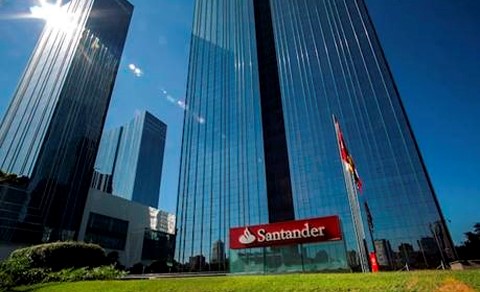
Santander Brazil to make R$1 billion available in lending to SME’s through a BNDES programme

On Wednesday 24 August, Santander Brazil commenced an emergency facility, the FGI PEAC (Fundo Garantidor para Investimentos do Programa Emergencial de Acesso a Crédito — Emergency Access to Credit Programme Investment Guarantee Fund), intended for individual microentrepreneurs and small- and medium-sized enterprises, via an initiative by BNDES (the Brazilian Development Bank). The resumption of the programme, which aims to stimulate lending through secured guarantees to financial institutions, gives businesses with a yearly turnover of up to R$300 million the green light to apply for a loan with Santander. This time around, the Bank plans to pay out R$1 billion in lending through the Brazilian Federal Government’s programme.

The bank’s corporate customers must apply for this facility exclusively through branches. The sums range from R$1000 to R$10 million, depending on the size of the business, which will be able to use this financial stimulus for rebalancing cash flow, for working capital or for carrying out investments in the business. Payment  terms range up to 60 months (five years) and the average rate could reach up to 1.75% per month.

According to Alexandre Fontenelle, executive superintendent of the Corporate segment at Santander Brazil, the BNDES emergency programme is very alluring for micro-, small- and medium-sized entrepreneurs, and it is also very beneficial to businesses in need of financial respite. The programme serves as a two-way street, since it’s a way for banks with below-average default rates on this facility to increase their appetite for extending credit. 

There is a very precise compromise to be had between product pricing and customer risk analysis, among other requirements guaranteeing the programme’s sustainability“, concludes Fontenelle.

Original Story: Santander BR | PR
Photo: Santander
Edition: Prime Yield

Bradesco results above expected; market monitors NPLs

Bradesco reported a better-than-expected result – and marked by mixed performances in its various business lines. 

The bank posted a R$ 7 billion profit in the second quarter, up 11.4%, with strong growth in the margin with clients, tariffs and insurance.  

These lines more than offset the drop in the margin of treasury operations – which was negative by R$ 587 million, pressured by the Selic rate – and the 10% increase in expenses with PDD, due to the return of default to historical levels and the growth of credit lines of higher return and, therefore, more risk.

The bank’s ROE was 18.1% in the quarter, compared with 18% in 1Q22. 

Service revenues grew 6.7% to R$9 billion, benefiting from the strong performance in cards, which recorded a 46% year-on-year growth in the base. In personal loans, the increase was 20.9%.  

The bank’s growth in riskier lines of credit drew attention. “‘Bradesco’ and ‘aggressiveness’ are rarely in the same sentence,” said one manager. 

The NPL ratio for 15-90 days remained stable at 3.6%; and NPL above 90 days came out from 3.2% to 3.5%.  

At Citi and JP Morgan, analysts highlighted that the 30 basis points rise in NPL over 90 days was ‘helped’ by the sale of a R$2 billion credit portfolio – without this sale, the rise would have been 60 points. 

“We believe the continued deterioration in asset quality is the main concern, and the second quarter brought no relief on this issue,” wrote Citi’s Rafael Frade.  

For BTG, given the market’s low expectations for Bradesco’s results, the poor performance of the stock in the year and the scenario of a possible end to the Selic hike cycle, the stock could react well to the result. 

 “There were things to like and others not so much, but overall, the quarter came in as expected,” wrote analysts Eduardo Rosman, Ricardo Buchpiguel and Thiago Paura. 

Original Story: Brazil Journal | Anna Paula Ragazzi 
Photo: Bradesco Linked IN
Edition & Translation: Prime Yield

Banco do Brasil has already disbursed R$ 1.6 million in credit through WhatsApp

There are more than 23 million attendances in the last 90 days in BB’s virtual assistants

Banco do Brasil (BB) reported that more than R$ 1.6 million in personal credit has already been contracted through WhatsApp, with a hiring journey entirely within the conversation with the virtual assistant of BB.

Banco do Brasil is the first to offer the solution, which was extended to the entire public from June 2nd. With the expansion of products and services on the social network, now Banco do Brasil clients can take out personal loans directly through the messenger.

To simulate, check the conditions – such as maturity date, amount of installments, contracting date – and contract the operation, the customer just needs to start a conversation with the number 61 4004-0001.

The solution is not exclusive to new contracts. Customers who already have a loan contracted can also follow the statement of their operations by WhatsApp. By the end of this year, the offer of personal credit products will be expanded to include consigned credit, income tax refund anticipation credit, 13th salary credit and vehicle credit.

The credit offer meets a demand from customers. According to BB, more than 23 million calls were made in the last 90 days on the bank’s virtual assistants.

Original Story: Correio Braziliense | Fernanda Strickland
Photo:
Edition & Translation: Prime Yield

Credit card interest rises for fifth month in a row

A survey by the National Association of Finance, Administration and Accounting Executives shows that the annual rate reaches 371.25%.

Credit card interest rates in Brazil rose for the fifth month in a row, standing at 13.79% in May. The 0.8% increase applied to the rate last month is the highest since June 2018. The rate reaches 371.25% per year, according to data from the National Association of Finance, Administration and Accounting Executives (ANEFAC).

The rise also occurred with the overdraft check, which had annual interest of 150.14%, recorded last month. ANEFAC warns of an even more pessimistic scenario in the coming months.

The researchers responsible for the study predict the maintenance of high costs for short-term credit in the face of an economic environment of greater risk, combined with an increase in the number of defaulters and the Selic rate.

For the executive director of Studies and Economic Research of the association, Miguel José Ribeiro de Oliveira, care must be taken not to acquire debt at this time. “High inflation corrupting family income, high interest rates making credit more difficult and expensive, more selective banks and extremely high unemployment.

Original Story: CNN Brasil | Rayane Rocha / Thayana Araújo 
Photo: Photo by Wundelman in FreeImages
Translation & Edition: Prime Yield

Brazil raises key rate by 50 points, signals more to come

Brazil’s central bank raised its key interest rate by half a percentage point and signaled a hike of equal or smaller magnitude for its next meeting, as policy makers juggle above-target inflation expectations and waning economic growth.

The bank’s board lifted the Selic to 13.25% on June 15th as expected by 39 of 41 analysts in a Bloomberg survey. The other two saw a larger boost of 75 basis points. Policy makers have added 11.25 percentage points to rates since March 2021.

“For its next meeting, the Committee foresees a new adjustment, of the same or lower magnitude,” policy makers said in a statement accompanying their decision.  “The Committee stresses that the growing uncertainty of the current scenario, coupled with the advanced stage of the current monetary policy cycle, and its impacts yet to be observed, require additional caution in its actions.” 

The central bank, led by Roberto Campos Neto, is grappling with more expensive food and energy, which have kept annual inflation above 10% since September. While economic growth remains subdued and price increases eased in May, forecasts for the next few years are still above target. Policy makers must also weigh congressional proposals that would lower fuel costs this year but add to inflationary pressures in 2023.

“The overall outlook remains difficult,” Lucas Vilela, an economist at Credit Suisse, said before the decision. Inflation expectations will likely plateau in coming months as policy makers gradually shift their focus to 2024, he said.

Brazil’s rate hike came hours after the Federal Reserve raised its key rate by 75 basis points — the biggest increase since 1994 — and Chair Jerome Powell said officials could move by that much again next month or deliver a smaller half-point boost. In Latin America, Mexico’s central bank is mulling a record rate increase of 75 basis points at its June 23 policy meeting.

Inflation is one of President Jair Bolsonaro’s main headaches as he runs for re-election in October, with Brazilians increasingly blaming him for spikes in the cost of living. In a bid to cushion the blow, his government is asking supermarkets to hold down prices, besides pushing legislation that would reduce fuel taxes. 

Annual inflation stood at 11.73% in May, well above targets of 3.5% for this year and 3.25% for 2023.

Policy makers have expressed concern that higher rates will be a drag on growth. Brazil’s gross domestic product expanded less than expected in the first quarter in what was likely the high-water mark for activity this year.

Outstanding consumer debt remains at record levels with analysts warning about rising default rates. Unemployment is sliding but informality is high and wage increases have failed to make up for lost purchasing power.

Original Story: Bloomberg News | Maria Eloisa Capurro
Photo: Photo by Svilen Milev in FreeImages
Translation & Edition: Prime Yield

UBS: Brazil’s banks may be ahead in credit cycle in Latin America

Latin American peers have recently shown worsening defaults; in Brazil the trend has been going on since 2020

Brazilian banks may be a few steps ahead of their Latin American peers in the credit cycle, assesses UBS BB. According to analysts Thiago Batista and Olavo Arthuzo, institutions in Mexico and the Andean countries have only started to show a worsening in defaults in recent quarters, while in Brazil this trend began in late 2020.

“This trend (of worsening) is clearer when we assess the quarterly data, whose numbers for Brazilian banks seem to potentially indicate that they are ahead of their regional peers in the credit cycle,” they said in a report sent to clients.

UBS calculated the average default rate for the largest banks it covers in Brazil, Mexico and Chile and Colombia. The Andean countries have the highest rate, at 3.1%, but the Brazilians, who come soon after at 2.9%, have been seeing an increase for longer. From the country, Itaú Unibanco, Bradesco and Santander Brasil were included. In Mexican banks, the average default rate is 1.8%.

The institution points out that throughout 2020 the large local banks considerably increased their coverage rates against possible defaults, but the default data fell. “Aside from differences in methodology between the banks we cover, it is remarkable how Brazilian retail banks had an artificial improvement in defaults in 2020″, UBS underlines.

That improvement, the house points out, came with government credit programs, bank-led renegotiations and other initiatives, most of which have now closed.

A worsening in defaults is expected by UBS analysts for Latin America as a whole. The bank predicts a gradual deterioration as a combination of riskier credit portfolios and high inflation erodes purchasing power and income.

According to the bank, Mexican banks have been more conservative in setting aside provisions over the last ten years. Brazilian banks should be the most exposed to risk, given that in the first quarter of this year 41% of their portfolios were loans to individuals, the highest volume in a decade. Colombian and Chilean banks, by this metric, have the least risky portfolios.

Original Story: E.Investidor Estadão | Matheus Piovesana 
Photo:
Photo by Cesar Fermino in FreeImages.com
Translation & Edition: Prime Yield

Banco do Brasil will release over R$ 6 billion in credit for micro and small entrepreneurs

President of BB says there are currently more than R$ 210 billion to lend to these entrepreneurs

The president of Banco do Brasil (BB), Fausto de Andrade Ribeiro, revealed that the financial institution will make another R$ 6 billion in loans available to Brazilian micro and small entrepreneurs.

“We will announce R$ 6 billion in Fampe (Micro and Small Business Guarantee Fund),” he said during a ceremony at the Planalto Palace to announce new measures of the Credit Brazil Entrepreneur program.

Ribeiro said that the BB currently has more than R$210 billion to lend to micro and small businesses.

Original Story:  Valor Globo | Estevão Taiar, Fabio Murakawa 
Photo: Banco do Brasil website
Edition & Translation: Prime Yield

Open Banking can bring more than 4.6 million Brazilians into the credit market

Research by Serasa Experian shows that Open Banking has the potential to include an additional 4.6 million Brazilians in the credit market and inject R$ 760 billion into the economy. According to the company, the combination of its Data It with resources of artificial intelligence and machine learning (machine learning) can favour the inclusion and make more assertive access to credit.

The survey, based on 15,000 queries, points to a 49% increase in the estimated monthly payment capacity of the population, from R$ 929 to R$ 1,391. “With the combination of information, it is possible to obtain an even more accurate score and better measure the probability of a consumer becoming delinquent,” says head of Open Banking at Serasa Experian, Leonardo Enrique.

One of the main beneficiaries are younger people. For people under 25, the increase in the average payment capacity is 95.9%, from R$540 to R$1,057. Regions where informality is higher, such as the North and Northeast regions, also tend to benefit from Open Banking, with, respectively, an increase of 80% and 57.9% in the average payment capacity.

Women tend to benefit more than men in terms of average payment capacity. For them, the expansion is 54.8%, while for men, it is 48.1%.

he chief economist at Serasa Experian, Luiz Rabi, says that granting credit can help people settle basic debts, such as water and electricity, especially in a challenging economic scenario like the current one. “The greater the supply of credit concession, the more positive it is for the economy, as it encourages the population’s consumption to rise. Part of the GDP is related to family consumption, so more credit volume destined to individuals increases purchasing power, that is, this has an indirect impact on the country’s economic growth.”

Currently, in parallel, phases 3 and 4 of Open Banking are taking place. The third phase, which runs until September, is being marked by the initiation of payment transactions and forwarding of credit proposals. The other stage, which runs from December to May, allows the sharing of information on investment, pension, insurance and foreign exchange products.

Original Story: Gazeta do Povo | Vandré Karmer| 
Photo: Photo by Bruno Neves on FreeImages
Translation and Edition:
 Prime Yield

Inter signs agreement with Banco Mercantil for credit assignment operations

Brazilian lender Banco Inter said it signed an agreement with Banco Mercantil to carry out assignment of claims operations.

In a securities filing, the bank said the agreement comprises the execution of credit assignment operations with a total volume of up to R$2 billion in an 18-month period.

Original Story: Reuters | Staff
Photo: Inter Bank Facebook
Edition: Prime Yield

More than 65 million Brazilians are in delinquency

Brazil recorded 65.2 million consumers in default in February, Serasa reported. This mark had not been reached since May 2020, at the beginning of the Covid-19 pandemic. These citizens have R$263.4 billion in negatived debts (in arrears).

In February alone, the number of defaulters rose 0.54%. Each Brazilian owes an average of R$4,042.08. The statistic is based on the fact that each Individual Taxpayer Registry (CPF) number has, on average, 3.4 active debts.

In relation to the profile of the defaulters, men represent 50.2% of the debtors, against 49.8% of women. In the age bracket, most are between 26 and 40 years old (35.3%), followed by 41 to 60 years old (34.9%).

The total number of consumers in default had been falling since April 2021, but has been rising steadily since October of last year. According to Serasa, the recent interest rate hikes, which make credit more expensive, and the still high unemployment are the main causes of the rise in delinquency.

The fall in the average income of the worker also affects the payment of debts. Even with the gradual recovery of the labour market in recent months, most people are finding jobs that pay less than the previous one, which increases the difficulty in paying off debts in arrears.

Among the types of defaulted debts in February, according to Serasa, 28.6% come from credit card debts. In second place are debts with household bills (water, electricity and gas), which account for 23.2%. In third place are spending on retail, which totalled 12.5%.

Original Story: Diário do Nordeste | Agência Brasil
Photo: Photo by Cesar Fermino on FreeImages
Translation and Edition: Prime Yield

Brazilian’s indebtedness hits a 12 year high

Almost 8 out of 10 families in Brazil are in debt, whether they are in arrears or not. This is the highest proportion of indebted since the beginning of the Survey of Consumer Indebtedness and Delinquency (Peic), in 2010, according to the National Confederation of Trade of Goods, Services and Tourism (CNC).

The current rate of indebted families is 77.5%. In February, the percentage was 76.6%. In March last year, the rate was 67.3%, according to Peic.

According to the analysis, these figures point to the trend of increasing indebtedness, even though market interest rates are higher and make credit more expensive. According to recent data from the Central Bank (Bacen), average interest rates in credit lines with free resources to individuals increased from 39.4% in January 2021 to 46.3% in January 2022.

In a statement, the president of the CNC, José Roberto Tadros, says that the result of the survey reflects the pressure of inflation on budgets, even in the face of the increase in the basic interest rate, which would have the role of reducing the demand for credit. “This high, persistent and disseminated inflation keeps the need for credit high to recompose income, causing families to find third-party resources as a way to maintain their level of consumption,” he notes.

Original Story: Infomoney | Mariana Amaro
Photo: Photo by Afonso Lima on FreeImages
Translation and Edition: Prime Yield 

BTG Pactual to buy controlling stake in Banco Economico

Brazilian investment bank Banco BTG Pactual SA announced it has agreed to acquire a controlling stake in bankrupted lender Banco Economico.

The move is part of BTG’s “special situations” strategy, which is focused on turnarounds by acquiring and recovering non-performing loans and alternative financial assets, it said in a securities filing.

Original Story: Reuters | Staff
Photo: BTG Pactual website
Edition: Prime Yield 

Government’s stimulus will have positive impact on Brazil’s NPL

The government package that intends to inject up to R$165 billion in the Brazilian economy before the elections promises to be positive for banks and retailers, defend the analysts. Among the measures already announced are the anticipation of payment of the 13th salary for retirees and pensioners of Social Security and the possibility of drawing up to R$1,000  from Guarantee Fund of the Length of Service (FGTS), until December 15 this year.

For UBS, the Government stimulus should help reduce the volume of non-performing loans (NPL), improving the quality of the assets of financial institutions. “We see these measures as positive for the asset quality dynamics of Brazilian banks in the short term, as it helps postpone an expected increase in defaults,” wrote analysts Thiago Batista, Olavo Arthuzo and Kaio Prato.

These specialists point out that the deterioration in banks’ asset quality is currently the main issue raised by several investors and foresee that defaults tend to normalise during the year. UBS notes that the default rate had already ended Q4 2021 below the pre-Covid level of December 2019.

“The measures are particularly positive for banks with greater exposure to credit to households, especially consigned, and to low-income people,” the analysis says.

Original Story: Infomoney | Mitchel Diniz
Photo: Photo by Bruno Neves on FreeImages
Translation and edition: Prime-Yield

Prisma Capital is hunting for “complex situations” to invest $650 million

Prisma Capital Ltda., the alternative-asset manager created by former Banco BTG Pactual SA partners, is hunting for “complex situations” in Brazil to invest about $650 million raised for its third fund. “We have a flexible mandate that allows us to invest in a range of asset classes and securities, including private or public equities, credit, real estate, companies under bankruptcy protection and and claims,” Marcelo Hallack, a Prisma co-managing partner, said in an interview. “The dysfunctions present in Brazil’s political, legal and tax systems, which chronically result in macroeconomic volatility, also create investment opportunities”, he said.

Brazilian corporations are struggling to access capital amid a steep increase in the nation’s benchmark interest rate, which has soared to 10.75% from 2% a year ago. A virtual halt in economic activity and shrinking capital markets are adding to the pressure, as are Russia’s invasion of Ukraine and Brazil’s looming presidential election in October. Brazil’s economy is expected to grow just 0.5% his year, down from 4.6% in 2021, according to forecasts compiled by Bloomberg. During these kinds of economic cycles, banks typically become more cautious in providing credit, and that increases the demand for the kinds of capital solutions that Prisma can provide, said Lucas Canhoto, a co-managing partner of Sao Paulo-based Prisma.

Prisma has competition in its search for opportunities. Jive Investments, Brazil’s largest distressed-asset manager, plans to raise as much as 7 billion reais ($1.4 billion) for a new fund this year, Guilherme Ferreira, a Jive partner, said in an interview last year. And Mubadala Capital, Abu Dhabi’s sovereign wealth fund, said in February that it’s received commitments of $322 million for its Brazil Special Opportunities Fund I, its first in Brazil, according to a statement. Prisma can invest in any industry, and so far has chosen sectors including infrastructure, energy, real estate, telecommunications, oil, gas and technology. The firm’s funds also invest in legal claims and litigation finance.Prisma was founded in 2017 and has $2.3 billion in assets under management. About 70% comes from institutional offshore investors, including endowments, foundations and sovereign-wealth funds, and 30% is from Brazilian family offices.

Original Story: BloombergQuint| Cristiane Lucchesi 
Photo: Prisma Capital Linked IN
Edition: Prime Yield

Household indebtness reaches a 12-year high

The percentage of Brazilian families in debt or with overdue bills in February was reported at the highest level since March 2010, as per data published by the National Confederation of Trade of Goods, Services and Tourism (CNN).

“Reaching 27% of households, default in February was up 0.6 percentage points from January and 2.5% from February 2021. Those who declared not being able to pay their overdue bills or debts, thus remaining in default, also increased month on month, up 0.4 percentage points. The proportion reached 10.5%, the same as February last year”, the CNC stated.

Families who reported having debts due (like credit cards, overdrafts, personal loans, car and house payments) reached 76.6% in February. A year ago, the indebted added up to 66.7%, 9.9 percentage points below the current number.

Credit card

Credit card indebtedness showed the first shrinkage among indebted people since February 2021, but remains the main debt type of 86.5% of all indebted families. The indicator is 6.5 percentage points below February 2021 and also 7.9 percentage points higher than February 2020, before the Covid-19 pandemic crisis.More expensive credit in Brazil and the fragility detected in the labor market should continue to affect indebtedness dynamics and default among consumers, especially in a year with uncertainties brought about by the general elections».

Original Story: Agência Brasil| Agência Brasil 
Photo: Photo by Bruno Neves from FreeImages.com
Edition: Prime Yield

BRB seeks buyers for a R$ 1.2 billion NPL portfolio

The Banco of Brasília (BRB) ended 2021 with a profit of R$608 billion, representing a 35.2% growth from the net results recorded a year before and reaching its best result ever.

In a statement, the banks explains that “the result reflects BRB’s expansionary strategy throughout the national territory, with an increase in its range of products and services and a diversification of its customer base”.

In 2021, the annualized return on average equity was 26.6%, above the market average. Revenues from services rendered increased by 15%.

“Even in an adverse context, marked by the worsening of the Covid-19 pandemic, BRB continued to act on the front line in the execution of public policies and granting credit to those who needed it most”, BRB’s president, Paulo Henrique Costa, says.

The bank ended 2021 with a costumer base of 3.5 million, compared with the 639,000 costumers from December 2018. Recently, in February 2022, the bank had already broke the 4 million costumer mark.

Its credit portfolio reached R$ 21.8 billion by the end of the Q4 2021, in an increase of 34.4% compared to the same period of 2020 and of 5.2% from the previous quarter.. The main highlight was real estate credit, whose balance reached R$ 4.5 billion, showing an annual growth of 81.9%. 

It’s nonperforming loans (NPL) rate stood at 2.47% by the end of the second semester of 2021, increasing by 0.79 percentage points from December 2020, due to an increase in operations with higher level of risk amid the bank’s credit portfolio.

Original Story: BRB|Press
Photo: Banco de Brasilia Facebook
Translation and Edition: Prime Yield

Banco do Brasil forecasts profit growth of 24% in 2022

Brazilian state-controlled lender Banco do Brasil SA forecasts that its 2022 net income is likely to rise by up to 23.7% from last year, despite a slower loan book growth.

Banco do Brasil forecast a recurring net income, which excludes one-off items, between 23 billion reais ($4.4 billion) and 26 billion reais this year, compared to 21 billion reais in 2021.

The bank indicated it plans to weather Brazil’s dim growth outlook with good asset quality, higher net interest income, and sales of financial services.

Loan-loss provisions were estimated between 13 billion reais and 16 billion reais, versus 13.1 billion reais in 2021. Latin America’s biggest economy is likely to post little or no economic expansion this year, hurting consumers and companies.

Loan book growth is also expected to slow down to between 8% and 12%, compared to 19.1% last year, mainly driven by rural loans and consumer lending.

The bank, however, said it expects to post a 4% to 8% rise in fee income, similar to the latest forecasts from brick-and-mortar banks such as Itau Unibanco Holding SA and Banco Bradesco SA  week.  

Still, amid Brazil’s surging inflation, operating costs are likely to go up by a similar percentage rise. In 2021, Banco do Brasil was able to tame inflation and post a rise of only 1.4% in expenses.

Banco do Brasil posted a 60.5% jump in fourth-quarter recurring net income from a year earlier to 5.900 bln reais, beating an average analyst estimate compiled by Refinitiv of 4.810 billion reais.

Profit was mainly helped by loan-loss provisions of 3.790 billion reais, down 26.5% from a year earlier. Its 90-day loan default ratio stood at 1.75%, slightly down from the previous quarter.

Net interest income – a measure of earnings on loans minus deposit cost – rose 4.5% from a year earlier, to 14.801 billion reais.Its return on equity, a gauge of profitability, was 16.6%, up 2.3 percentage points from the previous quarter.

Original Story: Reuters| Carolina Mandl 
Photo: Banco do Brasil website
Edition: Prime Yield

Brazil’s outstanding loans rise 16.5% in 2021

The amount of outstanding loans in Brazil grew 1.9% in December from November to 4.684 trillion reais ($865.55 billion), ending last year with an increase of 16.5%, the central bank said.

A broad measure of Brazilian consumer and business default ratios came in at 3.1%, unchanged from the previous month.

Original Story: Reuters|Marcela Ayres 
Photo:
Photo by Cesar Fermino in FreeImages
Edition: Prime Yield

Caixa Econômica raises real estate financing rate with savings resources

Caixa Econômica Federal is warning real estate agents that its interest rate on credit with savings resources (SBPE) to finance the purchase of real estate will rise in February.

The lowest rate, charged to customers who have a relationship with the bank, the largest real estate lender in the country, will change from the current 8.3% per year to 8.7% per year, always plus the TR, as of February 1st, according to publicity material to which Reuters had access. The over-the-counter rate will be maintained at 8.99% pa

With the change, Caixa will start to practice a rate closer to that offered by its competitors in the private sector. Santander Brasil had from 9.99% per year, compared to 9.5% for Bradesco and 9.1% for Itaú Unibanco, all plus TR.

The move comes days after the chief executive of the state bank, Pedro Guimarães, predicted a 10% increase in lending for real estate purchases in 2022, in an interview with Reuters, claiming he has lower interest rates than most. of competitors.

In a note, Caixa stated that there will be an “adequacy in the conditions for the application of reducers… depending on the customer’s relationship with the bank” and that “it will continue to have the best interest rates on the market”.

Original Story:Pymnts.com| Yadunandan Singh
Photo: Rodrigo de oliveira
Edition: Prime Yield

Brazilian lender Creditas valued at $4.8 billion

Creditas, a Brazilian start-up specializing in insurance, consumer loans and used car sales, has raised $260 million in a funding round that valued the company at $4.8 billion.

As the Financial Times reported, this financing comes as investors continue to bet on the burgeoning FinTech sector in Latin America.

“We want to continue growing fast,” said Creditas Founder and CEO Sergio Furio. “And that means that we need to invest in bringing in customers, so that over time, those customers generate the revenues in the recurring model we have.”

The new funding came a little more than a year after Creditas gained unicorn status following a $255 million funding round that valued the firm at $1.75 billion.

Founded 10 years ago, Creditas employs more than 4,000 workers and offers services in Brazil and Mexico. Its six funding rounds have yielded a total equity of $829 million. The company accepts three types of collateral — homes, vehicles and salaries — but instead of holding loans on its balance sheet, its credit portfolio is securitized and sold.

Furio declined to comment when asked if his company was planning to go public.

Last year saw Latin America receive record levels of venture capitalist funding, with $9.4 billion being funneled into companies in that region, more than double the amount from 2020. Nearly 75% of that money went to FinTech, eCommerce and PropTech companies. VCs backed 650 deals last year, with 16 FinTechs achieving unicorn status.

Original Story: Pymnts.com| News 
Photo: Creditas website
Edition: Prime Yield

Top