NPL&REO News

Brazilian lender Creditas valued at $4.8 billion

Creditas, a Brazilian start-up specializing in insurance, consumer loans and used car sales, has raised $260 million in a funding round that valued the company at $4.8 billion.

As the Financial Times reported, this financing comes as investors continue to bet on the burgeoning FinTech sector in Latin America.

“We want to continue growing fast,” said Creditas Founder and CEO Sergio Furio. “And that means that we need to invest in bringing in customers, so that over time, those customers generate the revenues in the recurring model we have.”

The new funding came a little more than a year after Creditas gained unicorn status following a $255 million funding round that valued the firm at $1.75 billion.

Founded 10 years ago, Creditas employs more than 4,000 workers and offers services in Brazil and Mexico. Its six funding rounds have yielded a total equity of $829 million. The company accepts three types of collateral — homes, vehicles and salaries — but instead of holding loans on its balance sheet, its credit portfolio is securitized and sold.

Furio declined to comment when asked if his company was planning to go public.

Last year saw Latin America receive record levels of venture capitalist funding, with $9.4 billion being funneled into companies in that region, more than double the amount from 2020. Nearly 75% of that money went to FinTech, eCommerce and PropTech companies. VCs backed 650 deals last year, with 16 FinTechs achieving unicorn status.

Original Story: Pymnts.com| News 
Photo: Creditas website
Edition: Prime Yield

Overdue payments in credit cards double

Brazilians have been facing difficulties to keep their bills on time and, in 12 months, doubled the number of late payments in the revolving credit card.

Data from the Central Bank shows that in November, 19.13% of customers who use the revolving credit card were behind on their payments between 15 and 90 days. The percentage is almost double that seen a year earlier, when it was 9.68%.

The revolving card is the part of the account that is not paid in the month and is pushed to the next invoice. With this surge in delays, the revolving already has the second highest rate of delays in the historical series – and only loses for May 2015, when 19.18% of customers were late.

Isabela Tavares, credit analyst at Tendências Consultoria, says that this phenomenon can be attributed to deteriorating economic conditions, especially the high inflation and weakness in the labour market.

She explains that, faced with financial difficulties, consumers take emergency credit and without improvement in income in the following months, begin to delay payments.

“The revolving credit is a modality of easy access and high interest. Normally, it is used in emergency situations. The use of this credit has grown in the last four or five months due to high inflation and pressure on income. And now the delays have started to appear,” she says.

In November, Brazilians had R$48.5 billion in debt on their credit cards. This is the highest amount in history. As Isabela Tavares explained, the demand for this emergency credit – just like overdrafts – grows in times of economic difficulty: In the average of the past 12 months, Brazilians took R$17.9 billion per month in overdrafts.

In other words, customers have pushed almost R$18 billion per month in debt to the next month’s bill in the hope that their financial situation will improve.

The problem is that this is the most expensive credit currently available in the financial system. On average, the interest on this operation was 346.1% per year in November – the most recent data from the Central Bank. This means that a R$1,000 debt becomes R$4,461 after 12 months.

With such high interest rates and no significant improvement in the job market or in income, delinquency – when the debt is more than 90 days past due – already reaches 33.29%.

In other words, a third of customers who use the revolving credit card end up defaulting on their loans. That, economists say, is behind the high interest on this operation.

Isabela Tavares notes that this worsening risk of default already influences the interest rates charged by banks. “The credit risk is already perceived and, since the 3rd quarter of 2021, it is possible to see an increase in margins on these operations. Banks are passing on the increased risk”.

Original Story: CNN Brazil|Fernando Nakagawa 
Photo: Photo by Lotus Head in FreeImages
Edition: Prime Yield

Brazilian savings see biggest reduction in 5 years amid rising inflation

Brazilian savings accounts suffered their biggest outflow in five years in 2021, official figures showed, as financial conditions deteriorated for families and companies amid double-digit inflation and aggressive interest rate hikes.

Brazilians boosted their bank savings by a net 7.7 billion reais in December, the lowest figure for the month in six years.

That took the annual total to a 35.5 billion reais ($6.23 billion) outflow, the first negative number since 2016. The balance of savings accounts in Latin America’s largest economy ended the year at 1.03 trillion reais.

In contrast, savings accounts grew by a record 166.3 billion reais in 2020 as the government spent heavily to combat the effects of the COVID-19 pandemic, including via cash transfers to the poorest, a program that was substantially reduced in 2021.

Also, from March, an increase in the Selic benchmark interest rate amid rising inflation made savings rates less competitive compared to other fixed income investments.

The central bank more than quadrupled its benchmark rate last year to 9.25% from 2% and has already signalled another 150 basis point hike in February.

The annual rate of inflation in mid-December stood at 10.42%, far above the central bank’s year-end target for consumer price inflation of 3.75%. The central bank acknowledged inflation has proven to be more persistent than anticipated, stirred by surging fuel and energy prices.

Original Story: Reuters| Marcela Ayres 
Photo: Photo by Magda S in FreeImages
Edition: Prime Yield

Manager of R$ 5 billion in agrobusiness NPL triples deals

Last May, the Central Bank recorded an accumulation of R$ 306.8 billion in agribusiness debts within the financial system. At the time, consultants’ surveys also showed an inventory of approximately R$ 600 billion with non-financial agents, such as trading companies and suppliers, maturing until February 2020.

These are the most updated figures known. But there is an unspecified amount of practically unrecoverable debts.

But considering the sector’s gains that have been accumulated for several harvests, especially among cereal producers, the reduction is felt among the agents that operate in the various credit recovery ends.

This is where NPL Brasil comes in, one of the main managers of nonperforming loans (NPLs) in the country, managing over R$ 5 billion of the defaulted (or non-performing) agribusiness portfolio. This still represents 80% of the total value of credits managed by NPL, but is falling.

“From January to August, the number of rural producers almost tripled,” says NPL CEO Christian Ramos, making reference to debtors’ demand to be able to save their financial situation with institutions and companies.

Basically, NPL, which qualifies itself as the largest independent manager in this niche business, buys the portfolios of the creditors and will seek the repactancing with the debtors.

According to the perspective of NPL’s CEO, the projections are for a 250% increase in agreements within the agribusiness chains.

Original Story: Agro Times| Giovanni Lorenzon 
Photo: Photo by Magda S for FreeImages.com
Edition and Translation: Prime Yield

Itau profit jumps 35% on Q3 driven on lower charges and more lending

Brazil’s biggest lender Itau Unibanco posted a 34.8% jump in its third quarter profit from a year earlier, driven by loans for individuals, lower provisions and higher fee income.

Recurring net income, which excludes one-off items, came in at 6.779 billion reais ($1.22 billion), in line with an estimate compiled by Refinitiv of 6.735 billion reais. Its return on equity, a gauge of profitability, was at 19.7% in the third quarter.

In a statement, Chief Financial Officer Alexsandro Broedel said the bank is on track to deliver a solid performance in 2021 and has put itself on a path to continued growth in 2022.

Itau’s loan book rose 5.9% in the quarter and 13.6% year-over-year, mainly helped by car loans, credit cards and mortgages.

The rapid expansion of retail loans alongside higher trading gains resulted in a 15.3% rise in net interest income, to 19.515 billion reais, from a year earlier.

The bank’s 90-day loan default ratio rose to 2.6% from 2.3% in the previous quarter. Still, loan loss provisions fell 17.2% year-over-year, to 5.232 billion reais.

Fee income rose 6.4% from a year earlier, even as brokerage XP Inc’s results, once incorporated into the fee income line, are no longer consolidated into Itau. It was boosted by credit cards, funds and advisory.

Despite a collective bargaining agreement which secured Brazilian banking sector workers a 11% raise in September, Itau’s operating expenses edged up only 1% from a year earlier, well below the double-digit inflation rate in Latin America’s biggest economy.

Original Story: Reuters | Carolina Mandl 
Photo: Itaú website
Edition: Prime Yield

Distressed funds buy real estate loans as defaults soar

Surging construction costs are sending delinquency rates skyrocketing among Brazilian developers, persuading a growing number of lenders to dump their loans and creating a feast for distressed-asset funds, Bloomerg News reported.

“I’m dealing with explosive demand from banks trying desperately to sell loans they made to construction firms”, said Eduardo Martins, a partner at MGC Holding, one of Latin America’s biggest distressed-asset managers.

MGC, which oversees a face value of 23 billion reais ($4.21 billion) in consumer loans, has hired three executives since August to start a unit to analyse corporate real estate credit.

The delinquency rate for builders reached as high as 20% in May for loans carrying market rates, meaning borrowers weren’t paying on time on 3.4 billion reais in loans, according to the central bank. The rate fell to 4%, or about 141 million reais in defaults in September, a reduction the central bank said could be explained by different forms of debt renegotiation.

Original Story: Bloomberg|Cristiane Lucchesi 
Photo: Photo of Afonso Lima in FreeImages.com
Edition: Prime Yield

2022 will be more challenging for loans, says Santander Brasil CEO

Banco Santander Brasil SA will face a more challenging environment for loan growth and repayments in 2022 in light of the rising benchmark interest rate and high inflation in Latin America’s biggest economy, Chief Executive Sergio Rial said.

Rial said the bank’s consumer loan book was likely to expand between 9% and 12% next year, a steep decrease from the roughly 20% growth it is poised to post this year, and predicted fewer people will seek a mortgage because of higher interest rates.

Rial did not provide any estimate for loan defaults, but said the scenario will be “more challenging” in 2022.

Its 90-day loan default increased 0.2 percentage point in the third quarter to 2.4%, while loan-loss provisions also grew.

Many economists are slashing their GDP outlook for Brazil. Itau Unibanco Holding SA said GDP is likely to shrink 0.5% in 2022, as a hike in the benchmark interest rate is expected to tame inflation.

The Brazilian unit of Spain’s Banco Santander reported a recurring net income of 4.340 billion reais ($769.45 million), up 12.5% from a year earlier, driven by higher net interest income and fees.

The result gave Santander Brasil a return on equity (ROE) – a gauge of profitability – of 22.4%, its highest on record.

Analysts praised Santander Brasil’s performance in notes to clients, but highlighted some points of concern.

“Loan loss provisions and defaults started to come under pressure,” analysts at BTG Pactual wrote.

Original Story: Reuters | Carolina Mandl 
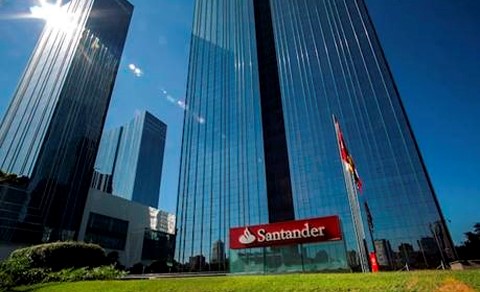
Photo: Santander Br
Edition: Prime Yield

Number of defaulters reached 62.21 million people in September

The number of defaulters in Brazil reached 62.21 million people in September, which represents a slight retraction (0.06%) compared to the previous month.

According to the Map of Delinquency and Renegotiation of Debts in Brazil released by Serasa, this is the lowest figure since April, when 62.98 million Brazilians were registered in this situation.

According to the monthly study, the number of total debts in Brazil is also the lowest recorded in the period, with a drop of 0.16% compared to August, totalling 208.46 million accounts.

According to the survey, despite the drop in defaults, the total value of debts in September rose 0.34% compared to August, adding up to R$ 245.3 billion. The average value of debt is R$ 3,944 per person and R$ 1,177 per debt.

The banks and credit cards segment continues to lead the list of accounts responsible for delinquency, representing 28.7% of them, followed by debts of basic accounts such as water and electricity (23.5%) and retail with 13%.

“These figures show that Brazilians are seeking opportunities to renegotiate with differentiated conditions and that creditor companies increasingly understand the importance of offering these conditions for people to renegotiate: in September alone, there were more than R$ 3.27 billion in discounts granted in renegotiations by Serasa Limpa Nome,” said Serasa manager Nathalia Dirani.

The states with the most defaulters are São Paulo (14.67 million), Rio de Janeiro (6.18 million), Minas Gerais (5.82 million), Bahia (4 million) and Paraná (3.29 million).

Original Story: Agência Brazil |Flávia Albuquerque 
Photo: Photo by Bruno Neves for FreeImages.com
Translation and Edition: Prime Yield

Default among the micro and small companies fell 0.9% in August

In August, 5.33 million of micro and small companies closed the month in the redline. This figure is 0.9% lower compared to July, when 5.38 companies of this size were in default, according to a survey by Serasa Experian.

The industrial and retail sectors boosted the improvement in the indicator, both with 1.0% retraction in defaults. The services sector also fell, albeit by a smaller 0.7%.

The North region had the best performance on the balance sheet, with a drop of 5.0% in the number of insolvent companies, followed by the Southeast, with a decline of 0.9%; the Centre West, with a retreat of 0.7%; the South, with a drop of 0.3%; and the Northeast, with a decrease of 0.1%.

Original Story: Isto é Dinheiro | Estadão Conteúdo
Photo: Photo by Wundelman in FreeImages.com
Edition & Translation: Prime Yield

Rio de Janeiro

Brazil: over 62 million have fallen into debt in the current financial crisis

According to the latest study carried out by Serasa, about 62.5 billion Brazilians have their names in bad debt, with each one oweing an average off of R$ 3,937.98 – the equivalent of more than three minimum wages.

The Default Map shows that the largest volume of debt corresponds to the bank/ credit card category, which represents 29,7% of the more than R$ 211 million in debt. Next are the bills with electricity, water and gas, with 22.3%. Retail purchases represent 13% of the debts of Brazilians

Serasa also points out that Brazilians are seeking negotiation through Serasa Limpa Nome. The age group of 31 to 40 years old was the one that most sought a financial solution for debts, followed by those between 18 and 25 years old.

Original Story: A Cidade On |Agência do Estado 
Photo: Photo by Bruno Leiva in FreeImages.com
Edition & Translation: Prime Yield

Brazil: 56.4% of defaulting debts are paid within 60 days

Data from Serasa Experian, relative to April 2021, showed that 56.4% of defaulted consumer debts in Brazil are paid within 60 days, mainly in the Utilities segment (67.4%) that covers expenses like water and energy. Next, is the Banks and Credit Cards sector, with 62.6% of related debts settled in the period.

These figures are from the Credit Recovery Indicator, which shows the percentage of debts paid within 60 days after being in default.

The economist at Serasa Experian Luiz Rabi evaluates that the fact that the percentages of debt recovery are lower in the last two months – March/21 (56%) and Apr/21 (56.4%) -, compared to the beginning of the year (58.8% in January and 59.3% in February), may be related to the acceleration of inflation in the period, which ends up eroding the purchasing power of the population and making it difficult to pay off debts in arrears.

He suggests that creditors provide discounts and payment facilities to their customers in debt, in order to be able to increase their recovery percentages at this time of higher-than-expected inflation.This indicator also suggests a pattern: more recent debts tend to be recovered more, while those with a longer history have the lowest percentage of discharge. Considering commitments that were 30 days overdue, 74.3% were settled; from 30 to 60 days, 42.4%; from 60 to 90 days; 31.0%; from 90 to 180 days; 28.3% between 180 days and the first year and 16.3% between one and more years

Original Story: Agência Brasil | Camila Boehm 
Photo: Photo by Magda S from FreeImages.com
Edition & Translation: Prime Yield

BRAZIL BTG wins the bidding and buys Banco Econômico credits for R$ 937,7 million

The FIDC NP Alternative Assets 1 fund, managed by BTG, won the auction held by BNDES and the FGC (Credit Guarantee Fund) to buy Banco Econômico’s credits that were held by these institutions since 1995, when the Central Bank intervened in the bank. 

Three participants had registered to take part in the auction: NPL Brasil, FIDC NP Atlântico and Alternative Asset 1, but only BTG’s fund made a bid, winning by the minimum amount of R$937.750 million.

When contacted, BTG informed that “the operation is part of BTG Pactual’s proprietary strategy of buying portfolios of non-performing loans”.

According to the statement on the auction, BNDES and FGC aimed to recover credits that have been in their portfolios for 25 years and with no prospect of being received before 2028. As they are adjusted by the Reference Rate (TR), zeroed since September 2017, have no correction since August 2017.

Also according to the statement, the credits owed by Econômico amount to R$ 14.88 billion, of which R$ 12.02 billion are related to creditors entitled to receive before the BNDES and the FGC. The credits of the institutions are unsecured (without preference in case of bankruptcy or composition with creditors, being paid after all other creditors), and therefore have no preference in the order of payment.

At the time of the Econômico intervention, the bank had R$ 401 million in debts relating to transfers from the BNDES System and debts with the now extinct Deposit and Real Estate Letter Guarantee Fund (FGDLI), which was succeeded by the FGC when it was created. Subsequently, these credits were incorporated into the institution’s liquidation mass.

Of the credits granted in the auction, without co-obligation, 28.71% are from BNDES itself and 23.32% from the Special Agency for Industrial Financing (Finame). The other 47.97% are from the FGC.

Original Story: Valor Investe | Álvaro Campos 
Photo: BTG Pactual website
Edition & Translation: Prime Yield

NPL rate steady at 2.3% in July

With an increase of 6.1% compared to the same month last year, the stock of credit operations reached R$ 4.266 trillion in July. The value is also 1.2% higher than the one registered in June this year. The figures numbers are from the Credit Monetary Note, released this Friday (27) by the Central Bank (BC). The concession of credit was R$ 418.4 billion, 16.3% more than in July last year.

For individuals, the balance of credit operations grew 8.6% compared to July 2020 and 1.5% compared to June this year. For companies, the increase was 2.9% and 0.8%, in the yearly and monthly comparison, respectively.

At 2.3% of the total balance of operations, defaults remained stable in relation to the month immediately before, but advanced 0.2 percentage points in relation to July 2020.

In free resources, the credit stock reached R$ 2.495 trillion in July, a growth of 7.4% compared to July last year. Still in this segment, credit granting totaled R$ 356.2 billion in the period, up 15.2%.

Credit with directed resources, which is that subsidized by governments, totaled R$ 1.770 trillion in July. The value is 4.3% greater than the one registered in July of last year. The concession of credit totaled R$ 62.2 billion, an increase of 25.6%.

Original Story: CNN Brasil | Anna Russi
Photo: Photo by Bruno Neves from FreeImages
Edition & Translation: Prime Yield

Brazil interest rates to hit 7.00% this year

Expectations for 2021 Brazilian inflation and interest rates rose to new highs, a survey of over 100 economists showed, with the central bank’s benchmark Selic rate expected to hit 7.00% by the end of the year.

The central bank has raised borrowing costs to 4.25% this year, and is expected to raise it by at least another 75 basis points on Aug. 4.

Next year’s inflation outlook inched up to 3.8% from 3.75%, the survey showed, creeping further above the central bank’s goal of 3.50%.

The FOCUS survey showed that this year’s growth outlook held steady at 5.3%.

Original Story: Reuters | Staff 
Photo: Photo by Svilen Milev from FreeImages
Edition: Prime Yield
House financing funded by savings should reach new record in 2021

In Brazil, home financing funded by savings should reach a new record of R$195 billion (US$37.5 billion) in 2021, according to the latest forecasts form ABECIP (Brazilian Association of Real Estate Credit and Savings).

After breaking records last year, with a volume of R$124 billion (US$24 billion), and also in the first half of 2021, reaching R$97 billion, real estate financing with funds from savings should close the year totalling R$195 billion, up 57% from 2020. 

The projection and data were released by ABECIP and considers both the loans mobilized by end consumers for the purchase of real estate, and those taken out by construction companies for the execution of works.

Original Story: Rio Times| Staff
Photo: Photo by Afonso Lima from FreeImages
Edition: Prime Yield 

Bradesco aims to decarbonize its loan book by 2050

Brazil’s Banco Bradesco has just announced it aims to decarbonize its credit and investment portfolios by 2050, or possibly before, in accordance with scientific forecasts and Paris Agreement climate goals.

In a securities filing, the bank also said it is the first Brazilian bank to join the Net-Zero Banking Alliance, an industry body under the auspices of the United Nations committed to “aligning their lending and investment portfolios with net-zero emissions by 2050.”

Bradesco said this reinforces its commitment to ESG goals and transitioning to a “cleaner, more efficient and resilient economy.”

Original Story: Reuters |Staff 
Photo: Bradesco Linked In
Edition: Prime Yield

Brazilian banks’ profitability falls in 2020, but recovery is expected in 2021

Brazilian banks saw profitability fall last year for the first time since the 2015-2016 recession, according to the central bank annual report on the banking system, as the COVID-19 pandemic forced institutions to increase provisions.

In December 2020, the banking system’s aggregate return on equity was 11.5%, the lowest in the central bank’s series, although the 2021 outlook is improving despite ongoing uncertainty surrounding the pandemic, it said.

“The fall in profitability was widespread, affecting banks of different types of control, size and activity,” the central bank said in its annual report.

“Bolstering provisions in 2020 reduces the need for significant new provisions, and the rebound in economic activity will support growth, credit quality, and demand for banking services,” it added.

The report also highlighted reduced concentration of the banking system, as the market share of state-owned institutions such as Banco do Brasil, Caixa Economica Federal and the BNDES national development bank fell.

The five largest banks – Itau, Bradesco, Santander, Banco do Brasil and Caixa Economica Federal – accounted for 77.6% of total assets in December 2020, down from 81% a year earlier, the central bank said.

The concentration of total deposits in these institutions dropped to 79.1% from 83.4% in December 2019, it added.

Original Story: Reuters|  Reuters Staff 
Photo: Photo by LotusHead from FreeImages
Edition:
Prime Yield

Santander Brasil is said to have bought R$4bn in bad debts from Bradesco

Return Capital, a company owned by Santander Brasil (SA:SANB11), is said to have bought over BRL 4 billion in overdue and unpaid loan portfolios from Bradesco (SA:BBDC4), the newspaper Estado de Sao Paulo said, citing sources.
According to the publication, the operation with the so-called bad loans was advised by consulting firm Deloitte.

Original Story: Investing.com
Photo: Bradesco Linked In
Translation: Prime Yield

Brazil’s central bank to make bank liquidity measure permanent

Brazil’s central bank will make permanent one of its pandemic crisis-fighting measures from last year of offering banks liquidity in exchange for private sector credit as collateral, instead of public debt, as had been the case before.

In an online event broadcast by the International Monetary Fund as part of its spring meetings, central bank president Roberto Campos Neto said this will help banks and Brazil’s nascent corporate bond market.

“This changes the whole chain of issuing private debt and the way we see private debt. Banks can charge less premium when they hold private debt on the balance sheet because now they know they can get liquidity out of that,” Campos Neto said.

“This is a change that we are going to make permanent, and we are designing a system to make that permanent,” he said.

In response to the COVID-19 pandemic just over a year ago, the central bank unveiled measures providing the financial system with up to 1.3 trillion reais ($225 billion) of liquidity, worth around 18.5% of gross domestic product.

Central bank figures show that within that overall package, loans backed by private sector debentures totalled up to 91 billion reais.

On monetary policy and inflation, Campos Neto repeated his view that front-loading interest rate hikes means they will not need to be raised as much in the end.

Brazil’s central bank began a “partial normalization” of monetary policy last month, raising its benchmark Selic rate by 75 basis points to 2.75% and, barring a major change in outlook, pledging to do so again next month.

Inflation is running well above the bank’s year-end target of 3.75%, the exchange rate is weak, and the fiscal outlook is deteriorating. All that points to continued tightening, despite the pandemic and darkening growth picture.

Campos Neto also warned that the rise in borrowing costs in some advanced economies will result in “some level of distress” for emerging countries like Brazil.

Original Story: Reuters | Jamie McGeever 
Photo: Banco Central do Brasil website
Edition: Prime Yield

Brazil’s Caixa may raise up to $1.15 bln in insurance holding Caixa Seguridade IPO

Brazilian state-controlled lender Caixa Economica Federal may raise up to 6.5 billion reais ($1.15 billion) by selling part of its stake in insurance holding Caixa Seguridade Participacoes according to documents filed with CVM.

The calculation considers the maximum size of the offering and the top of the price range for the shares, which was set between 9.33 reais and 12.67 reais per share.

The offering size will initially be 450 million shares in the insurance holding owned by parent Caixa Federal, but, depending on demand, the number of shares may rise to 517.5 million.

The IPO will be priced on April 27, according to the documents, and Caixa Seguridade will be listed under the ticker symbol CXSE. The offering will be managed by investment banking units of Morgan Stanley, Caixa Economica Federal, Bank of America, Credit Suisse AG, Itau Unibanco Holding and UBS BB.

Original Story: Nasdaq |  Tatiana Bautzer
Photo: Rodrigo de Oliveira
Edition: Prime Yield

Top